The future of news is an expert friend you can talk to
Airtable founder Howie Liu wants a news chatbot that learns what you care about and lets creators give it any voice they want.
 My First Million · Brainstorming $10M AI Business Ideas w/ the Airtable Founder
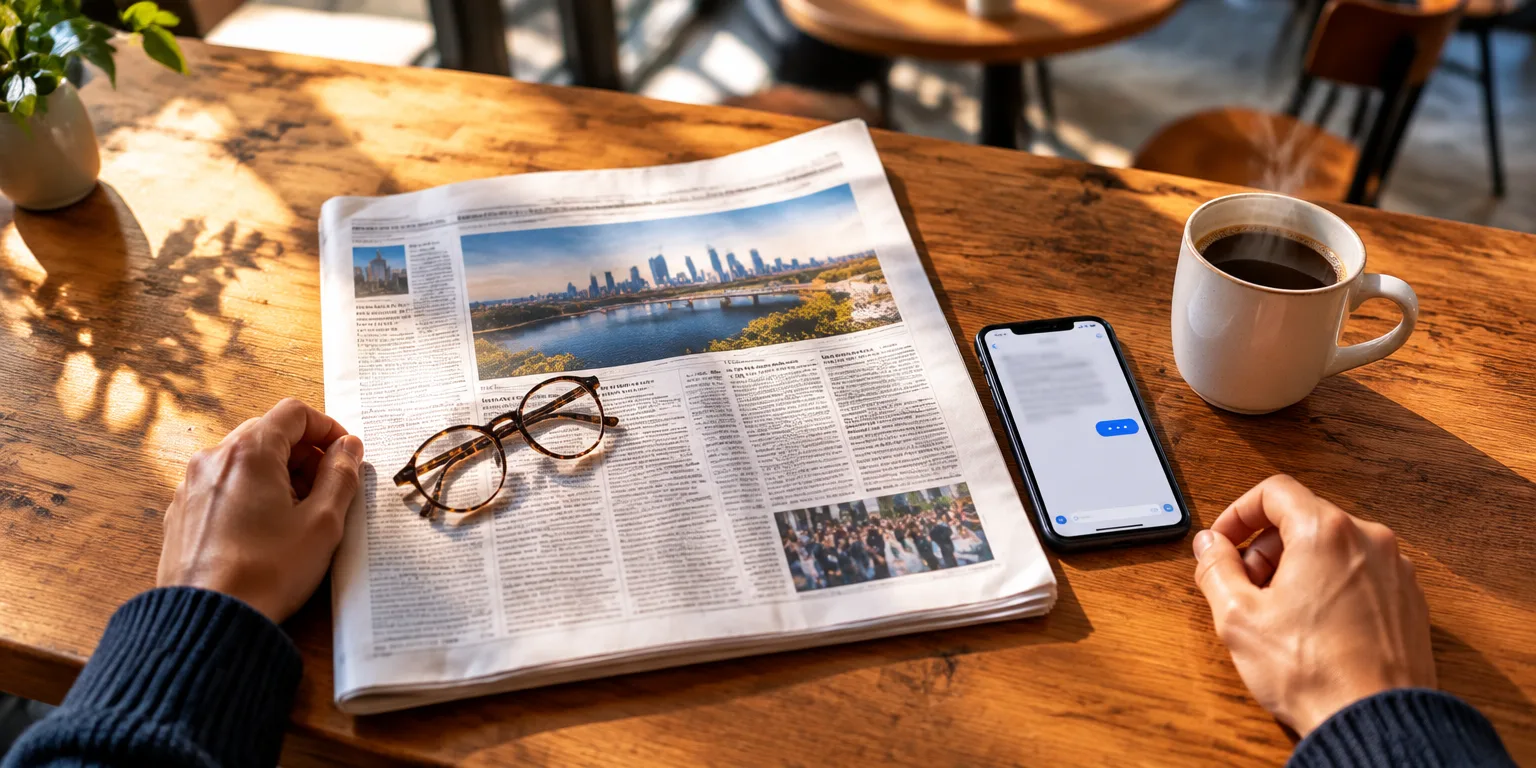
Airtable founder Howie Liu was swapping startup ideas with Sam Parr, who built the daily newsletter The Hustle, and show host Shaan Puri when he described how he reads the news and what he wishes would replace it. He still buys the print editions of The Wall Street Journal and the Financial Times because he likes seeing the exact same front page as millions of other people. For anything he finds online, he copies the text into a chatbot and asks for the key points, and he wants a tool that does that automatically.
What Liu said he really wants is not another feed of summaries but something he can question. "I want Nick in AI form where I could just ask it, tell me more about this," he said. Nick is a mutual friend of Liu and Parr who reads everything and can catch someone up on any subject in about 30 minutes.
Parr said the description sounded familiar. Parr described his old pitch as "we're your smart, no bullshit friend who will tell you what you need to know every morning." With a team of three reaching almost 3 million readers a day, Parr said, his staff had tried to match different news items and expert comments to each reader's interests by hand, work he called "so manual."
Liu believes software can now do that matching work, and his twist is to let creators build on top of it. Like writers on Substack, the newsletter platform, creators could start their own branded newsletters on shared AI technology and give each one a distinct voice. The voice would not have to be plain, neutral news writing like the Associated Press, Liu said, but could sound like a writer for TMZ, the celebrity gossip site, who sensationalizes celebrity news.
He thinks conversation plus personality can support a large business because people check the news every day, so they keep coming back. Liu said there is going to be "a different high growth era of AI news" built around talking to it.
Questions people ask
Why does Liu still buy print papers if he wants AI news?
He says he values the curated, physical experience. He likes knowing he is seeing the exact same front page as millions of other people. He contrasts that shared edition with his online habit, where he reads links on his own and asks a chatbot to summarize them.
Who is Nick?
The source identifies him only as Nick, a mutual friend of Liu and Parr. Liu describes him as someone who reads everything about what is happening in the world. Spending 30 minutes with him, Liu says, can teach you about any topic you want.
What did The Hustle try before AI?
Parr says his team of three people tried to personalize the newsletter by matching different news items to what readers cared about. They also talked about bringing in experts to comment on stories and including those comments in the email. Parr says the hand assembly was manual, which is why he thinks AI changes the math.
How would different AI news personalities work?
To illustrate Liu's idea with a hypothetical example, imagine the same system powering two different editions. One hypothetical edition could explain markets in a straight, neutral tone, while another could deliver celebrity news in a loud gossip style. Liu himself only sketches the two poles, a neutral wire style and a TMZ style voice.
Can you trust an AI summary of the news?
This was not discussed in the interview, so take this as general advice. Summarizers can leave out caveats, flatten nuance, or invent details that were not in the original. If numbers, quotes, or decisions matter to you, open the linked article and read the relevant part yourself.