The global internet runs through a soda-can cable coated in petroleum jelly
About 300 undersea cables carry 99% of international traffic.
 Vox · Thin underwater cables hold the internet. See a map of them all.
About 300 cables cross the seabed. They carry 99% of international internet traffic as pulses of light sent through thin glass fibers.
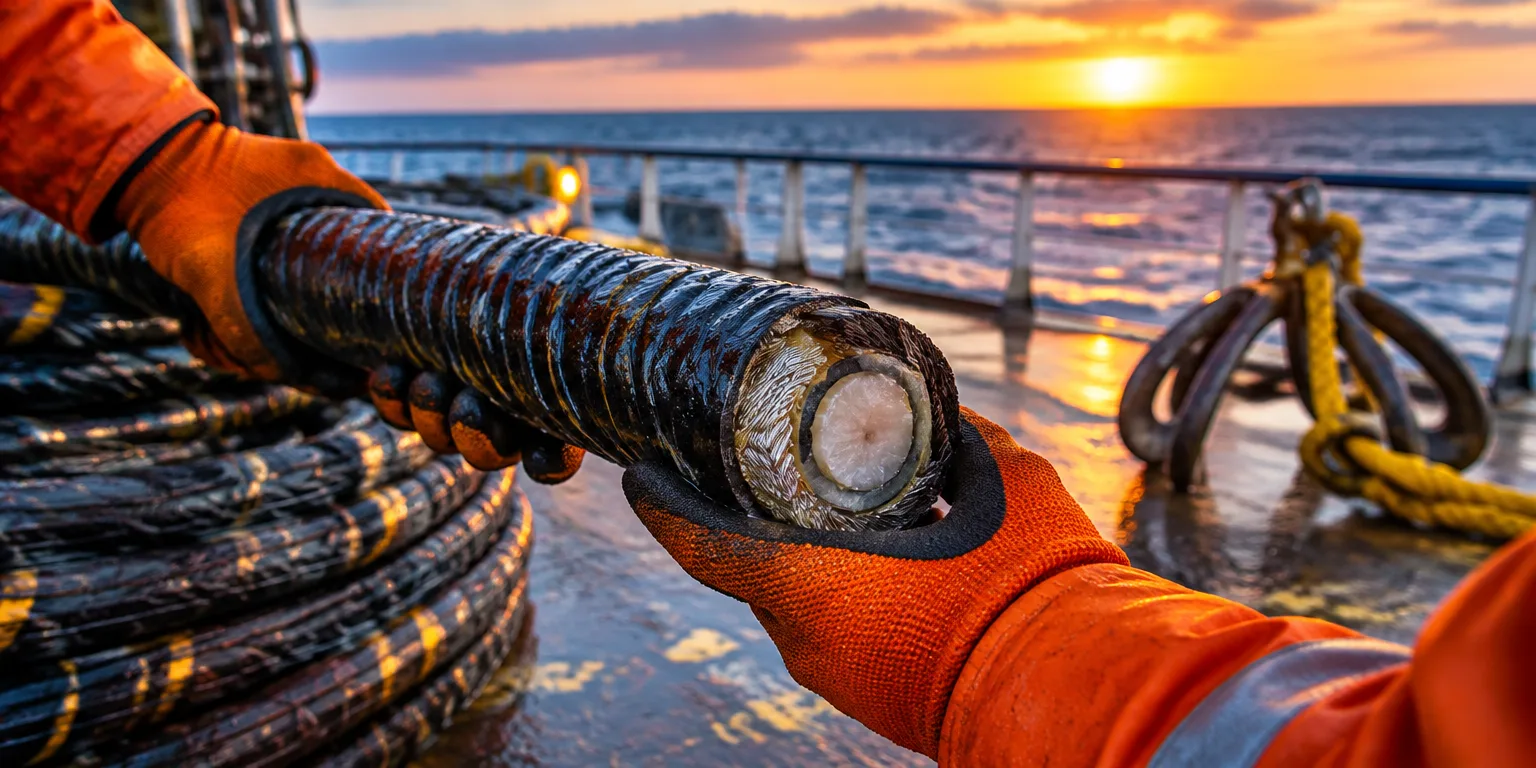
The surprise is how ordinary they feel up close. If you held one, it would be no wider than a soda can, wrapped in just a few layers for protection.
One of those layers is petroleum jelly, which keeps water out of the cable.
Your emails, videos, and stock trades between New York and London run through these same jelly-coated cables.
The cables are laid by private companies, not governments, and together they form the backbone of the global internet. The cloud is not floating somewhere above us. The thing that connects continents fits in your hand, and it is greased to survive the sea.
Questions people ask
If the cable is that small, what is actually inside it?
At the center are a handful of hair-thin glass fibers that carry data as light. Around them are steel wires for strength, copper to carry power to signal boosters along the route, and plastic insulation. The outer layers add abrasion resistance and waterproofing, including the jelly.
How much data can one of these cables carry?
Modern cables carry tens to hundreds of terabits per second, enough for millions of simultaneous video streams. Capacity has grown because engineers send more colors of light down the same fibers and improve the equipment at each end. A single new cable can carry many times the traffic of the entire internet a decade ago.
What breaks these cables?
They face fishing trawlers, ship anchors, earthquakes, and even shark bites, which is why many sections are buried under the seafloor. Repair ships grapple the broken ends to the surface and splice in a new section. Breaks still happen regularly, but traffic is rerouted to other cables.