The grid stays steady because its generators act like a giant flywheel
That shared momentum keeps voltage and frequency stable when demand jumps or equipment fails.
 Practical Engineering · How Does the Power Grid Work?
The reason your lights do not flicker every time a factory starts a motor is momentum in a large grid.
Engineers call one of the grid's main jobs power quality. The voltage and the frequency of the electricity reaching your home must stay correct and stable. Some devices even count the regular oscillations in the current to keep time, and shifts in voltage can cause brownouts or surges that damage equipment.
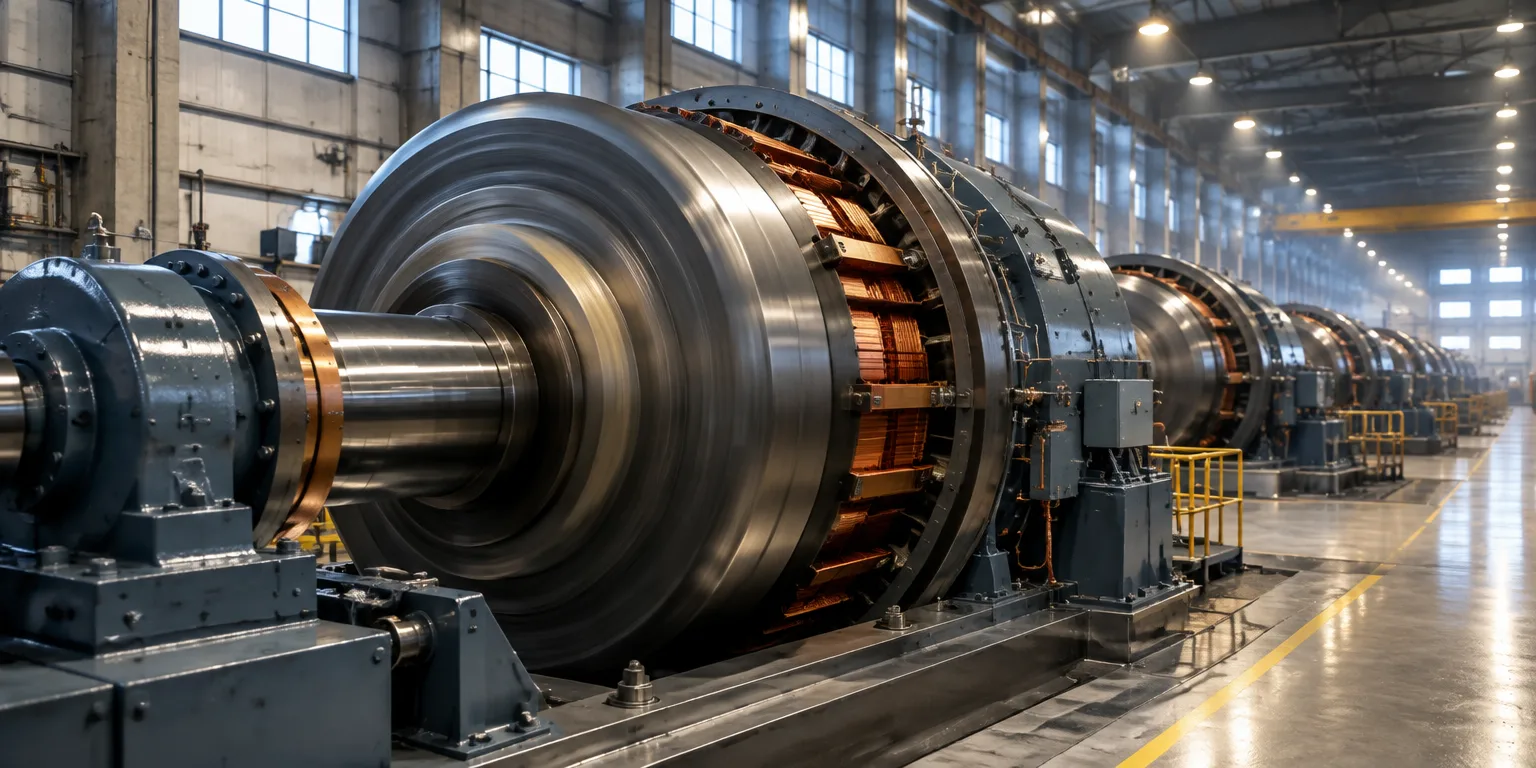
A large grid helps keep those numbers steady through what engineers call electrical inertia. Many large spinning generators are linked together electrically. Once spinning, all that rotating mass keeps spinning at the same speed, the way a heavy flywheel resists a sudden push or pull.
That shared momentum absorbs small shocks from equipment faults or loads that change quickly. A single generator would lurch when hit with a sudden surge in demand, but all those generators together barely budge, and the power stays clean.
Questions people ask
Can electricity really be rerouted around a broken part of the grid?
Yes. The grid is designed so power can travel by more than one path. If a line, transformer, or plant goes out for maintenance or because of a fault, operators can reroute electricity around the problem, which is why faults rarely become blackouts.
Do wind turbines and solar panels provide the same inertia?
Traditional plants spin large metal generators, so they naturally provide inertia. Most solar panels and many wind turbines connect through electronics rather than spinning in sync with the grid, so they provide little or none unless they are specially controlled to mimic it.
What is grid frequency, exactly?
Frequency is the number of back-and-forth swings the current makes each second. If supply and demand fall out of balance, the spinning generators speed up or slow down, and the frequency drifts, which can confuse timing devices and damage equipment.