The Grid Uses Alternating Current Because Its Voltage Is Easy to Change
Power plants boost voltage to cut losses on the way to cities, then lower it for safe use, all with a pair of wire coils.
 Practical Engineering · How Does the Power Grid Work?
The main reason the grid runs on alternating current is that its voltage can be changed with nothing more than two coils of wire placed beside one another.
Direct current flows constantly in one direction. Alternating current reverses direction repeatedly, 60 times per second in North America. That constant change is what makes voltage simple to raise and lower, a critical part of shifting electricity efficiently and safely from where it is made to where it is used.
The tool responsible is called a transformer, and it amounts to two loops of wire sitting side by side. A changing voltage in the first loop creates voltage in the next. The size of the new voltage follows the number of loops in each coil. A second coil with more turns raises the voltage, and a second coil with fewer turns lowers it. With direct current, the flow stays steady, so the second coil picks up nothing.
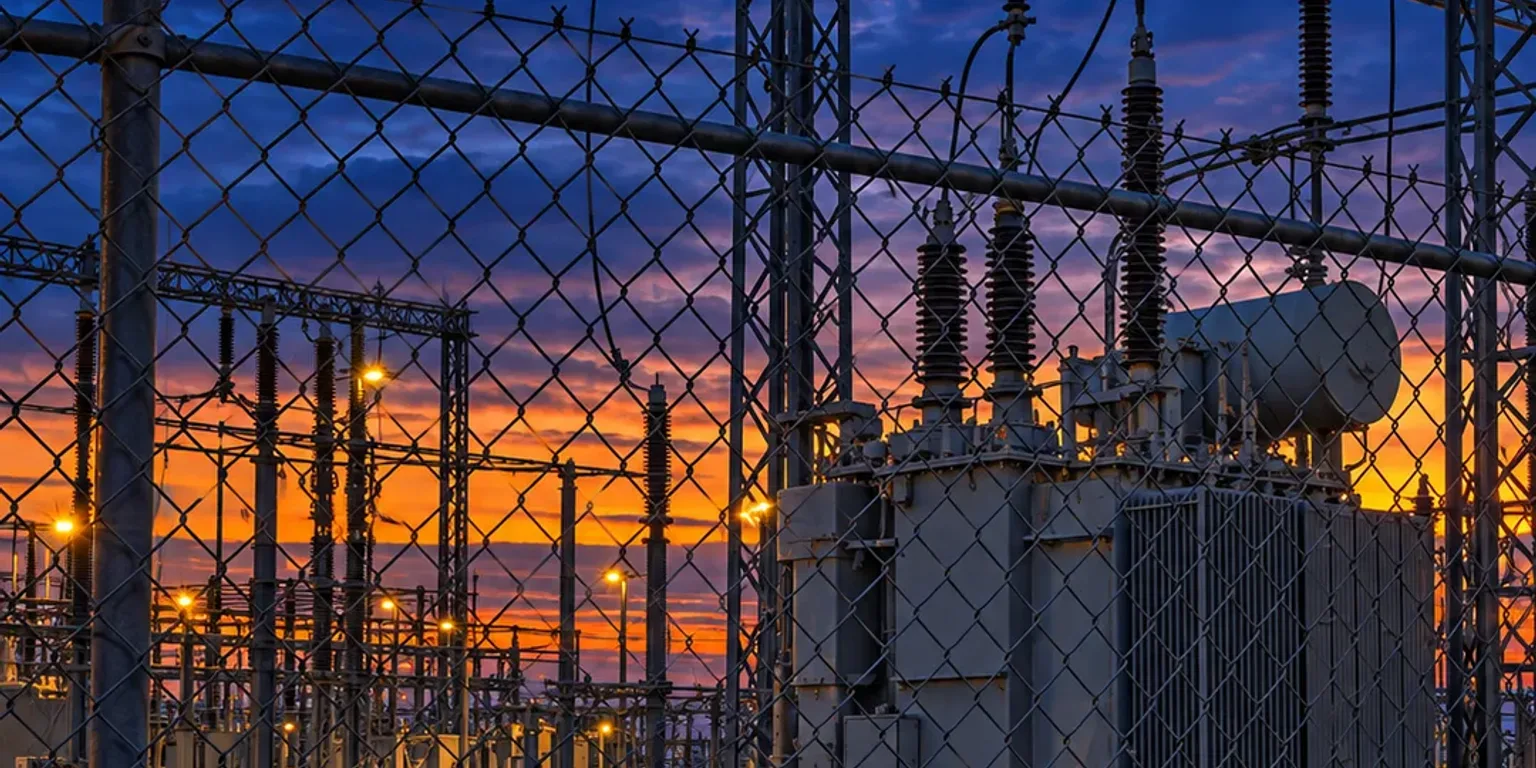
Power plants use the effect to send electricity over distance. Most plants stand far from towns and cities, so transformers raise voltage to cut waste in high voltage transmission lines. Once the power reaches areas that need it, transformers at a substation bring it down to lower voltage that is safer and easier to handle. From there, feeder lines carry it out for distribution, and smaller transformers bring it down to the level used by factories, businesses, and homes.
Substations also carry gear that steadies the electricity and switches that separate faults on the lines.
Questions people ask
Why does higher voltage make long-distance transmission more efficient?
Raising the voltage lets the same amount of power flow with less current. Less current means less energy is wasted as heat in the wires, so more of the electricity made at the plant actually reaches the city.
Why is lower voltage safer to use at home?
Higher voltage can push more current through the human body, arc across longer gaps, and break through insulation more easily. That is why homes get lower, more practical voltages after the power leaves high-voltage transmission lines.
If the grid uses AC, why do batteries and electronics use DC?
Many of the devices in your home actually run on direct current. Phone chargers, laptop power bricks, and LED drivers convert the alternating current from the outlet into steady direct current for the electronics inside.