The Invaders Who Shattered Civilization May Have Been Starving Refugees
Egypt called them unstoppable monsters, but drought, famine, and failed harvests point to desperation.
 Fall of Civilizations · 2. The Bronze Age Collapse - Mediterranean Apocalypse
The Sea Peoples who supposedly helped destroy civilization around 1200 B.C. may themselves have been starving refugees. That is the argument Paul Cooper makes in his account of the Bronze Age collapse.
The Sea Peoples were loose bands of seaborne raiders who struck the eastern Mediterranean around 1200 B.C., and the Egyptian pharaoh Ramses III was their most famous enemy. In ancient accounts, they play the monsters. Cooper says even the name evokes terror, that the Sea Peoples sound like "monsters rising up from the deep to wreak devastation on the land."
Ramses encouraged that view. In an inscription at his memorial temple at Medinet Habu, he wrote, "No lands can stand before their arms," and said they desolated the peoples they touched until the land "was like that which has never come into being."
Cooper argues that fear hid desperation. Around 1200 B.C., the eastern Mediterranean grew suddenly dry and arid, he says. Pollen shows that plants suited to desert spread, and sediment cores and chemical traces in Israeli cave formations show far less rain than in earlier centuries.
The written records point to hunger. A Hittite queen sent a short message to the Egyptian pharaoh, "I have no grain in my lands." A servant writing to his master, a merchant in the trading city of Ugarit, warned of famine in his house and wrote, "we will all die of hunger if you do not quickly arrive here."
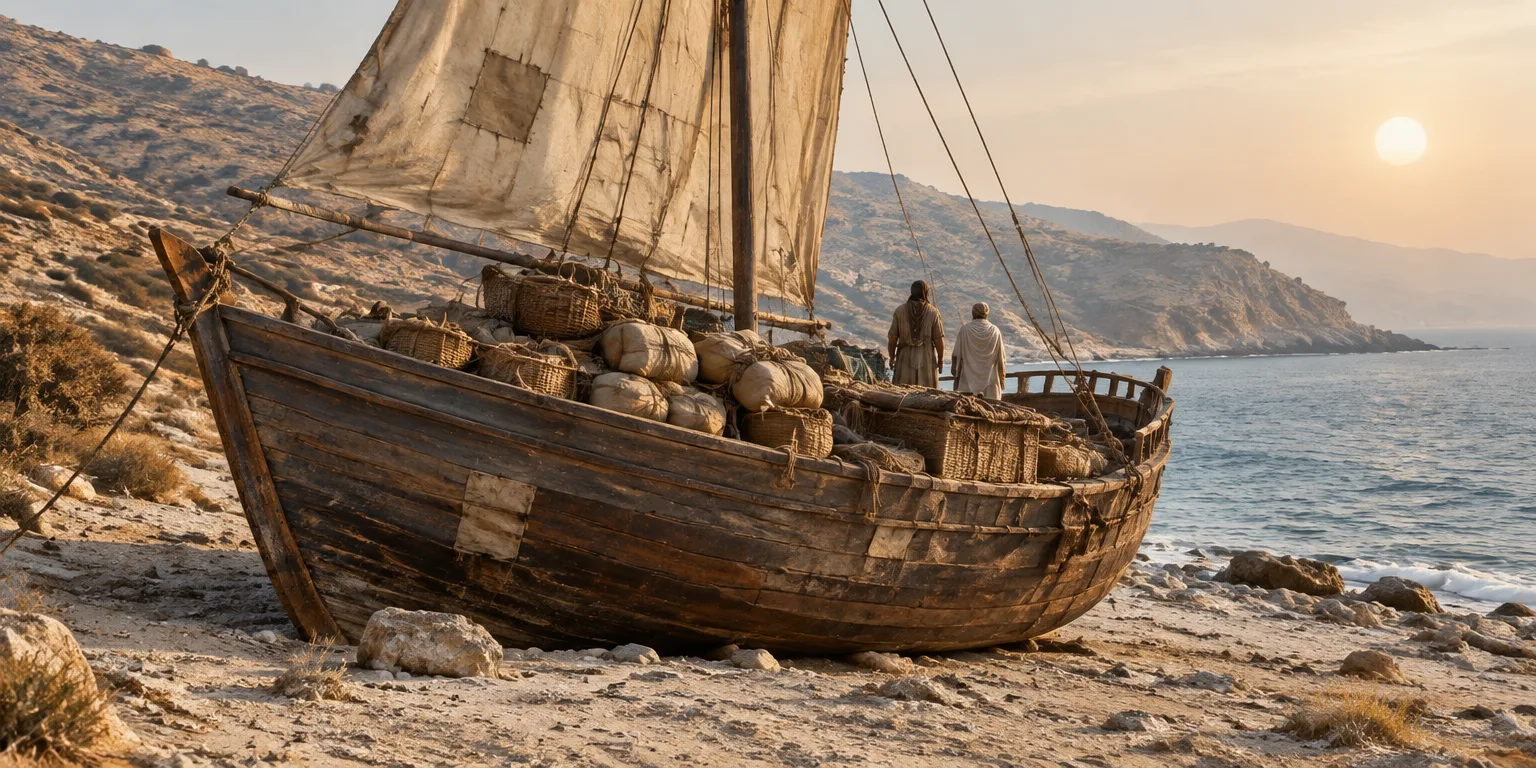
Picture living on a Mediterranean island such as Sardinia or Sicily, watching the sun turn pale through haze, watching crops fail one year and then again the next, while hungry newcomers arrive from lands even worse off. People do what islanders do best. They build ships and sail in search of a place where the sun still shines, picking up more desperate people as they go, stealing from ships and villages to survive. His phrase for them is "a roving band of refugee warriors roaming the oceans in search of somewhere to call home."
If he is right, the monsters in Egypt's records were desperate migrants looking for a new home.
Questions people ask
Do we know where the Sea Peoples came from?
No one knows for sure. Egyptian carvings list groups with names like the Peleset, Shekelesh, and Shardana, and scholars have guessed origins from Sardinia and Sicily to Libya and the Aegean. The lack of a clear homeland, language, or leader is one reason the refugee theory is appealing.
Did Egypt actually defeat the Sea Peoples?
Yes, at the Nile Delta around 1177 B.C. Ramses III set an ambush with archers on the banks and men hidden in reeds, then hit their ships with arrows, spears, and grappling hooks. Egypt survived, but with trade broken it still slid into hunger, strikes, and decline.
What happened to the Sea Peoples afterward?
They did not vanish. Some settled on the southern coast of what is now Israel and Gaza. Known to the Hebrews as the Peleset, or Philistines, they gave their name to the region later called Palestine.