The Last Jews of a Nazi Ghetto Dug a 600-Foot Tunnel With Spoons
On a rainy holiday eve in 1943, about 250 prisoners crawled one by one toward the forest and the partisans.
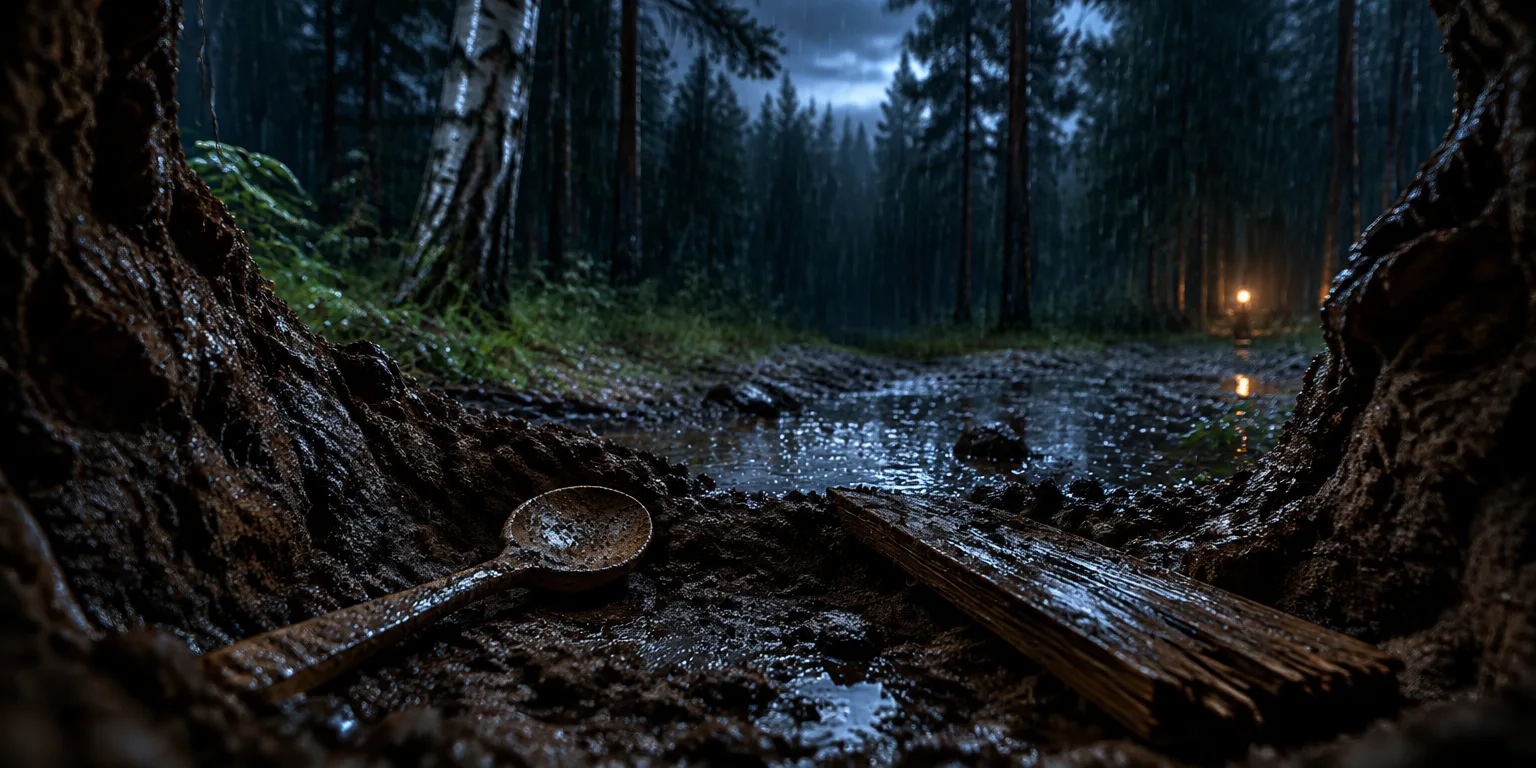
After a long day of forced labor, the prisoners went back to work. Night after night for three months, about 250 Jews held in the Novogrudok ghetto dug with spoons and pieces of wood they had pocketed from work sites. They hid the dirt in sacks tucked into hollows of the building where they were held, lengthening a passage so narrow that only one person could crawl through at a time.
One of the diggers was Rae Kushner, then about 20, the daughter of a local shopkeeper who sold hats and coats. Born in 1923 in Novogrudok, then in northeast Poland, she had already watched her town be destroyed twice. After the Soviets seized her family's stores in 1939, the Nazis invaded in June 1941, murdered 50 Jewish professionals in the town square while an orchestra played and soldiers danced, and forced Rae and other girls to wash the blood from the stones and load the bodies into wagons.
This is the story of what happened when there was almost no one left to save. By the summer of 1943, after successive roundups and killings, only a few hundred Jews remained in Novogrudok. Instead of waiting to be liquidated, they dug 600 feet toward the woods and toward a rumor, that 25 miles away in the Naliboki Forest a man named Tuvia Bielski was sheltering any Jew who could reach his partisan camp.
Rae knew what capture meant. At the courthouse, the Nazis had lined up 7,000 Jews and sent each one left to a labor camp or right to die. Her family had been sent right, then pulled back when a German soldier asked for furriers to make winter hats for the campaign against the Soviets. Her older sister Esther was not saved, and was machine-gunned into a pit with 5,000 others. Her younger brother Chanon survived being shot in the leg by a drunken soldier on New Year's Eve in 1941, and her mother was murdered in February 1943 while her husband and children watched through a window.
On the eve of Rosh Hashanah, in a torrential downpour, the tunnel was ready. The last Jews of the ghetto crawled out one by one beyond the walls. When Chanon crawled out, he lost his bearings in the downpour, was caught, and was shot and killed.
Rae, her sister Lisa, and their father made it to the forest and hid for 10 days in the continuing rain. They were found there by the Bielski Partisans, the Jewish armed resistance group that had heard of the escape and come looking for survivors. The Kushners lived with the partisans for nine months, where Rae met Yossel Berkowitz, later known as Joseph Kushner, a tailor's son educated only to the fifth grade who had spent three winters sheltering in a pit in the woods, armed with a pistol and hidden under branches.
When Soviet soldiers finally pushed the Nazis out and marched the 1,200 people in the camp back to Novogrudok, there was almost nothing to return to. "You cannot imagine, I fainted twice," Rae later recalled. "We all wanted to run away from our town."
Questions people ask
Who were the Bielski Partisans?
They were a Jewish resistance group led by Tuvia Bielski and his brothers in the forests of what is now Belarus. They sheltered more than 1,200 Jews, functioning as a hidden forest community with workshops, schools, and armed defenders, and are credited as the largest Jewish rescue effort by Jews during the Holocaust.
What is Rosh Hashanah?
It is the Jewish New Year, a two-day holiday in early fall that begins a ten-day period of reflection ending with Yom Kippur. Families gather for festive meals, prayer, and sounding the shofar, a ram's horn. In 1943, its eve fell in late September.
How many people escaped through the Novogrudok tunnel?
Historians generally count about 230 to 250 escapees, with about 170 to 180 reaching the Bielski camp or other partisan groups. Dozens were caught and killed in the immediate pursuit, and others died later in the war. The escape is considered one of the largest and most successful ghetto breakouts of the Holocaust.