The Man Who Knows AI Is Just Math Warns It Could Doom Us
He helped perfect the math behind modern AI, yet his talk of a conscious machine arms the fundraisers.
 davidwsilva.substack.com · I'm Sorry to Burst Your Bubble: You Are Being Fooled About AI, and You Will Soon Feel Really Stupid
Geoffrey Hinton, the computer scientist known as the Godfather of AI and winner of the 2024 Nobel Prize in Physics, has warned that the technology he helped create could pose an existential risk, meaning a threat to humanity's survival. He has spoken in ominous tones and suggested that something like consciousness might be emerging in the machines.
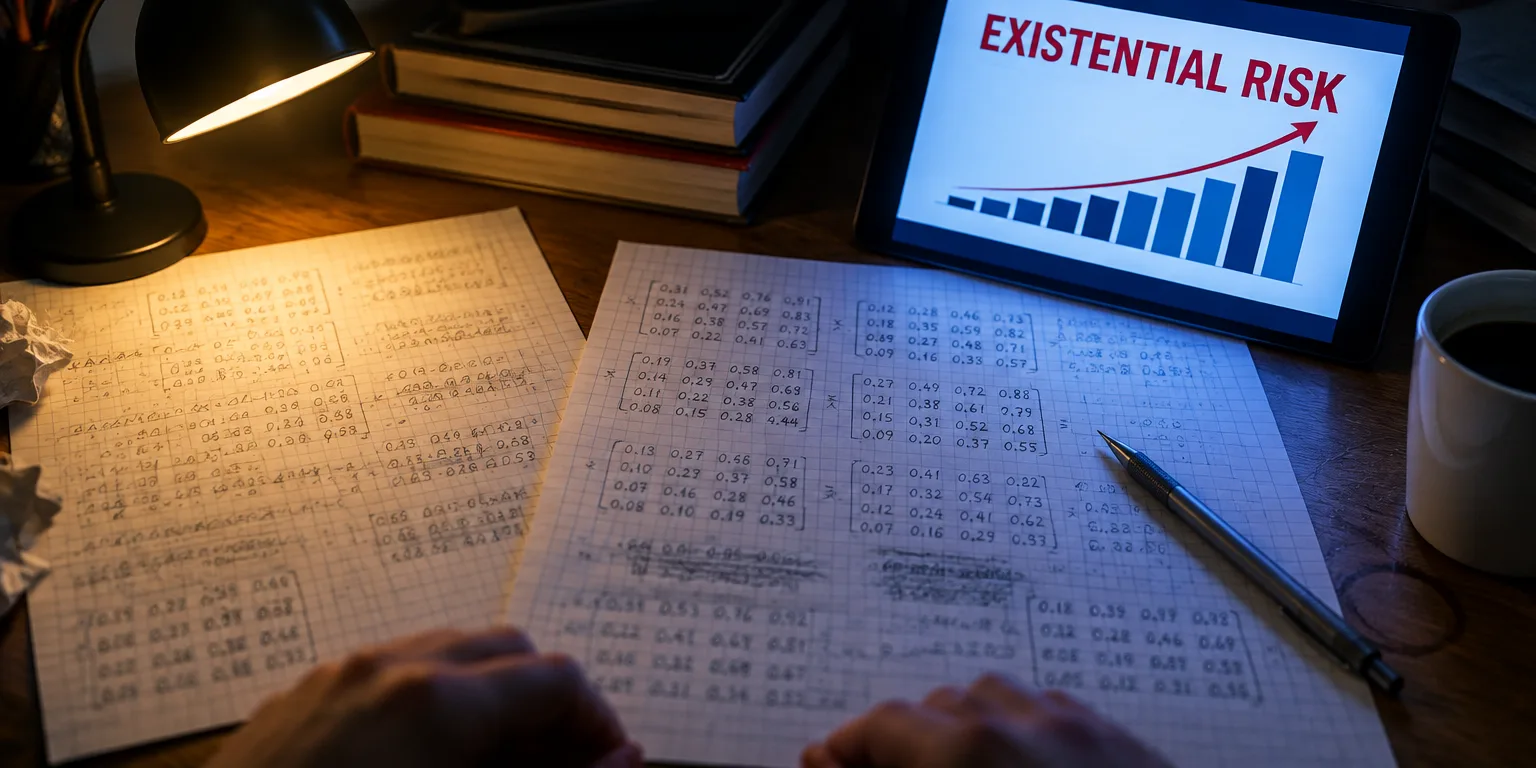
An essay argues that this creates a paradox: the man who best understands the math is the one warning of a mind inside it. Hinton, with colleagues, helped popularize a training method called backpropagation and advanced methods called gradient descent, ways for software to correct its errors by making small adjustments to millions of internal numbers.
Because of that history, the essay says, Hinton knows better than almost anyone that these systems run on number-crunching and statistical tuning rather than a conscious mind with intentions of its own. His own work on the machinery is, in this view, the strongest reason to doubt his most frightening predictions.
The essay explains the shift in human terms. "Brilliance does not make someone immune to narrative capture, to social pressure, to the seduction of relevance in a world that suddenly cares very much about your life's work." By writing that "Every human genius is more human than genius," the essayist means it as compassion, not insult, that even Hinton can be fallible and swept up by attention.
The effect, the essay argues, is that Hinton's fear helps the hype. His warnings add weight to the fear around AI and give investors and founder fundraisers the thrill they use to keep the funding machine running. "Even the godfather of AI is scared!" the essay notes. In the essayist's words, "What a pitch deck slide that makes."
Questions people ask
What did Hinton actually invent?
Hinton helped make neural networks practical. With colleagues in the 1980s, he popularized backpropagation for training multi-layer networks and advanced methods for adjusting weights to reduce error. That work later earned him a share of the 2018 Turing Award and the 2024 Nobel Prize in Physics.
What is matrix multiplication, in plain terms?
It is arithmetic with grids of numbers. An AI model stores knowledge as large tables of numbers called weights, and answering a prompt means multiplying and adding those tables over and over. Learning means nudging those numbers slightly after each mistake, millions or billions of times.
Has Hinton said he regrets his work?
He has said he worries about where it could lead, including misuse, job disruption, and future systems that might evade control. He has also said he does not regret the science itself and that much of the near-term concern should focus on practical harms rather than only far-off scenarios.