The Morning He Left for Dallas, Kennedy Left a Note About Secret Peace Talks With Cuba
After the missile crisis, he moved from Cold War hawk to peacemaker, and his own generals and spies were furious.
 Who Killed JFK? · "Shots Have Been Fired"
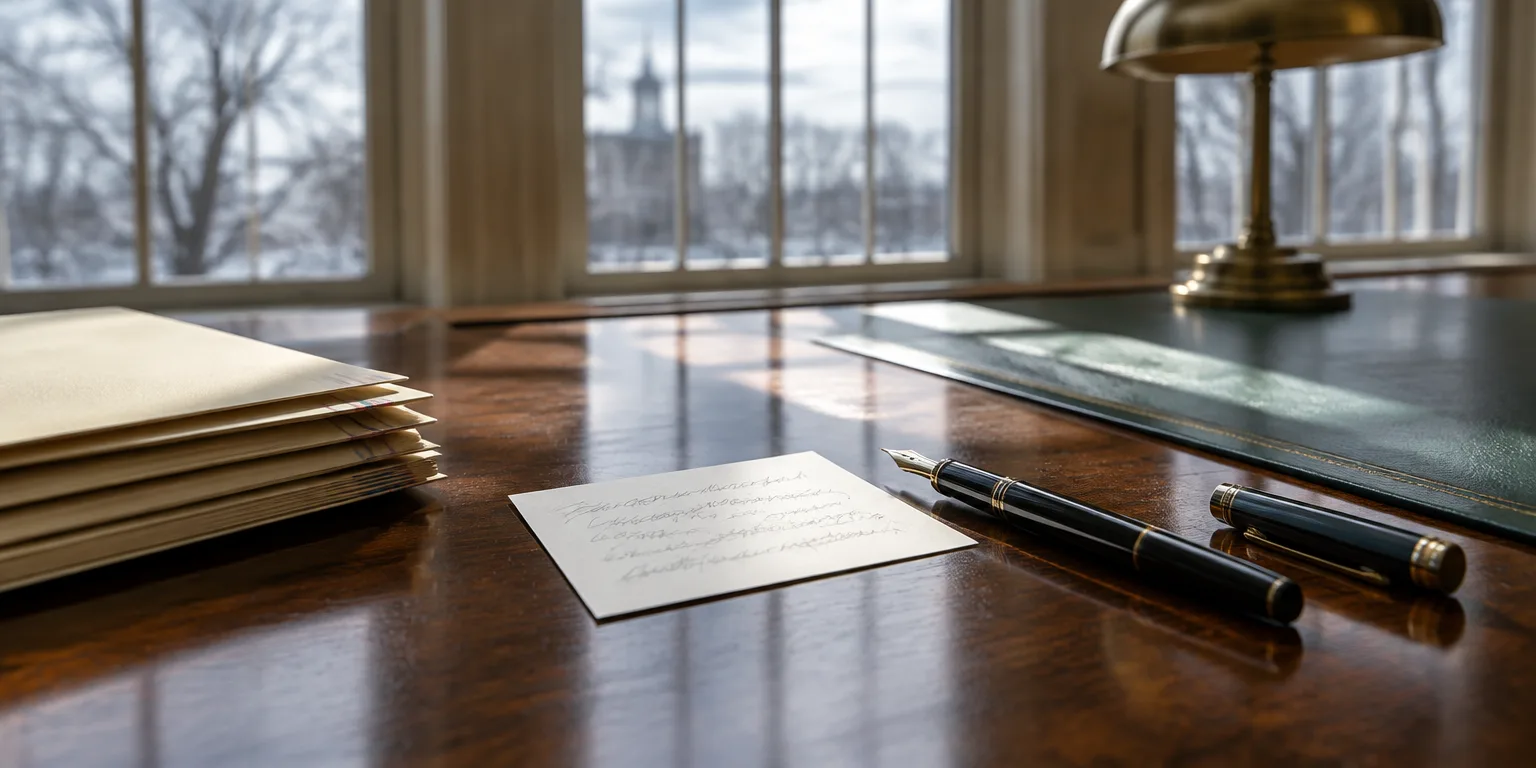
On the morning of November 22, 1963, President John F. Kennedy left Washington for a political visit to Dallas. On his White House desk, he left a reminder to himself. The note said to check in with William Atwood, a deputy American ambassador, about the Cuba initiative.
It was a small piece of paper for a large idea. Two weeks earlier, on November 5, Atwood had received a secret invitation from Fidel Castro, the revolutionary leader of Cuba, to talk about a possible reconciliation between Washington and Havana. During Atwood's call about the invitation, a voice on the recording asks about getting "that one off the payroll," meaning Atwood would go unofficially. These would be secret conversations.
The note was the latest sign that Kennedy had changed from the candidate who had campaigned on standing firm against communism. The president elected in 1960 had run as a conventional Cold War politician, determined to answer the question of what to do about Cuba, an island 90 miles off Florida.
The Cuban Missile Crisis had altered him. After 13 days of standoff, the crisis ended through compromise and negotiation. The United States agreed to remove its missiles from Turkey, and Soviet leader Nikita Khrushchev stood up to his own hard-liners and agreed to take Soviet missiles out of Cuba.
After that, Kennedy began to argue that the Cold War had to end. In June 1963, he gave what became known as the peace speech at American University in Washington. It was rendered into Russian and aired around the Soviet Union, and Khrushchev called it "the greatest speech by any American president since Roosevelt." Kennedy planned to bring 1,000 service members home from Vietnam, drafted a plan for complete withdrawal by 1965, and approved a partial halt to nuclear testing.
That shift infuriated his own national security leadership. The Joint Chiefs of Staff were furious about his handling of the crisis, and opposition inside the CIA was the fiercest. Meanwhile, Castro remained in charge, a situation the Joint Chiefs regarded as "intolerable."
Kennedy went ahead on his own. He was already holding private contacts with Khrushchev, and now he was planning to do the same with Castro, running directly against what generals and intelligence officials preferred. He left the note about Atwood on his desk, and then he boarded the plane for Dallas.
Questions people ask
Who was William Atwood?
He was an American journalist turned diplomat who served as ambassador to Guinea and later to Kenya. In the fall of 1963 he was acting as a back channel to Castro through intermediaries at the United Nations. After Kennedy's death, the secret Cuba talks were dropped.
What was the Cuban Missile Crisis deal?
In October 1962, American reconnaissance found Soviet nuclear missiles being installed in Cuba. For 13 days the world faced possible nuclear war until Kennedy and Khrushchev reached a public and secret deal: Moscow withdrew the missiles from Cuba, and Washington pledged not to invade Cuba and later removed comparable American missiles from Turkey.
Did the U.S. and Cuba make peace after Kennedy?
No. President Lyndon B. Johnson did not pursue the opening, and relations remained hostile. The United States kept its broad trade embargo on Cuba, which is still largely in place, and Washington and Havana did not restore full diplomatic relations until 2015.