The Most Average Person on Earth Is a 31-Year-Old Man From India
He speaks Mandarin, makes about $660 a month, and offers a useful way to picture humanity.
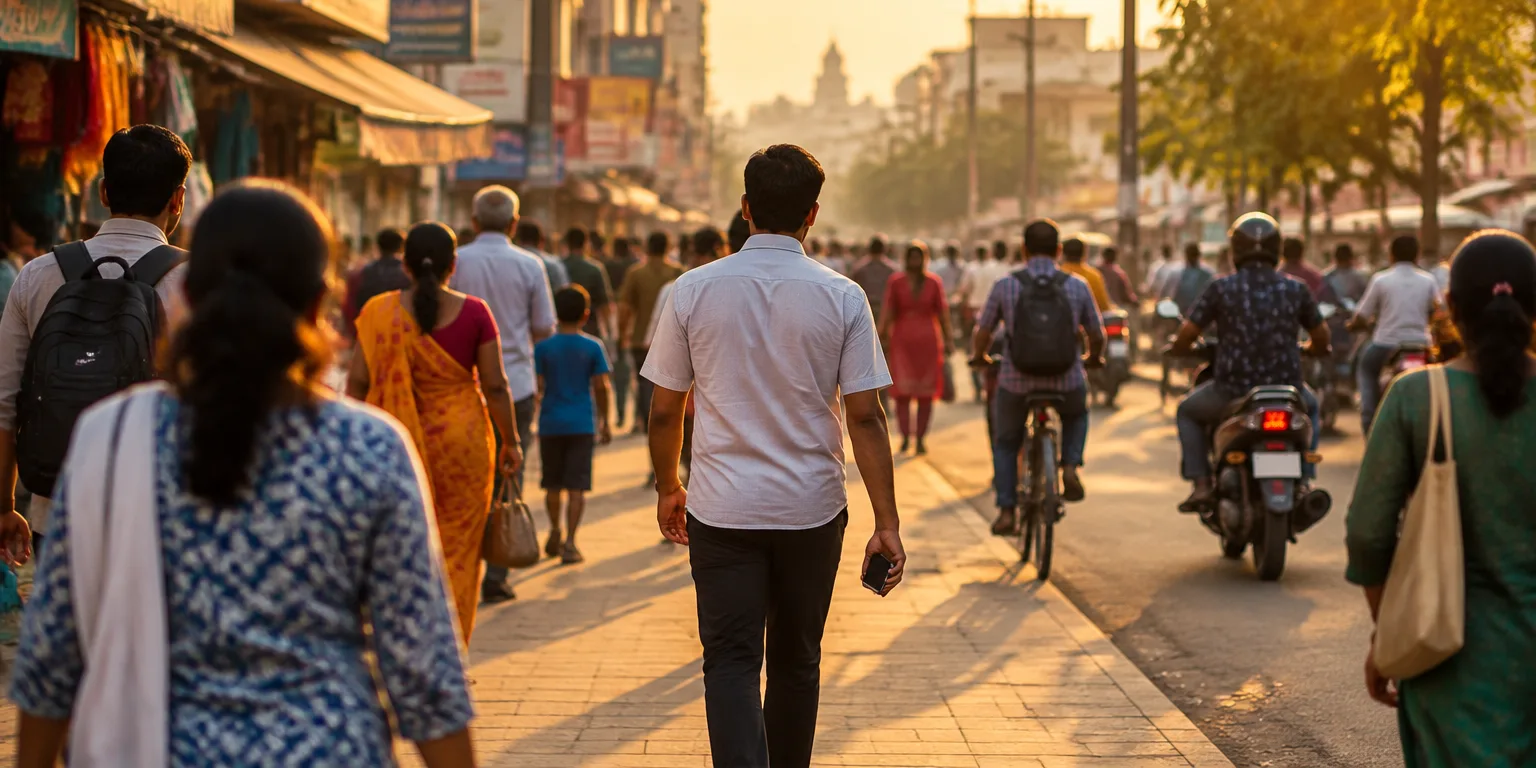
 Kurzgesagt – In a Nutshell · The World’s Most Average Person
He would be easy to miss in a crowd. He just turned 31. He stands 165 centimeters tall, about five feet five inches, and weighs 62 kilograms, or about 137 pounds. He has black hair and brown eyes.
He is not a real person. He is what you get when all eight billion people in the world are blended into one statistically average human being.
That blending starts with sex and nationality. Men slightly outnumber women around the world, so the average person is male. Until recently, he would have come from China. That changed in 2023, when India moved ahead of China in population to become the most populous country, so now he comes from India.
Language is counted separately. Mandarin has the most people who speak it as a first language, so Mandarin is the language he speaks, even though the nationality average now points to India.
He earns about $22 a day, or about $660 a month. That is the world's average income per person. Many people earn far more, and many earn far less.
He owns a smartphone, as about 60 percent of humanity does. Only about one person in five owns a car, so he has none.
The average comes out as a 31-year-old man from India, 165 centimeters tall, with a phone in his pocket and no car.
Questions people ask
Why would an Indian man speak Mandarin?
He would not, in real life. The average person is a composite, not an actual individual, so traits are stacked independently. Mandarin is the most common first language in the world, spoken by around 900 million people, so it wins the language average even though the nationality average now points to India.
How is the $22 a day figure calculated?
It is roughly the world's total income divided by its total population, expressed per person per day. That comes to about $8,000 a year, or $660 a month. It does not mean most people earn exactly that, since incomes are highly unequal, but it is the mathematical middle of humanity.
Why does he own a smartphone but not a car?
Smartphones have spread far faster than cars because they are cheaper, do not need roads or fuel, and provide access to banking, information, and work. About 60% of people globally own one. Cars remain expensive to buy and run, so only about one in five people owns one.