The Most Useful Robots Will Not Look Like Us
For factory-scale jobs, a simple machine built for one task beats a line of humanoids, says Uber founder Travis Kalanick.
 David Senra · Travis Kalanick, Founder of Uber & Atoms
Travis Kalanick, the founder of Uber who now runs a robotics company called Atoms, says the robot future will not look like us. His company is betting on physical automation that transforms one industry at a time with specialized machines, not humanoids.
The logic comes down to scale and setting. A humanoid, a machine with a head, arms, and legs that moves like a person, makes sense in a home, which is designed for humans. There, the jobs are small and varied: folding clothes, taking out the trash, and washing dishes. No one would pay tens of thousands of dollars for a robot that only folds clothes, Kalanick says, because that is not a big enough problem. A home robot has to do many different things, so a general, human-shaped form helps.
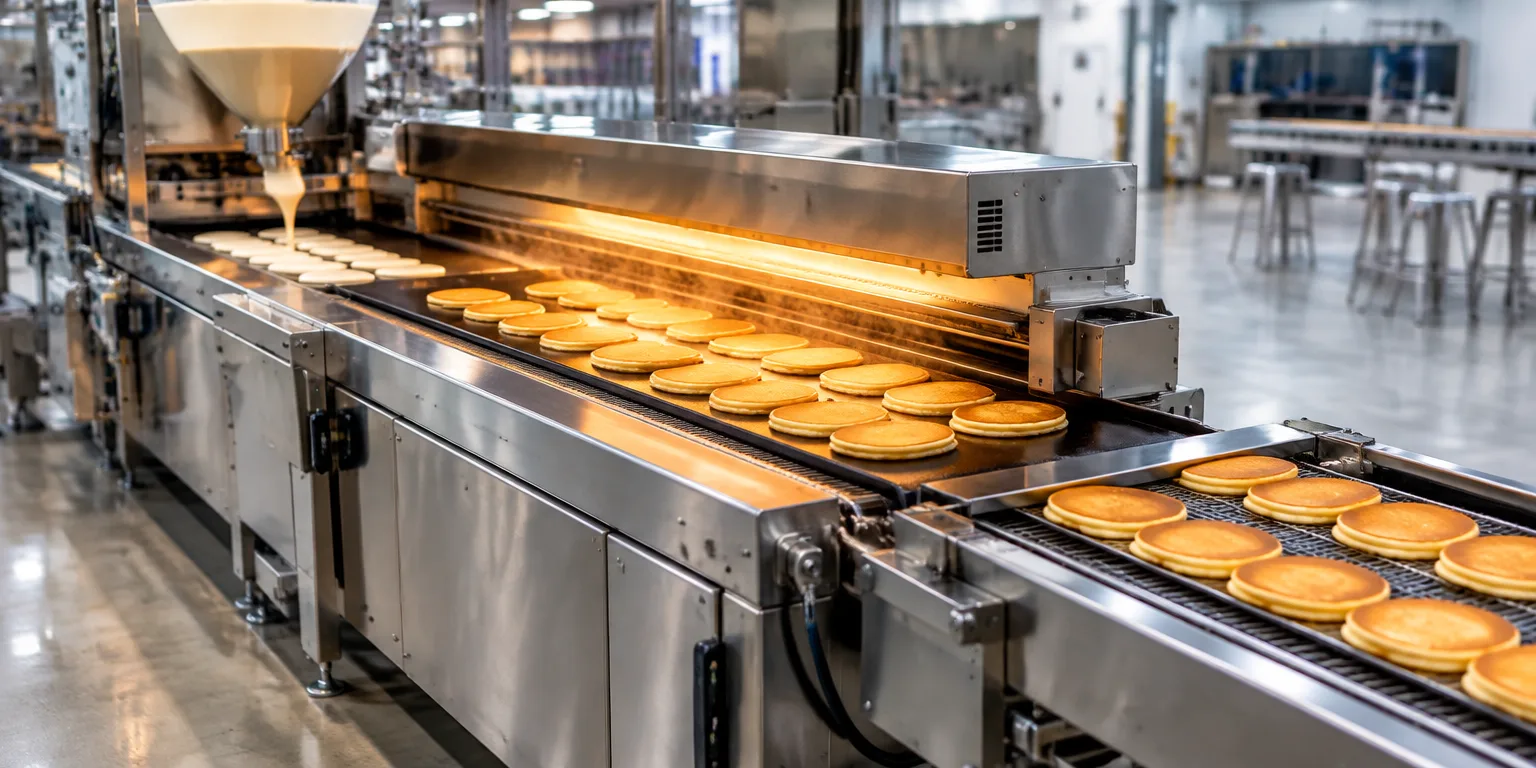
A factory is the opposite. If you need to make pancakes once on a Sunday, a human-like helper is fine. If you need to make 1,000 pancakes an hour, a humanoid would cook the way a person does, one at a time. Kalanick estimates you would need about 100 of them standing in a row. The better answer is a simple iron apparatus, already hot, where batter is pushed in one side and finished pancakes come out the other, perhaps 100 every few minutes. The same applies to driving: you would not put a humanoid behind the wheel to move a car down the street.
That is why Kalanick talks about gainfully employed robots, machines with a full-time job. Humanoids will get there, he says, but right now their public demonstrations are dancing and martial arts, and Beijing has even held a humanoid Olympics with a marathon. They are not ready for industrial work. For heavy, repeated work, he jokes about putting wheels on them, because, as Kalanick put it, "having a purpose-built machine for the task is important."
Questions people ask
Why not just use humanoids everywhere if they can do anything a person can do?
Because a generalist is slower and more expensive per task. A humanoid needs hands, eyes, balance, and software to handle many jobs, while a single-purpose machine can be simpler, faster, sturdier, and cheaper to run around the clock.
How much does a humanoid cost compared with a specialized machine?
Today's most capable humanoids typically cost tens of thousands to hundreds of thousands of dollars, plus maintenance and programming. Prices are falling, but they remain far more expensive than a single-purpose machine built from steel, heaters, motors, and conveyors.
What does “gainfully employed robots” mean?
It is Kalanick's phrase for a robot that earns its keep in steady, productive work, rather than doing demonstrations. Examples include warehouse carriers, mining trucks, or cooking equipment that perform the same valuable task thousands of times.