The New Orleans Canal Walls Were Designed for Soil Stronger Than Tests Showed
The samples came from the firmest ground, under the old levees, and designers still assumed even more strength.
 Practical Engineering · The Mind-Blowing Flaw That Flooded New Orleans
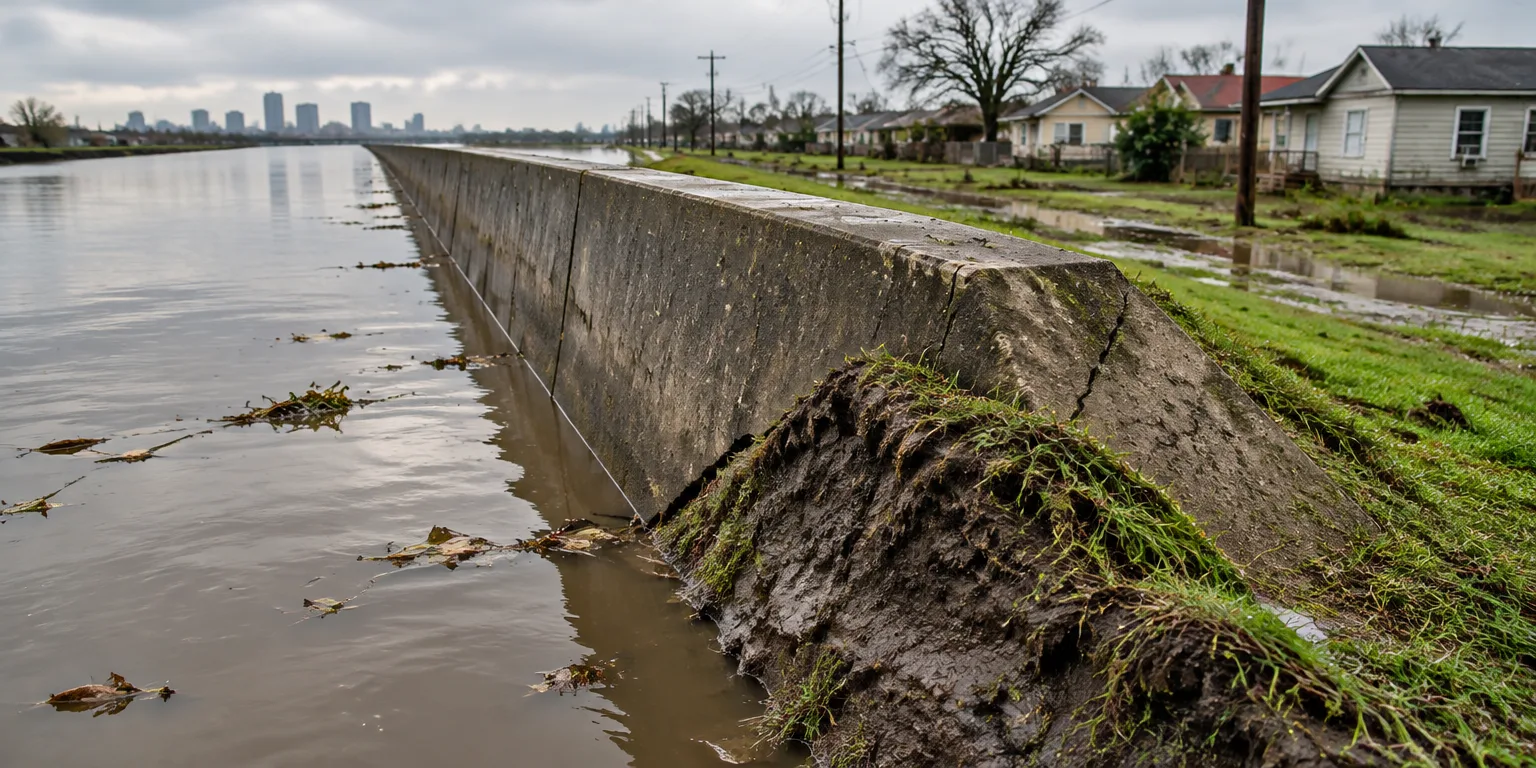
The floodwalls along New Orleans' outfall canals were designed for soil stronger than the soil they stood on in most places. After Hurricane Betsy, the Army Corps of Engineers drilled hundreds of test holes and measured soil strength in a lab, then picked a strength value for the design that was higher than most of those test results.
The sensible approach when building miles of levee, the earthen ridges that hold back water, is to design for the weakest spots, because getting it right in the weak places protects the rest too. Here the Corps did the opposite.
Those tests came from along the center beneath the old embankments, since the load above had squeezed the soil firmer. Soil outside that strip was much weaker. When Hurricane Katrina filled the canals, the walls bowed outward into that weaker ground and failed at water levels they were supposed to contain.
Questions people ask
How does water weaken the soil under a levee?
Soil gets its strength when grains press and lock together. When water seeps into the foundation, pressure in the pores pushes the grains apart, reducing friction and letting the mass shear or slide under load.
Why did New Orleans have canals that could bring seawater inland?
The city sits in a low bowl and pumps rainwater out through three outfall canals to Lake Pontchartrain. Because that lake is an estuary connected to the Gulf of Mexico, a storm surge could push seawater up the same canals, miles inland toward the city.
What changed in the flood defenses after Katrina?
The Army Corps of Engineers built huge gates at the mouths of the canals, raised and strengthened levees, removed many I-Walls, and added a storm surge barrier in Lake Borgne. It also rewrote its levee design manual and helped start national levee safety programs.