The Rookie on the Oil Rig Saw What His Commanders Missed
Staring hard narrowed his leaders' vision to 20 degrees. Stepping back showed the rookie the whole rig.
 Andrew Huberman · Essentials: How to Become Resilient, Forge Your Identity & Lead Others | Jocko Willink
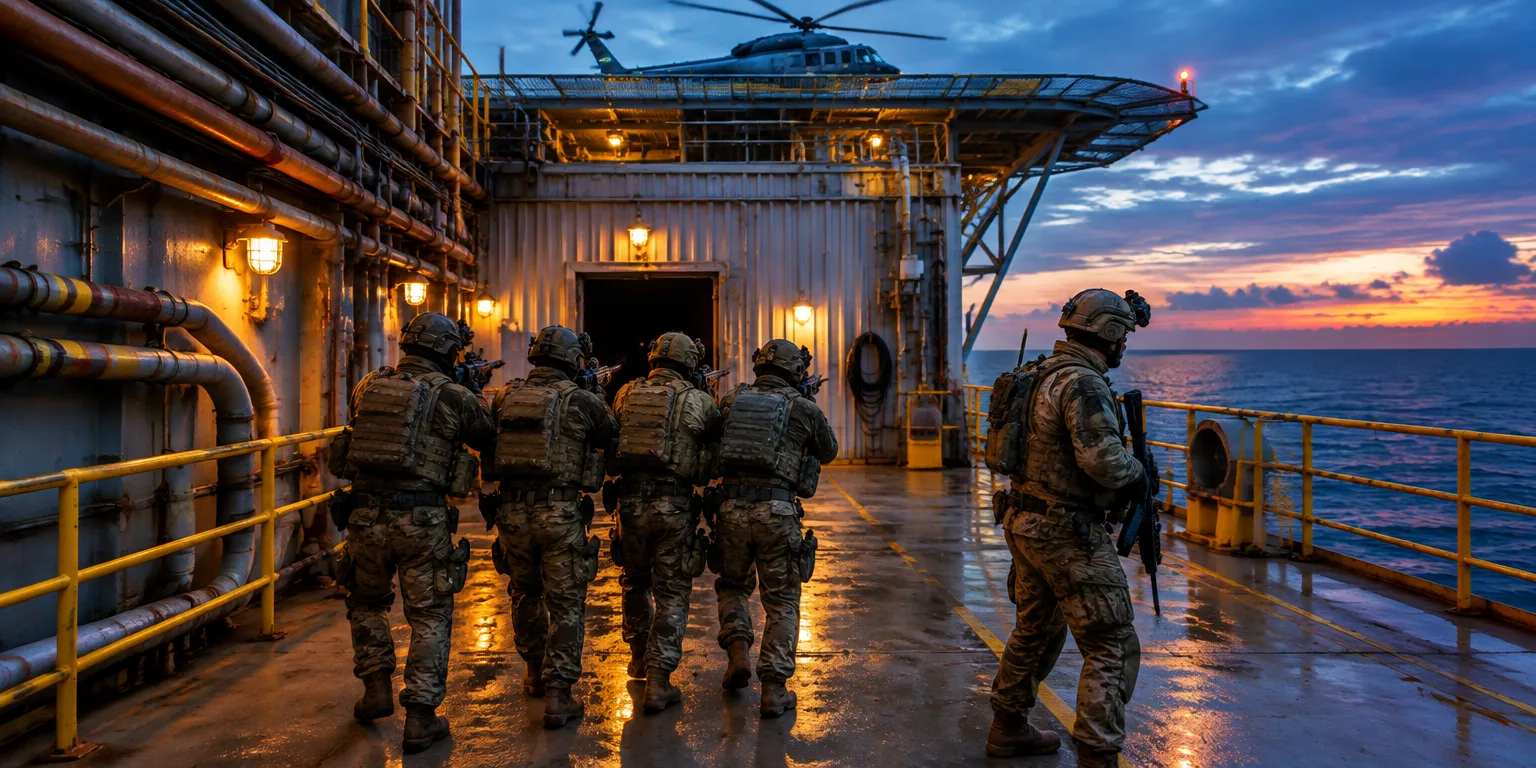
Jocko Willink was the last guy who should have been giving orders. It was the 1990s, on a training mission aboard an oil rig, and Willink, a former Navy SEAL then at the start of his career, was the youngest and most junior man in his platoon.
The platoon stood shoulder to shoulder in a skirmish line, a spread out line of troops meant to move across an area together, facing a wide section of the rig they were supposed to clear. Each man stared down the sights of his weapon, waiting for a leader to say what to do. Willink waited five seconds, then 10, then 20. After about 30 seconds, which he said felt like an eternity, no one had spoken.
Willink finally stepped off the line and looked left and right. Every veteran around him, the platoon commander, the platoon chief, the leading petty officer, and the assistant platoon commander, was still looking through his sights. That gives a shooter a field of view of only about 20 degrees, a narrow tunnel. By stepping back, Willink could suddenly see the whole scene.
New guys are supposed to keep their mouths shut, and Willink knew it. But since no one else was talking, he gathered his courage and shouted a basic tactical order, "Hold left, clear right." It was not a brilliant maneuver, just the normal call for that situation. He braced to be told to shut up.
Instead, the line repeated him. "Hold left, clear right. Hold left, clear right." The platoon moved up and cleared the structure to the helicopter deck on top. In the debrief, Willink expected a scolding. The platoon chief said instead that it had been a good call down on the lower deck.
Afterward, Willink asked himself the obvious question. If he was the least experienced man there, why had he seen it first? His answer was physical. He had taken a step back, broadened his vision, and taken a breath before he spoke, and that let him think more clearly than men locked into a narrow focus. He recognized that move as detachment.
He began using the same habit in land warfare training, in urban combat training, and later in conversations with people.
Questions people ask
What does Jocko mean by detachment?
Detachment means stepping back mentally as well as physically so you can see the full situation instead of staying locked on one narrow spot. For Willink, it started as literally stepping off the line and broadening his field of view before he decided what to do.
Was this oil rig mission real combat?
No. It was training in the 1990s, not combat. Willink said he later used the same habit in land warfare training scenarios, in urban combat training scenarios, and then in conversations with people.
How can a regular person practice this without a weapon or a platoon?
Take a mental step back from the problem so you can look at it and assess how to solve it, instead of staying inside it. Then take a breath before you speak, the way Willink took a breath before he made his call, so you respond clearly.