The Salsa Almost Nobody Buys Is Why You Keep Coming Back
The jars that take a month to sell take up the same warehouse space as the ones that sell in a day, but stores will take the loss to keep you coming back.
 Wendover Productions · The Incredible Logistics of Grocery Stores
The least popular salsa in the store may be the most important bottle on the shelf.
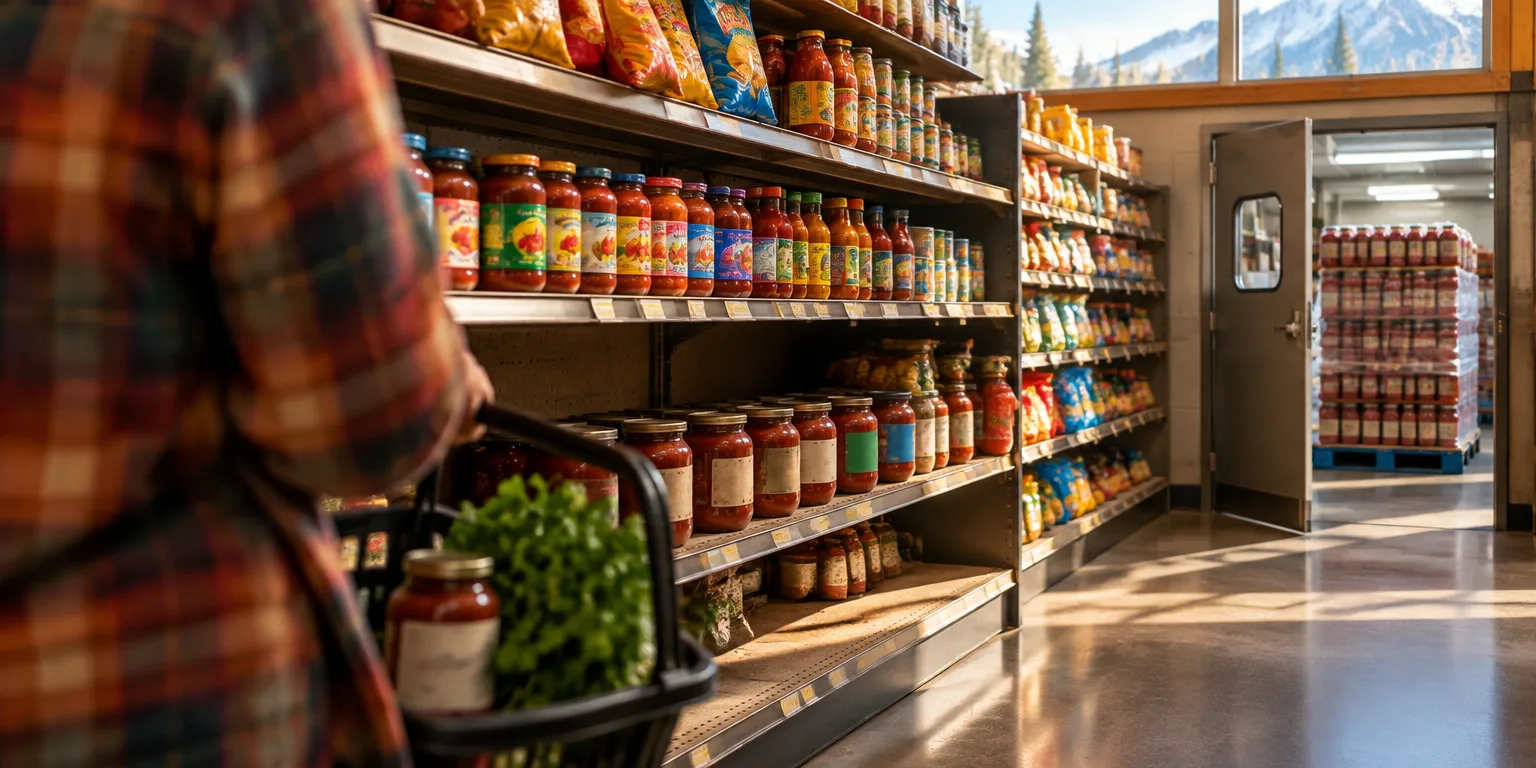
A supermarket can carry dozens of salsas because one bottom-shelf brand is probably the one jar a particular shopper loves most. The City Market in Glenwood Springs, Colorado, might stock it when the nearby Walmart or Target does not. Even if that shopper can find the rest of their groceries at a competitor, they keep coming back to City Market for that one jar, and fill the rest of the cart while there.
That loyalty is why stores willingly stock what the industry calls slow-moving inventory, products that sell in a trickle rather than a flood, even if they have to sell them at a loss. Supermarkets treat those niche foods as differentiators, the small differences that decide where a household shops week after week.
They are a headache behind the scenes. Grocery distribution centers are built to handle goods a full pallet at a time, taking in full pallets, storing them, and breaking them into smaller quantities for each store. That system is efficient only if pallets turn quickly.
If each store sells only a dozen jars of that niche salsa per week, it can take the whole company a long time to sell off one warehouse pallet. On the shelves where orders are assembled, that pallet occupies the same amount of space whether it empties in a day or in a month. Every extra slow seller therefore demands more storage space, and forces workers in manual warehouses to walk farther to assemble each store's order.
Walmart learned how bad the tradeoff can be. It trimmed its assortment by 11%, but soon undid the change after the move hurt profits, despite making warehouse work simpler. Fewer choices made the warehouse work easier, but hurt the bottom line.
Questions people ask
Why don't warehouses just order a smaller amount of a slow seller?
They sometimes do, but it takes a separate system. Chains like Kroger and H-E-B have built dedicated distribution systems for slow-moving inventory that can ship less than a box at a time. That approach needs enough scale to work, which is why Kroger has set it up in densely populated areas of the East Coast but not yet in the more sparsely populated Rockies region served by King Soopers and City Market.
How can a store make money selling a product at a loss?
It does not need to profit on that jar alone. If the promise of finding a favorite salsa, sauce, or snack brings a shopper into the store every week, the profit comes from the milk, produce, meat, and other staples bought on the same trip. The niche item works like an anchor for the whole basket.
Why is losing one favorite item enough to make someone switch stores?
Because a regular grocery trip depends on knowing the store will have what you want. If a favorite is repeatedly missing, there is less reason to keep making that store the default and more reason to try the competitor. Research on out-of-stock items found that on the third time a desired item is missing, shoppers go to another store 70% of the time.