Same Steady Walk May Plateau Over Time
A coach points to early Japanese research in which women who alternated harder and easier walking gained more aerobic fitness than steady walkers.
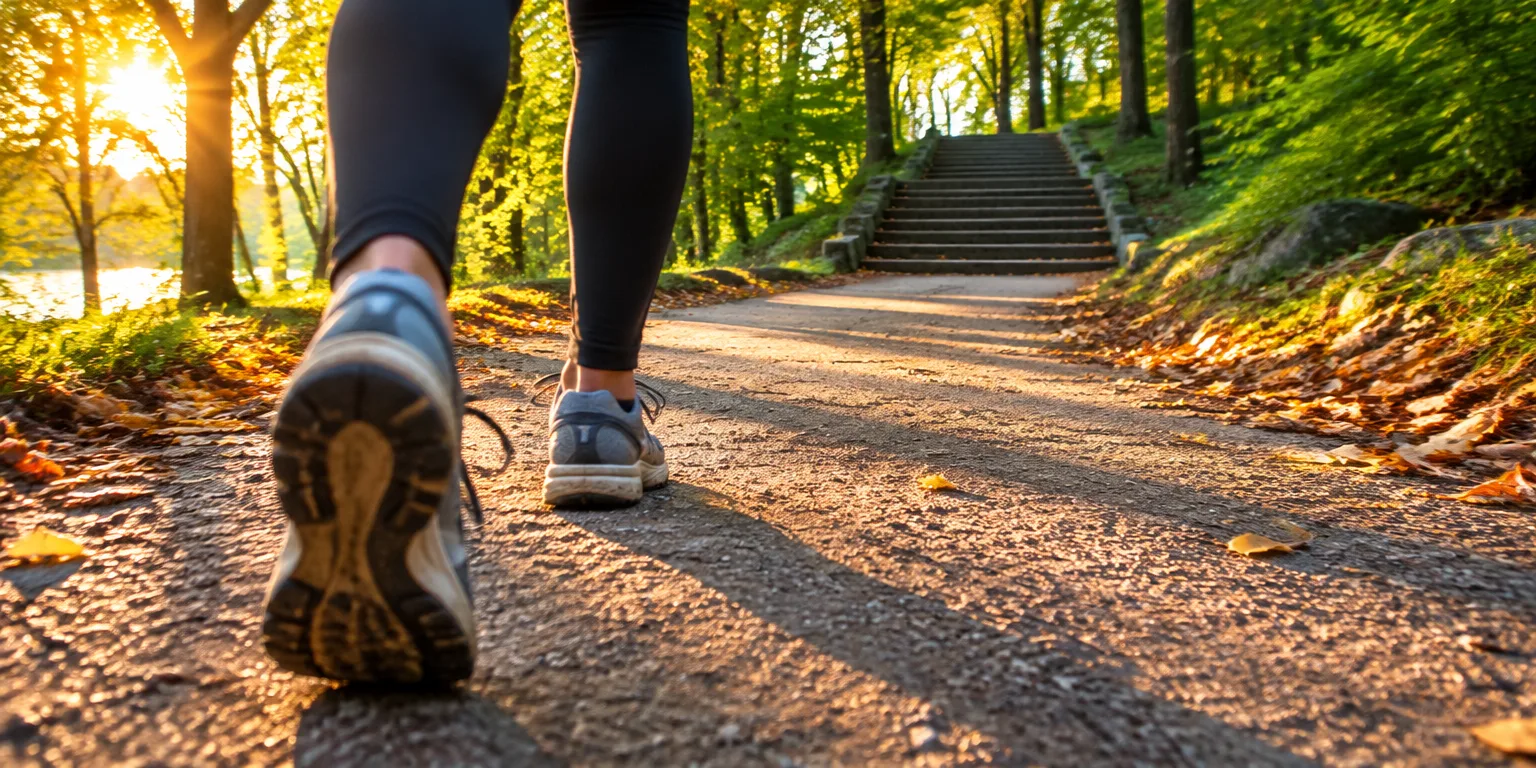
 The Strong[HER] Way | Healthy nutrition and habits for moms, routines, strength training for women · Japanese Walking for Women Over 35: Small Shifts, Big Wins in under 30 minutes
Walk the same route at the same comfortable pace every day, and the walk soon feels easier. Breathing stays even, the legs complain less, and the outing becomes pleasant routine.
Coach Alisha Carlson says that ease can also signal a plateau. The body has learned to handle that exact demand, so the same walk prompts less adjustment over time.
She compares it to strength training for the heart and metabolism. Lifting an unchanged load for unchanged repetitions gives muscles little reason to grow stronger, and she says the cardiovascular system responds the same way to an unchanging pace.
In her account, alternating harder and easier periods supplies the missing variation. The harder period asks more of the heart, lungs, and muscles, and the easier period allows partial recovery, and repeating that contrast is described as the stimulus for further adaptation.
The comparison she cites comes from early research at Shinshu University. In that study, women who alternated harder and easier walking had larger gains in peak aerobic capacity, a measure of cardiorespiratory fitness, than women who walked at a continuous moderate pace.
The practical point is about pattern rather than time or distance. Changing effort within a familiar walk, rather than always holding one steady pace, is presented as a way to keep the body adapting.
Questions people ask
What is peak aerobic capacity?
It is the maximum rate at which the body can take in and use oxygen during hard effort. It rises with aerobic training and falls with inactivity, and researchers use it as a broad marker of cardiorespiratory fitness.
Why would repeating the same effort stop producing more fitness?
Muscles, the heart, and blood vessels remodel in response to demands they have not already mastered. Once the same load becomes familiar, that remodeling signal fades, which is why training programs usually raise demand gradually over time.
Does this mean a steady daily walk has no value?
No. Easy movement still uses energy, supports joint motion and sleep, and can improve mood. The claim here is narrower, that adding variation can prompt larger gains in aerobic fitness than holding the same pace indefinitely.