The Silk Road Carried the Compass That Put It Out of Business
Once sailors could navigate the open ocean, Europe looked for a sea route to the riches of East Asia.
 TED-Ed · The Silk Road: Connecting the ancient world through trade - Shannon Harris Castelo
The Silk Road worked so well that it helped put itself out of business.
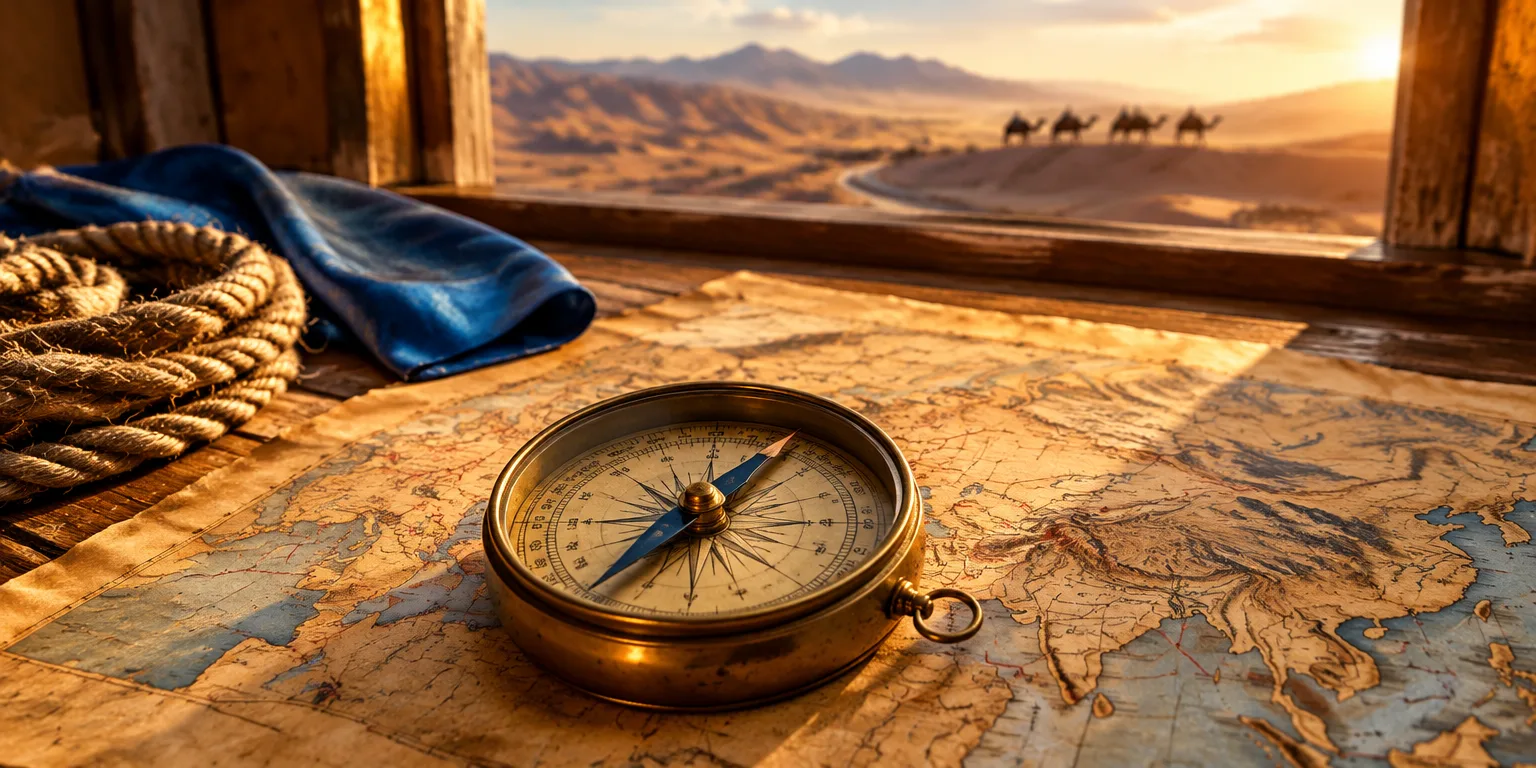
It was not one paved highway but a web of linked routes, built up over centuries across some 5,000 miles. Traders sent silk and jade west and brought back horses and cotton, and Chinese buyers placed high value on glass vessels from Rome. Along with goods came ideas and tools, including gunpowder moving from China toward the Middle East, possibly the crossbow moving west after Chinese and Roman forces met in Central Asia, and the magnetic compass, a needle that points north and lets a sailor hold a course with no coastline in sight.
The compass gave Europeans a way to navigate the open ocean. The implication is that ships could now reach the source directly, so overland trade would lose its advantage. Overland routes lost their point.
Politics finished what technology started. Mongol rule, which had protected the routes, collapsed, and China withdrew from international trade. The old network broke apart.
But Europeans had learned how much wealth awaited in East Asia, and they wanted a new way to reach it. Instead of rebuilding the land routes, they took to the water. The search for sea routes east opened an era of ocean voyages, and European ships pushed toward Africa and across the Atlantic to the Americas.
Trade moved from land to sea.
Questions people ask
How does a magnetic compass actually work?
A lodestone needle that lines up with Earth's magnetic field, mounted so it can swing freely and point north. Early versions were developed in China and later improved with a pivoted needle and a marked dial, which let a navigator keep a steady heading on cloudy days or far from shore.
Do land routes across Asia still exist today?
They did, and they still do carry goods across Central Asia by truck and train. What ended was the Silk Road as the main link between East Asia and Europe. Sea shipping proved faster and cheaper for bulk goods, so ocean routes took over that role.
Did the compass alone cause the Age of Exploration?
In part, yes. The compass made open ocean sailing practical, but better ships, sails, charts, and guns also mattered. Historians usually describe the Age of Exploration as driven by the combination of those tools with the economic motive to reach Asian markets directly.