The Sloppy White Specks in Roman Concrete Were Its Secret
The white chunks experts dismissed as bad mixing turned out to be pockets of quicklime left by a far hotter recipe.
 Medieval Wisdom · Why Roman CONCRETE Lasts 2000 Years While Ours Dies in 50
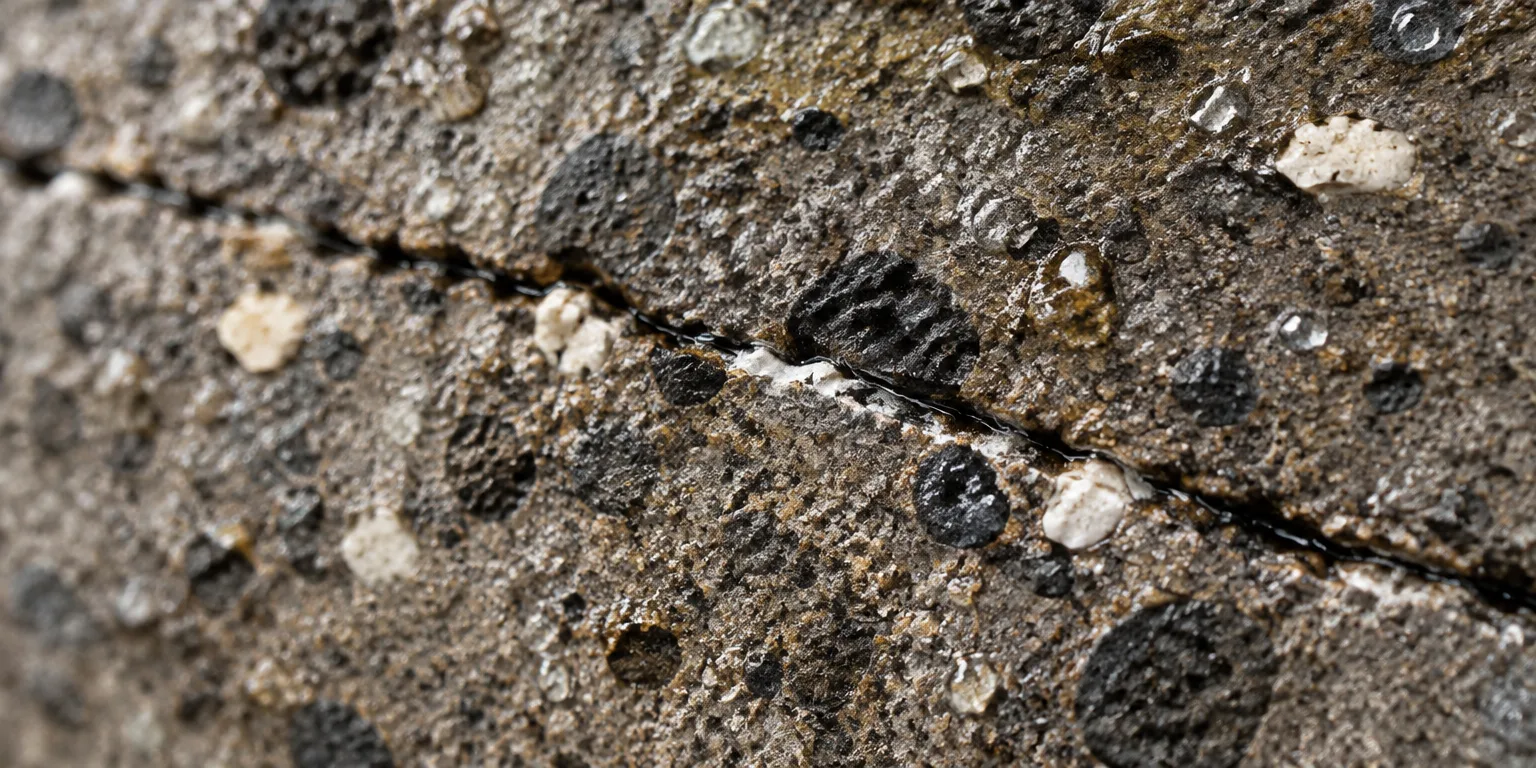
Under the microscope, every sample examined was freckled with white. Tiny pale chunks dotted the gray concrete taken from ancient Roman walls, sample after sample. To Admir Masic, a materials scientist at the Massachusetts Institute of Technology, they looked like a mistake that refused to go away.
For decades, scientists had treated those white chunks as exactly that, a mistake. The standard explanation was incomplete mixing, leftover bits of lime that never fully blended in. The durability of Roman concrete was credited instead to a special volcanic ash that, mixed with lime, made a binder unusually stable and resistant to water.
Masic could not make that story fit. The Pantheon in Rome, with its 142-foot dome built with no steel reinforcement, is still standing after 2,000 years, while modern concrete exposed to seawater can begin to fail in 20 to 30 years. He wondered how builders that skilled could have been so uniformly sloppy, and he decided to treat the supposed flaws as a clue.
Using advanced imaging, Masic and his colleagues studied old Roman concrete unearthed in Italy, working down to the nanoscale to learn the chemistry of the white chunks. The work pointed to how the material was made.
The structure of the chunks, known as lime clasts, suggested they had formed at extremely high heat. That pointed away from slaked lime, the safe lime paste premixed with water that experts had assumed the Romans used, and toward quicklime, a dry and highly reactive form of lime. The team came to think the Romans had probably added the quicklime straight to volcanic ash and rock, then added water, so the reaction happened inside the batch and drove temperatures to 200 to 250 degrees Celsius.
That hot mixing left small pockets of still reactive lime in the finished wall. The team proposed that those pockets serve as healing material stored for later. When a crack lets in water, the water can dissolve one of the pockets into a calcium rich solution, which then hardens into calcium carbonate and stitches the crack shut, while also reacting with surrounding ash to form stable minerals.
They tested the proposal in the lab. They prepared a pair of mixes, one present-day formula and one using the Roman style hot mixing recipe, broke open each sample and let water flow across them. The present-day samples stayed split. The Roman style samples had fully closed within 2 weeks, with no human intervention.
The same kind of reaction may help explain what happened in seawater. There, water entering the concrete dissolves lime, which reacts with volcanic ash to form crystals of a mineral called aluminum tobermorite. Those crystals form interlocking microscopic plates that fill pores and reinforce the material, and a team at the University of Utah found the crystals keep developing over thousands of years.
In that light, the white specks look less like carelessness than a reserve. They may have given Roman walls a way to patch small cracks as they formed, and to grow stronger in places where the sea kept them wet.
Questions people ask
What is the difference between quicklime and slaked lime?
Quicklime is calcium oxide, a dry form of lime that reacts strongly with water and releases a great deal of heat. Slaked lime has already been combined with water into a safer paste, so it does not produce that burst of heat when it goes into concrete.
How is hot mixing different from how concrete is made today?
Modern concrete is usually mixed at ordinary temperatures using Portland cement, water, and stone. Hot mixing puts the dry quicklime into the batch before water is added, so the heat is generated inside the mixture and the leftover chemistry is different.
What is the Pantheon?
The Pantheon is a temple in Rome completed nearly 2,000 years ago, famous for its huge round dome with an open oculus at the top. It remains the largest unreinforced concrete dome in the world, and its survival is a leading example of Roman durability.