The Slow Kid in Math May Just Be Slow This Week
After watching classrooms let students move at their own pace, Salman Khan says early speed predicts little about who finishes ahead.
 TED · Let's use video to reinvent education | Salman Khan
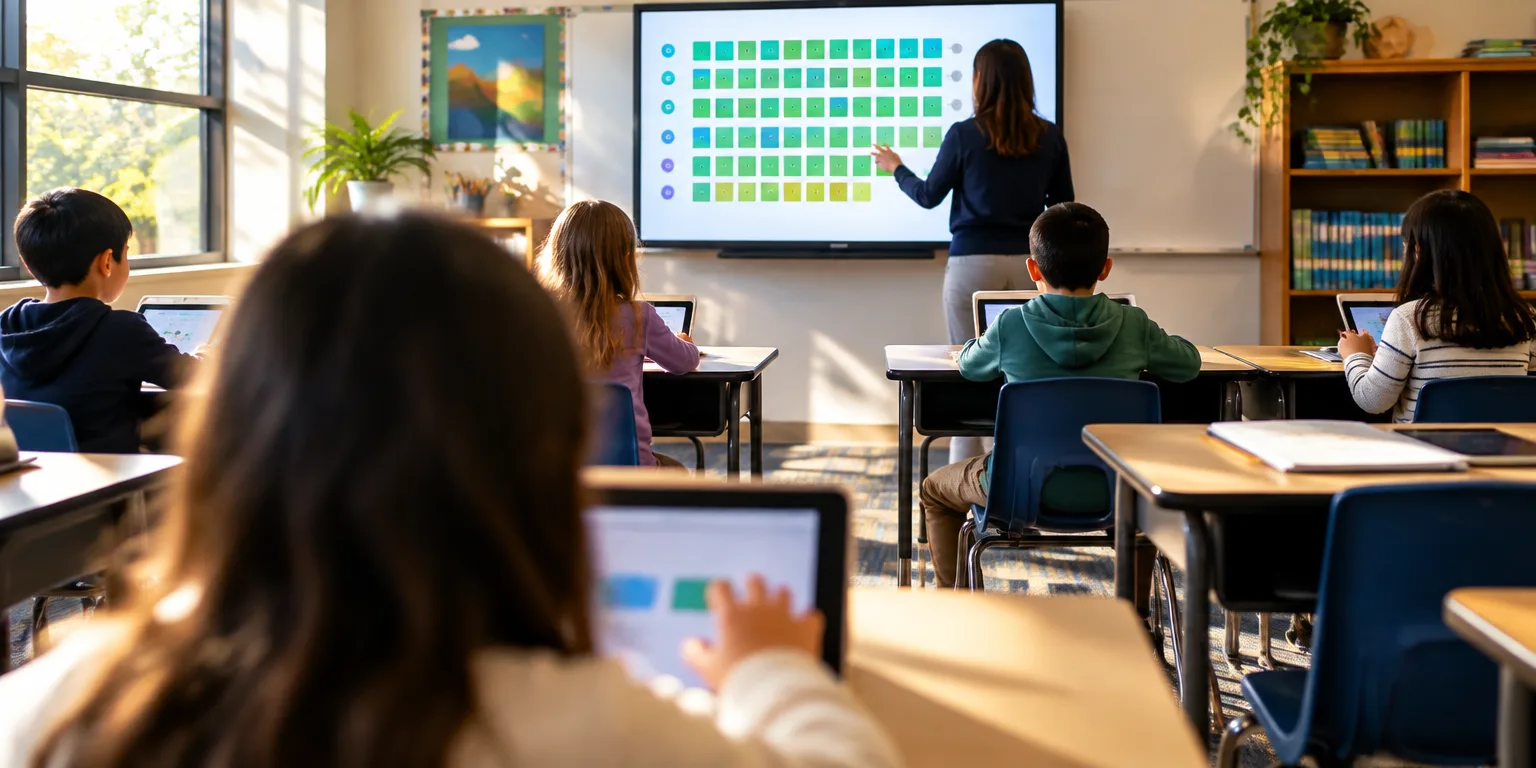
Salman Khan, a former hedge fund analyst who started posting math lessons on YouTube for his cousins, was describing what he had seen in a school pilot. In Los Altos, California, children in four elementary and middle school classes stopped using textbooks and whole-class lectures for about half of math class, he said. Each child moved through the exercises at a personal pace while the teacher followed a grid showing how each child was doing on each idea.
Khan said that after about five days, one group pulls ahead and another falls behind. That is the kind of split, he said, that can lead a traditional school to talk about gifted children and slow children, and to teach them separately.
Khan shifts timescales as he tells it, talking about five days in one breath and about six weeks in the next. His point is that the labels may be less fixed than they look: "And so the same kids that you thought were slow six weeks ago, you now would think are gifted."
He presents this as something he has seen repeatedly in classrooms using his software. In his telling, a child spends longer than classmates on one idea, then moves quickly through later ideas once the earlier one clicks.
To manage the differences, teachers watch a color coded display, where green means proficient, blue means working, and red means stuck. They step in with students who are stuck, or ask a student who already understands an idea to help a peer. Khan said the software handles routine practice. He said it frees up class time, and he stressed that he does not view it as a full math education. The saved time, he said, can go to simulations, games, mechanics, robot building, and estimating the height of a hill from its shadow.
"It makes you really wonder how much all of the labels maybe a lot of us have benefited from were really just due to a coincidence of time," Khan said.
Questions people ask
What is mastery-based learning?
It means students must prove they fully understand one idea before moving to the next, often by answering many questions in a row correctly. Khan Academy, for example, asks for 10 correct answers in a row. The goal is to prevent small gaps from compounding into later confusion.
Does letting kids learn at their own pace actually work better?
Khan's talk offers no formal results or evidence on that question. He describes what he has seen across every classroom using the approach, in general terms. So his account of children flipping from slow to gifted is best read as his own observation, not as proof that self-paced software alone raises achievement.
What happened to Khan Academy after this?
Khan Academy grew from about 2,200 videos at the time of the talk into a large free education platform used in schools and homes in many countries. It now covers math, science, reading, and other subjects. Its core model remains short videos, practice exercises, and dashboards for teachers.