The Steel Box That Built Global Trade Made Almost No One Rich
The container slashed freight costs, but a rush of copycats and costly ships wiped out profits for carriers.
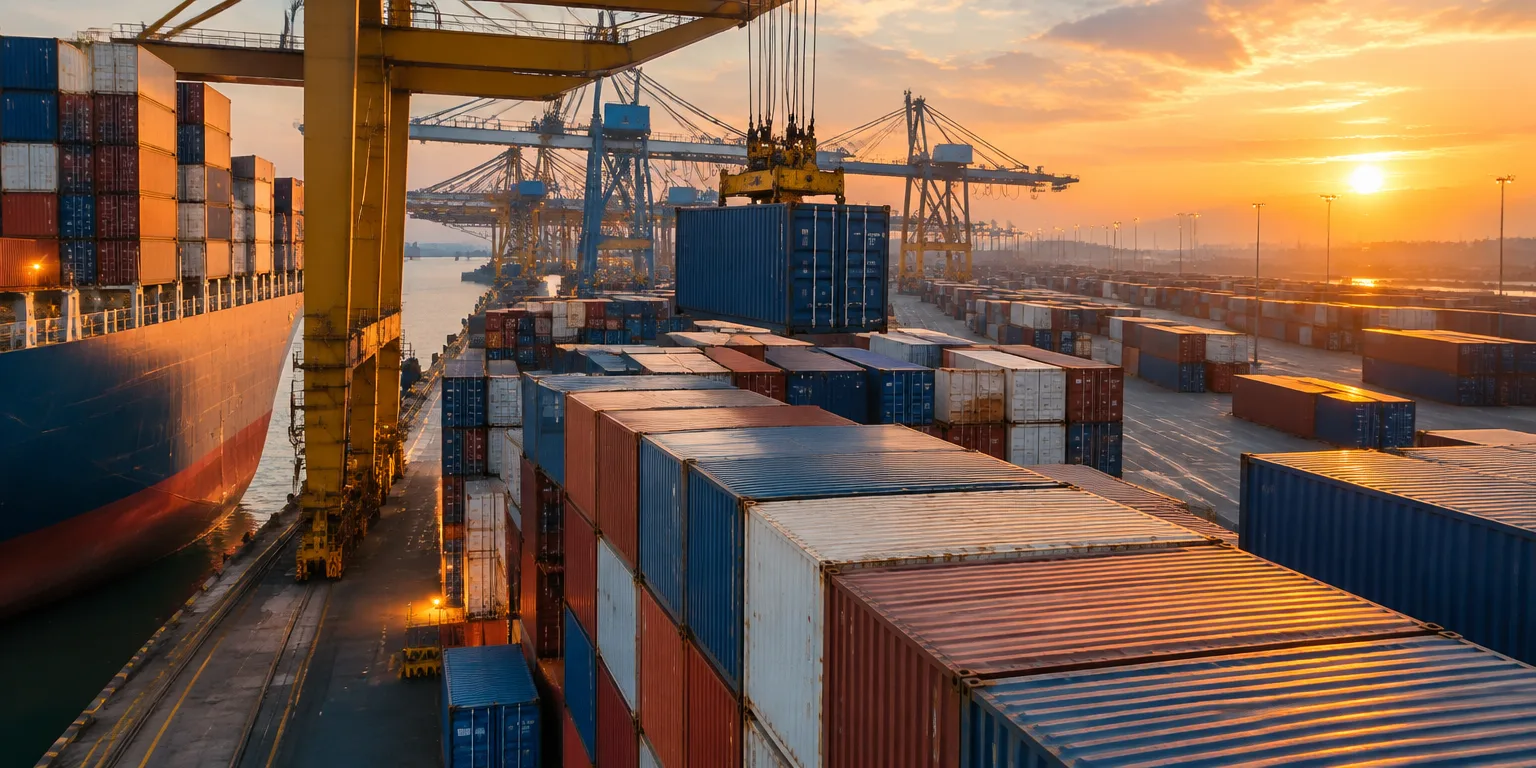
In 1956, Malcolm McLean, a trucker who had founded the shipping line soon called SeaLand, sent out the Ideal X, the first container ship. It carried no loose crates or barrels for dockworkers to haul piece by piece. It carried uniform steel boxes that could be lifted whole from a truck onto a ship and then onto a train.
McLean's insight was simple. Trucking firms, rail carriers and ocean lines were not really in the business of operating vehicles, he reasoned. Their purpose was getting products from seller to buyer. If freight stayed in the same box across every leg, shippers could skip most of the loading, unloading, and reloading, and ships would not sit idle in port for days while men emptied their holds.
The boxes helped start modern globalization, let makers shift work to lower wage countries, and improved daily life, yet maybe one or two backers ever earned serious fortunes from it. The savings on freight went to the buyers of shipping, not the shipowners.
Then, around 1965, when containers finally looked workable, every large shipping line rushed in. Boxed cargo still made up under one percent of all commerce in 1968, yet new box carriers were multiplying quickly.
Capacity outran demand for years. Competition turned into a rate war, profits were squeezed, and the industry consolidated into cartels. At the same time, ever larger ships and the new ports needed to handle them made the business hugely expensive to stay in. Between 1967 and 1972, shipowners poured about $10 billion into new vessels, equal to about $80 billion in 2025 money.
McLean read the tide early. In January 1969, he sold his container line to R.J. Reynolds, the tobacco company, and he may have been the lone founder to exit undamaged. Shipping magnate Daniel Ludwig also profited, having put $8.5 million into McLean Industries at $8.50 a share in 1965 and selling in 1969 for $50 a share. Shipbuilders and port builders were paid. For R.J. Reynolds and others who bought into fast growth in the late 1960s, container shipping brought little but disappointment, and the business ended up dominated by the established shipping lines.
Around 1980, sea freight costs fell dramatically, and international trade boomed as makers moved production to lower wage countries. IKEA, a small regional retailer in Scandinavia in 1972, used cheap and predictable freight to grow and lead global furniture retail by 2008. Its furniture, designed to be packed flat and assembled at home, stacked neatly in the boxes. Walmart used that same predictability to hold less inventory and cut the costs that come with it.
Questions people ask
What exactly is a container ship?
A container ship is built or rebuilt to carry standardized steel boxes, usually 20 or 40 feet long, that move intact between truck, train, and ship. The box itself is the innovation, because cranes can move freight without unpacking it. That cut loading time from days to hours.
Why did dockworkers and ports oppose containers?
Longshoremen load and unload ships, and containerization threatened much of that heavy, piece by piece work. In the source, dockworkers, the politicians who wanted their votes, port authorities, regulators, and rival rail and shipping lines all had reason to resist. McLean survived early on partly by staying small enough not to look like a threat.
Who are Maersk and Evergreen?
Maersk is a Danish shipping giant that grew large after consolidation in container shipping. Evergreen is a Taiwanese container line that did the same. Both are examples in the source of later incumbents that became very large, even though early investors in containerization generally did not get rich.