The Sun Holds 99.8% of All the Mass in the Solar System
Even burning Jupiter for fuel would barely register next to the sun, and Earth is a rounding error.
 All-In with Chamath, Jason, Sacks & Friedberg · Elon Musk: OpenAI Betrayal, His Future at Tesla, and the Next Big Thing — Grokipedia
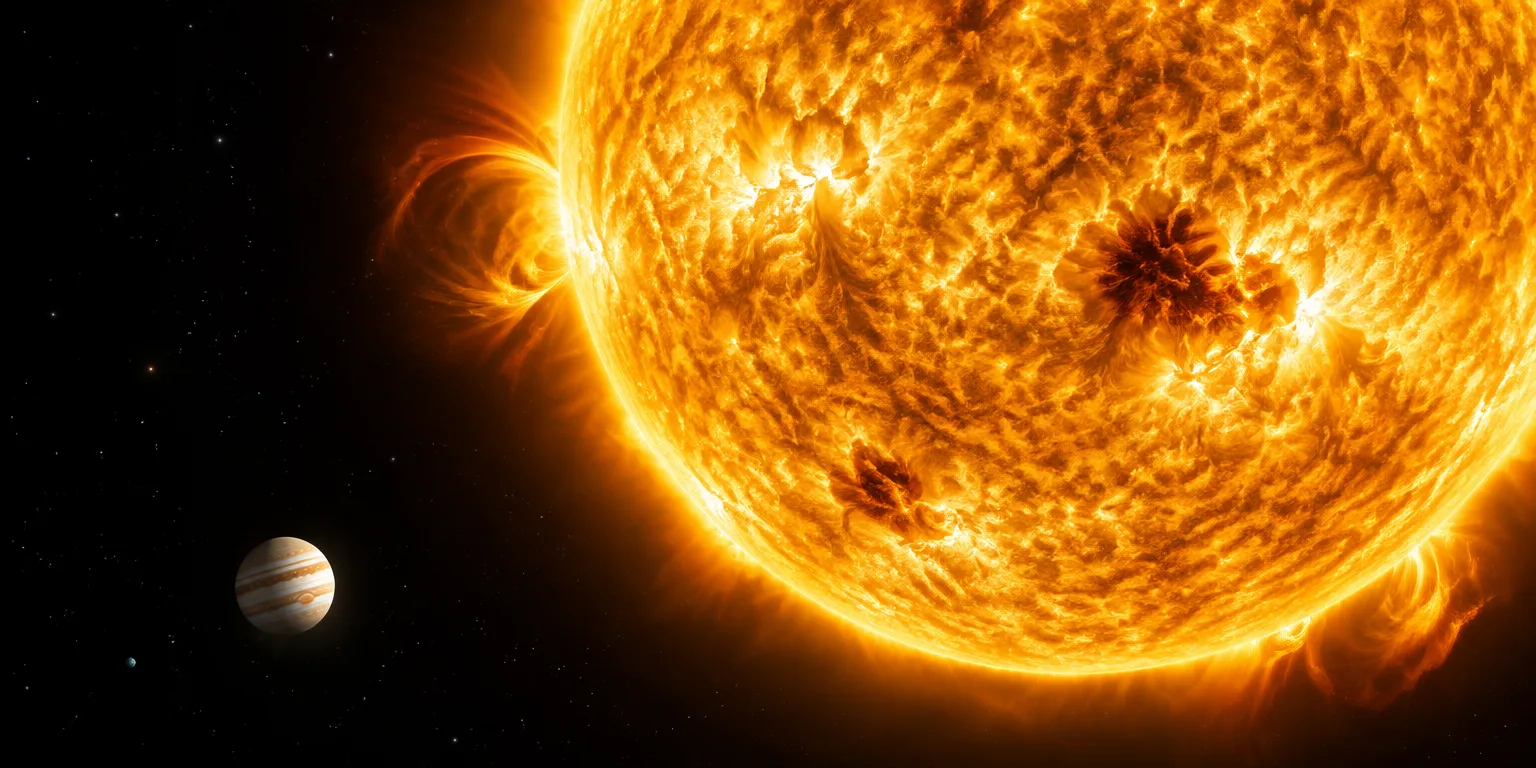
The sun holds 99.8% of all the mass in the solar system. Jupiter holds about 0.1%, and everything else, including Earth, fits into the remaining 0.1%.
Elon Musk, the businessman who runs Tesla and SpaceX, laid out the numbers to explain why solar power matters. Burn up everything else in the solar system for energy, he said, and the sun would still account for nearly all of it.
His illustration was deliberately extreme. Jupiter is large and hard to burn, but even if you teleported in two extra Jupiters and burned them too, the sun would still account for essentially all of the energy. Earth itself is much less than 0.1%, lost in what he called the miscellaneous category.
Questions people ask
How do we know the sun weighs that much?
Scientists weigh the sun using gravity, not a scale. By watching how fast planets orbit and how far away they are, they can calculate how much mass must be pulling on them, and the answer comes out to about 2 octillion tons, or 333,000 Earths.
How big is Jupiter compared with Earth?
Jupiter outweighs everything else combined by a wide margin. It is about 318 times as massive as Earth, and 2.5 times as massive as all the other planets put together, which is why it gets its own slice of the solar system's mass.
Will the sun burn forever?
No, but on human timescales it might as well be. The sun fuses about 600 million tons of hydrogen every second, and it has enough fuel to keep going for about five billion more years before it swells and fades.