The Vagus Nerve Works Like Brakes on Inflammation
Electrical signals from the brain stem turn into chemical messengers that tell immune cells to stop making inflammatory molecules.
 Science Friday · Is there science behind the ‘nervous system reset’?
Your immune system comes with brakes, and the pedal is in your brain.
Those brakes are signals that travel from the brain down the vagus nerve to quiet inflammation.
Kevin Tracey, a neurosurgeon, became interested in inflammation during his neurosurgery training, and he stumbled on the wiring by accident. He was trying to solve a familiar problem. White blood cells make small proteins called cytokines, which drive inflammation forward. In large amounts, they can create what became known during COVID as a cytokine storm. Drugs advertised today as biologics block those cytokines, but they can also suppress the whole immune system and leave people vulnerable to infection. Tracey wanted a treatment that would quiet inflammation without shutting immunity down.
An early experimental molecule, called 1493, did that. Then came the surprise. Vanishingly small amounts placed in the brains of animals switched off inflammation in their bodies. Years of work traced the effect. The brain was sending signals down the vagus nerve, a long bundle of fibers that runs from the head through the neck and into the abdomen, telling the immune system to stop making cytokines.
Tracey describes the vagus nerve as brakes on a car going downhill. Turn it on, and inflammation slows.
Scientists now understand that braking system in unusual detail. Nerve cells that start in the brain stem, the stalk at the base of the brain that controls automatic functions, send electrical impulses down the vagus nerve and into the abdomen. Near the spleen, an organ packed with immune cells, those electrical signals are converted into chemical messengers, norepinephrine and acetylcholine, the kinds of signaling chemicals nerves use to talk to other cells. Tracey's studies show those chemicals regulate white blood cells and turn off their production of cytokines.
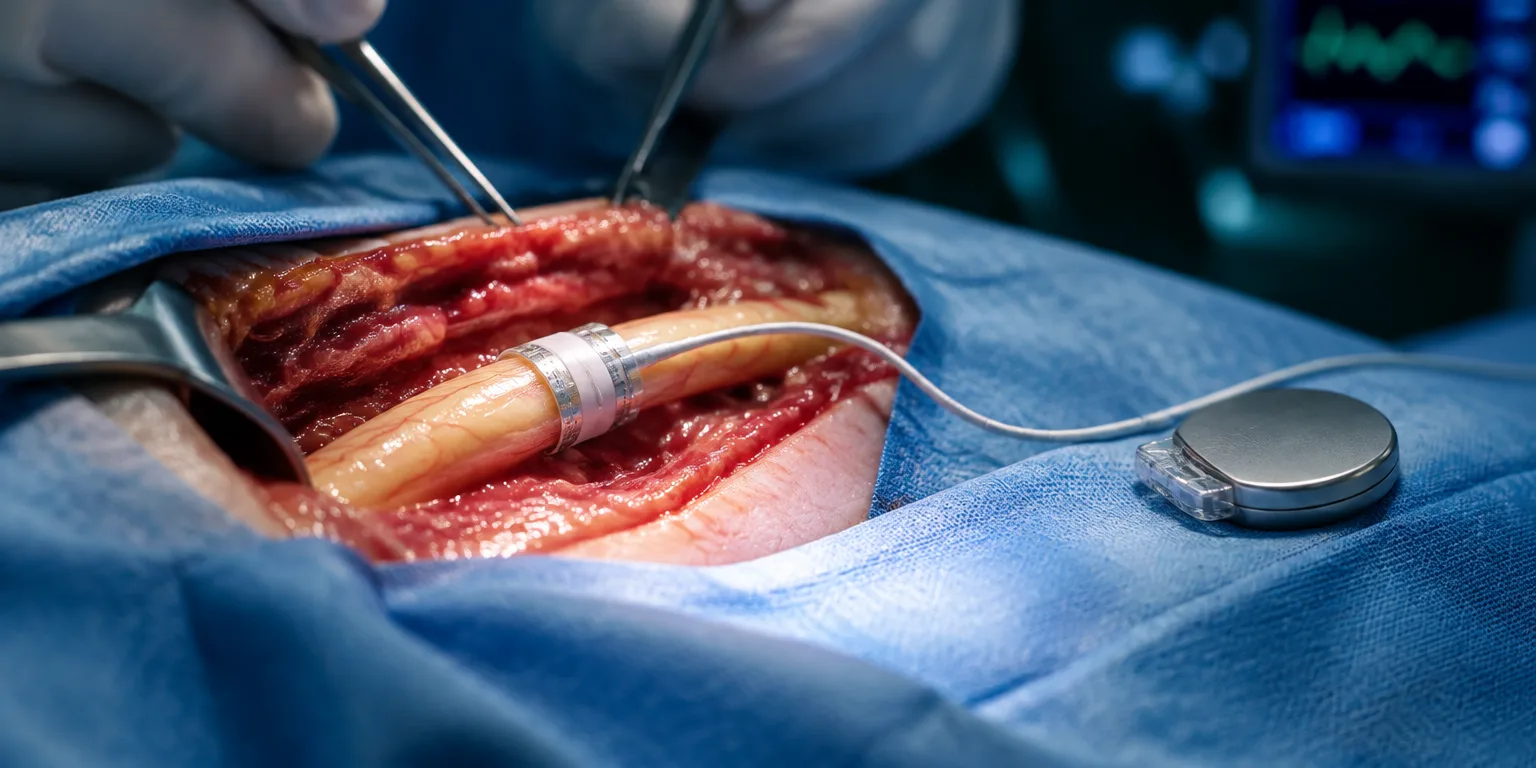
That is why researchers reasoned they did not need to put drugs in the brain to use the reflex. A stimulator attached to the nerve could deliver the same slow-down signal. Vagus nerve stimulators were approved by the FDA in the 1990s for epilepsy. The FDA later approved stimulators for rheumatoid arthritis, a painful joint disease driven by inflammation.
Questions people ask
What does the spleen do, and why does the signal go there?
The spleen is a fist-sized organ in the upper left abdomen that filters blood and houses large numbers of white blood cells. Because so many immune cells gather there, it is a convenient place for a nerve signal to reach many cells at once. That is why the vagus nerve braking circuit acts there.
Where exactly is the vagus nerve?
You have two, one on each side of the body, running from near the ear down through the neck and chest and into the abdomen. Each contains about 100,000 fibers, with branches to the heart, lungs, pancreas, and spleen. Different fibers carry different instructions, in both directions between brain and organs.
Can I activate this brake myself by thinking calm thoughts or breathing deeply?
No, at least not in any direct or reliable way. The reflex Tracey found uses specific fibers and precise electrical pulses delivered by an implanted stimulator. Everyday activities like breathing change signaling across many vagus fibers at once, but that is broad and nonspecific, not the same as pressing the brake on inflammation.