The wobble between heartbeats reflects how balanced your nervous system is
More wobble means a better balanced nervous system, and one member's sudden drop preceded a cancer diagnosis.
 All-In with Chamath, Jason, Sacks & Friedberg · WHOOP CEO, Will Ahmed: 50B Hours of Health Data, a 4 Million Member Data Moat, & the FDA Fight
Your heart does not beat like a metronome, and that is a good thing.
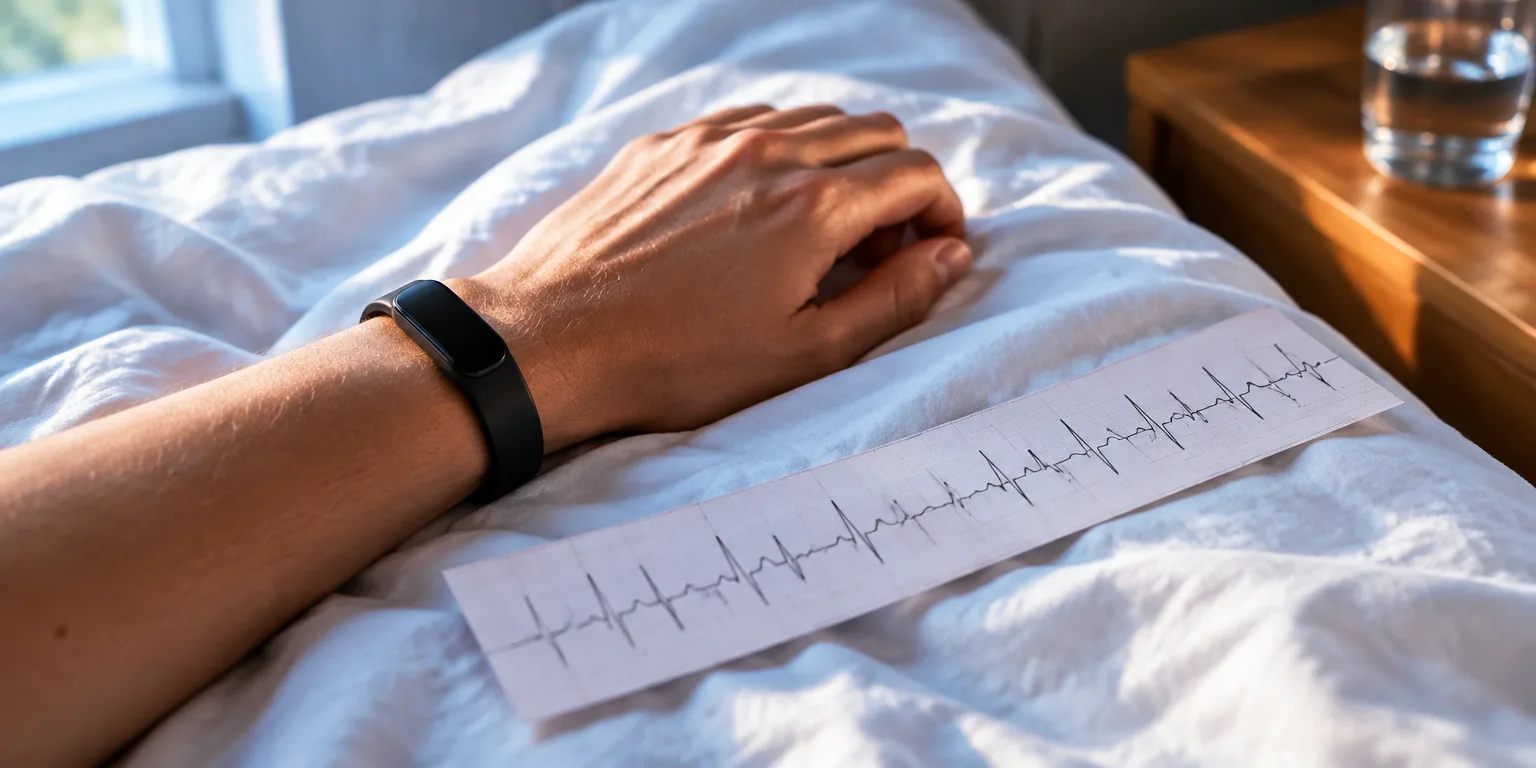
The tiny difference in time from one beat to the next is called heart rate variability, or HRV. Counterintuitively, more variation means a healthier system, said Will Ahmed, the chief executive of the wearable company Whoop. It is a window into the autonomic nervous system, the automatic controls that speed the body up and slow it down.
One branch is the sympathetic system. Heart rate rises, blood pressure rises, and breathing quickens, the response to exercise, a stressful thought, or, as Ahmed put it, the feeling that there is a lion in the room. The other branch is the parasympathetic system. Heart rate falls, blood pressure falls, and breathing slows, the state that helps a person fall asleep or that comes with a long exhale.
What matters is that the two branches work together, constantly adjusting to each moment. When they are well coupled, variability is higher, Ahmed said. He came across HRV while doing medical research as a student at Harvard, and was struck that there was interesting science on it but no way to track it continuously. Measuring it around the clock became one of the central ideas behind Whoop, and the company uses it for readings such as stress and its daily recovery score.
Watching the trend over years makes HRV an important longevity indicator, Ahmed said, because it gives a sense of whether someone is getting healthier over time. People in their 20s average roughly 80 to 100, he said. That falls to around 70 in the 30s, around 50 in the 40s, and into the 30s or below in the 50s and 60s. Keeping the number flat over years, rather than sliding with age, is a sign of good fitness and longevity.
A sudden drop from baseline is a warning sign worth watching, in one member story Ahmed told. The member had used Whoop for years and had a steady HRV near 100, which abruptly fell to about 50 for a period of time. Later testing found testicular cancer. When the interviewer, investor Jason Calacanis, asked whether HRV had been known as a lead indicator for that cancer, Ahmed said he did not think so, and he cited no broader study.
Questions people ask
How do wearables actually measure HRV?
Most wearables estimate it with an optical sensor that watches blood flow in the wrist, then calculate the tiny differences between beats, usually during sleep when the body is still. A clinic can measure it more precisely with a chest strap or an electrical tracing of the heart. The numbers are not directly comparable between brands, so trends on the same device matter most.
What makes HRV go up or down?
Regular aerobic exercise, consistent sleep, and strength training tend to support higher HRV over time. Alcohol, illness, heavy stress, and short or broken sleep often push it down for a day or two. Because the number jumps around daily, doctors and coaches look at the average over weeks, not one morning.