Tibet has almost none of China's people, but it shields China from India
More people live in four inner districts of Beijing than in all of Tibet.
 Wendover Productions · China's Geography Problem
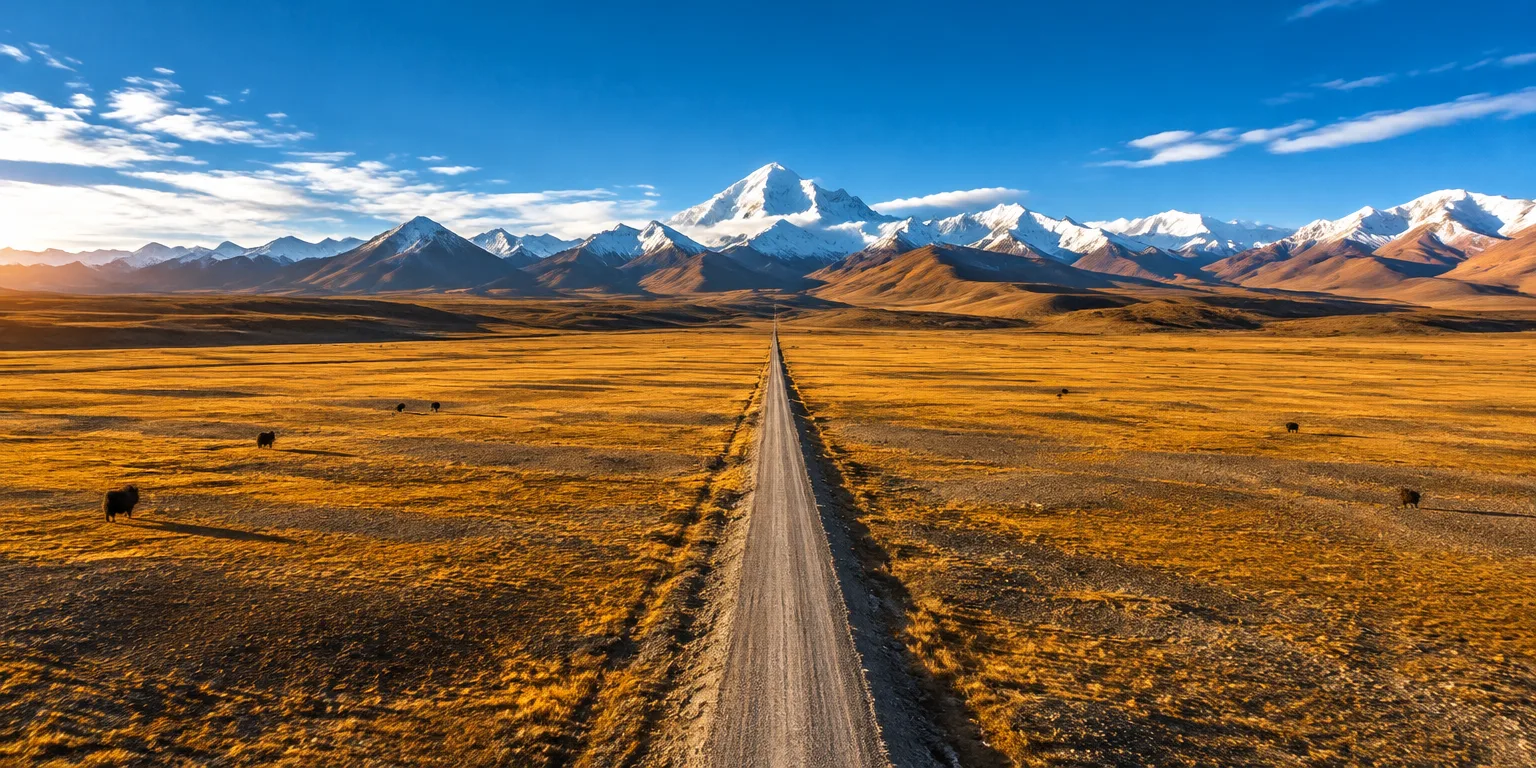
Tibet holds about 0.2% of China's people on about 13% of its land, and that empty expanse is what makes it useful as a buffer against India.
Tibet once ruled itself as a separate empire until China took it over about 300 years ago, and its people remain ethnically distinct from the Han majority who fill the east.
Tibet matters for defense. With Tibet, China's border runs along the Himalayas, backed by a vast, thinly populated zone without the roads an invading army would need to reach China's crowded east. Without it, that protection disappears. An independent Tibet would have little chance of avoiding economic and cultural domination by either India or China, since it lacks the economic and military power to resist. In Beijing's view, an Indian Tibet cannot be allowed.
Questions people ask
How big and empty is Tibet, exactly?
Tibet's autonomous region covers about 470,000 square miles, about two-thirds the size of Alaska, with around 3.6 million residents. Most of it sits above 13,000 feet, with thin air, long winters, and little farmable land, which is why so few people live there.
Why would an independent Tibet likely fall under India or China?
It would be landlocked between the world's two most populous countries, with a tiny economy and no major military. It would depend on one neighbor for trade, roads, fuel, and manufactured goods. Over time, that dependence usually turns into political and cultural influence, especially in a strategic border zone.
Have China and India actually fought over this border?
Yes. They fought a brief border war in 1962, largely over the Himalayan frontier, and soldiers have clashed since, including deadly fighting in 2020 in the Galwan Valley. Both sides still station large forces near the Line of Actual Control, the unsettled de facto border.