Tiny Guyana now pumps as much oil as Venezuela
Venezuela sits on the world's largest reserves, but its neighbor turned a 2015 discovery into the fastest growing economy on Earth.
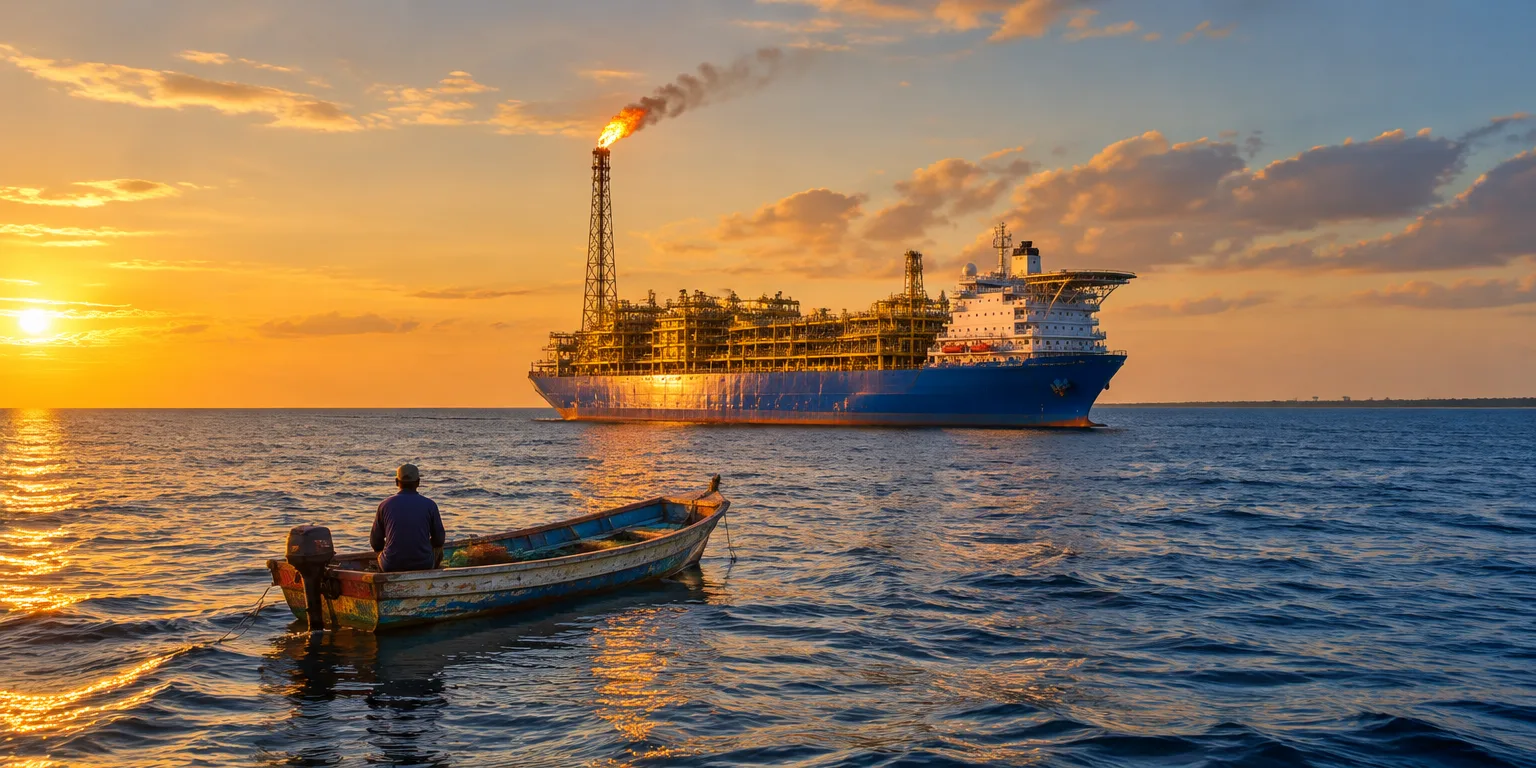
 Economics Explained · Where Has Venezuela's Oil Gone?
Guyana now produces more than 900,000 barrels of oil a day, roughly as much as Venezuela was managing before the January US special forces raid that captured Nicolás Maduro.
That is striking because Guyana found oil only in 2015 and holds far less than its neighbor. Venezuela holds the world's largest proven reserves, about 303 billion barrels on OPEC's count, though independent estimates put the recoverable total at around 100 billion barrels, since much of it is heavy, deep, and expensive to extract.
Venezuela peaked at about 3.5 million barrels a day in the late 1990s, then fell about 75% to about 900,000 barrels a day. The collapse followed nationalization of foreign-owned oil projects under Venezuela's president Hugo Chávez in 2006 and 2007, sanctions, chronic underinvestment, corruption, and running the industry as a political patronage system.
Guyana, backed mainly by investment from ExxonMobil, grew its GDP roughly 500% in under a decade under stable institutions.
Questions people ask
Where exactly is Guyana?
Guyana is a small English-speaking country on the northeastern coast of South America, between Venezuela and Suriname, with fewer than 1 million people. Its offshore Stabroek Block, where ExxonMobil and partners found oil in 2015, sits in deep water in the Atlantic.
How did Guyana build an oil industry so fast?
In 2015 ExxonMobil and its partners Hess and CNOOC announced a large discovery at the Liza field in the offshore Stabroek Block. Because Guyana had no oil industry of its own, it relied on that consortium for capital, drilling technology, and floating production vessels to develop the fields quickly.
Why is Venezuela's oil hard to extract?
Much of Venezuela's oil is extra-heavy crude that is thick, high in sulfur and metals, and buried deep underground. It must be thinned with lighter oil to flow through pipelines and needs complex refineries with coking units, which makes it costly to produce and sells at a large discount to lighter oil.