Tiny magnetic robots could attach to the heart to deliver antibiotics
Tested so far in a heart model and a butcher's pig heart, the system puts a concentrated dose where IV drugs fall short.
 Global News Podcast · Pope has surgery for lung cancer
Only a really small share of antibiotics injected into a vein ever reaches a bacterial infection on the heart wall. That dose problem is what a new two-robot system is trying to solve.
The infection is called endocarditis, an infection that settles on the heart's inner wall that affects about 50,000 patients a year in the United States. Doctors now treat it with antibiotics injected into a vein, but only a really small dose actually reaches the infection. The rest spreads through the body and does not reach the infection.
Axel Krieger, a Johns Hopkins engineering professor and senior author of the study, is trying to boost the effective dose by sending it directly to the infection with tiny robots.
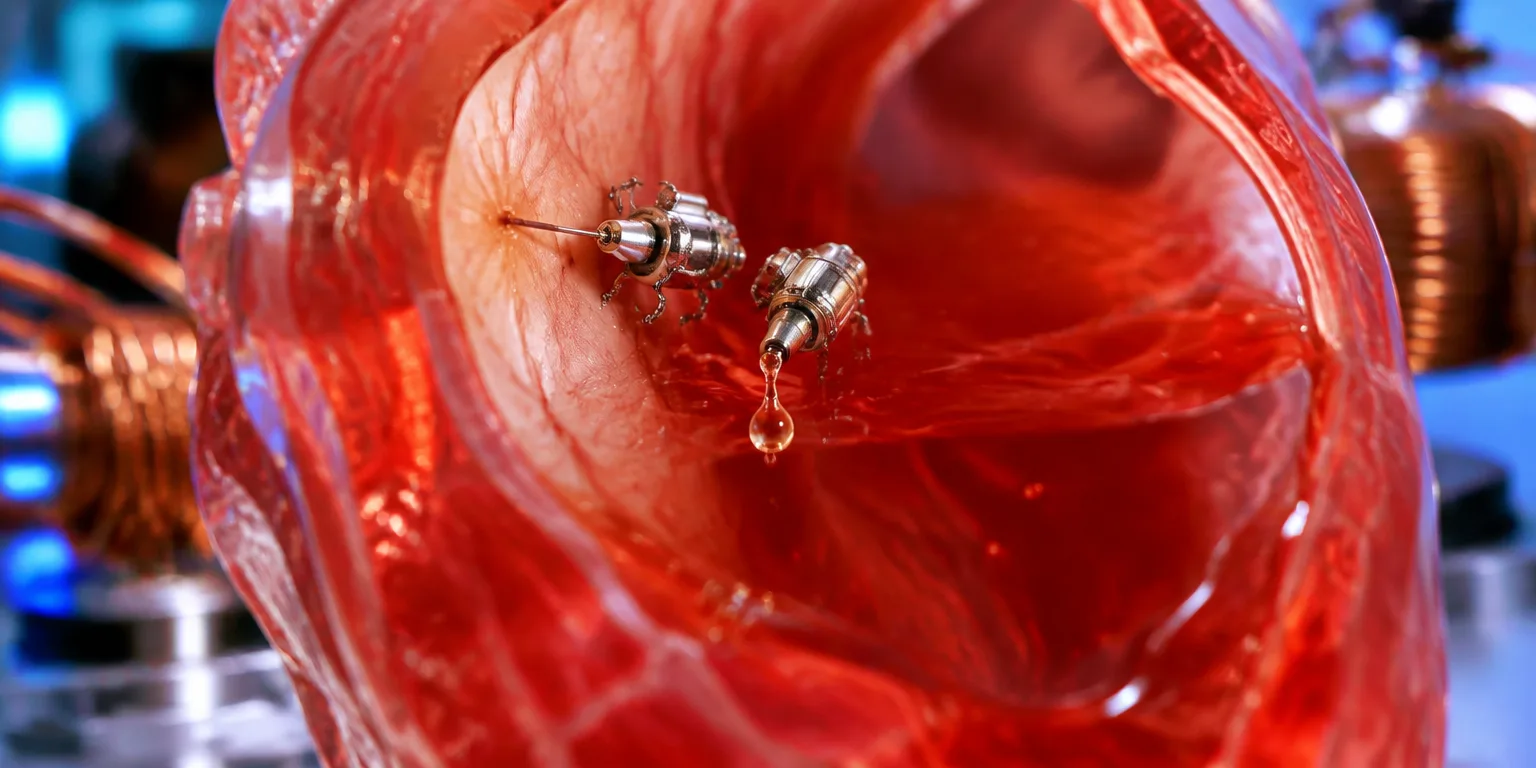
The needle robot is under 3 millimeters across, about the size of a pencil tip. It carries what Krieger called "a little needle and a little barb" for fixing itself to the heart wall at the infection site.
Inside each robot is only a small permanent magnet. Larger electromagnets outside the body create changing magnetic fields that pull and steer the robots through the bloodstream.
The job takes two robots. First, with AI guidance, the researchers drive the needle robot to the infected patch and fix it in place on the heart wall. Then they steer a second robot, the drug module, to join it. That module lets go of a strong, concentrated dose of the medicine right at the site. When treatment is done, the magnets guide both robots back out of the body.
So far the system has been tested only in a heart model and in tissue. In a heart model with realistic blood flow, the robots docked and undocked successfully close to 100 percent of the time, with steering accuracy of a few millimeters. The team also tested anchoring force in pig heart tissue bought from a butcher.
The next steps are live animal studies before any first studies in people. If it works, drugs could go straight to the infection instead of spreading through the whole body.
Questions people ask
Why is a heart-wall infection so dangerous?
Endocarditis can damage heart valves and lining, and clumps of bacteria can break off and travel to the brain, lungs, or kidneys. Treatment often requires weeks of intravenous antibiotics, and some patients need surgery to repair or replace a valve.
Why would local delivery work better than an IV?
An IV drug spreads through the entire bloodstream, so organs and tissues absorb much of it before it reaches the heart. A local release puts a concentrated dose beside the bacteria, which could mean stronger killing with less harm to the rest of the body.
Are there other medical microrobots like this?
Researchers in several labs steer magnetic particles, capsules, and soft robots for drug delivery, eye repair, and clearing clogged vessels. Most are still in animal or laboratory testing, because steering precisely inside a moving body and then removing the device safely is difficult.