To bring back speech, read the brain just before it moves the mouth
Inside motor cortex, some patches move muscles and others hold the plan for sounds, and Shain says the second group is the one to target.
 Wu Tsai Neurosciences Institute, Stanford · A new precision neuroscience of language (Big Ideas in Neuroscience) | Cory Shain
The brain does not keep the plan for speech where it moves the mouth. It keeps it one step earlier, and that earlier spot may be the better place to listen for people who can no longer speak.
Neurolinguist Cory Shain describes speaking as running in stages. The brain forms the idea of a planned message, programs the mouth movements that would express it, and then drives the muscles to speak. In work by researchers Frank Willett and Jimmy Henderson and colleagues to decode attempted speech for paralyzed people, the best performance so far has come from that final motor stage, in motor cortex.
Within motor cortex, Shain explains, some patches mainly control the muscles of the face and mouth. Others act as go-betweens that carry plans from language planning areas to those muscle controllers, and they hold a higher level picture of the sounds to be made. Results differ widely from one person to the next, apparently depending on "how speech selective the implanted sites are," Shain says. Those relay patches, not the muscle patches, are the ones to target when trying to pull intended speech out of motor cortex.
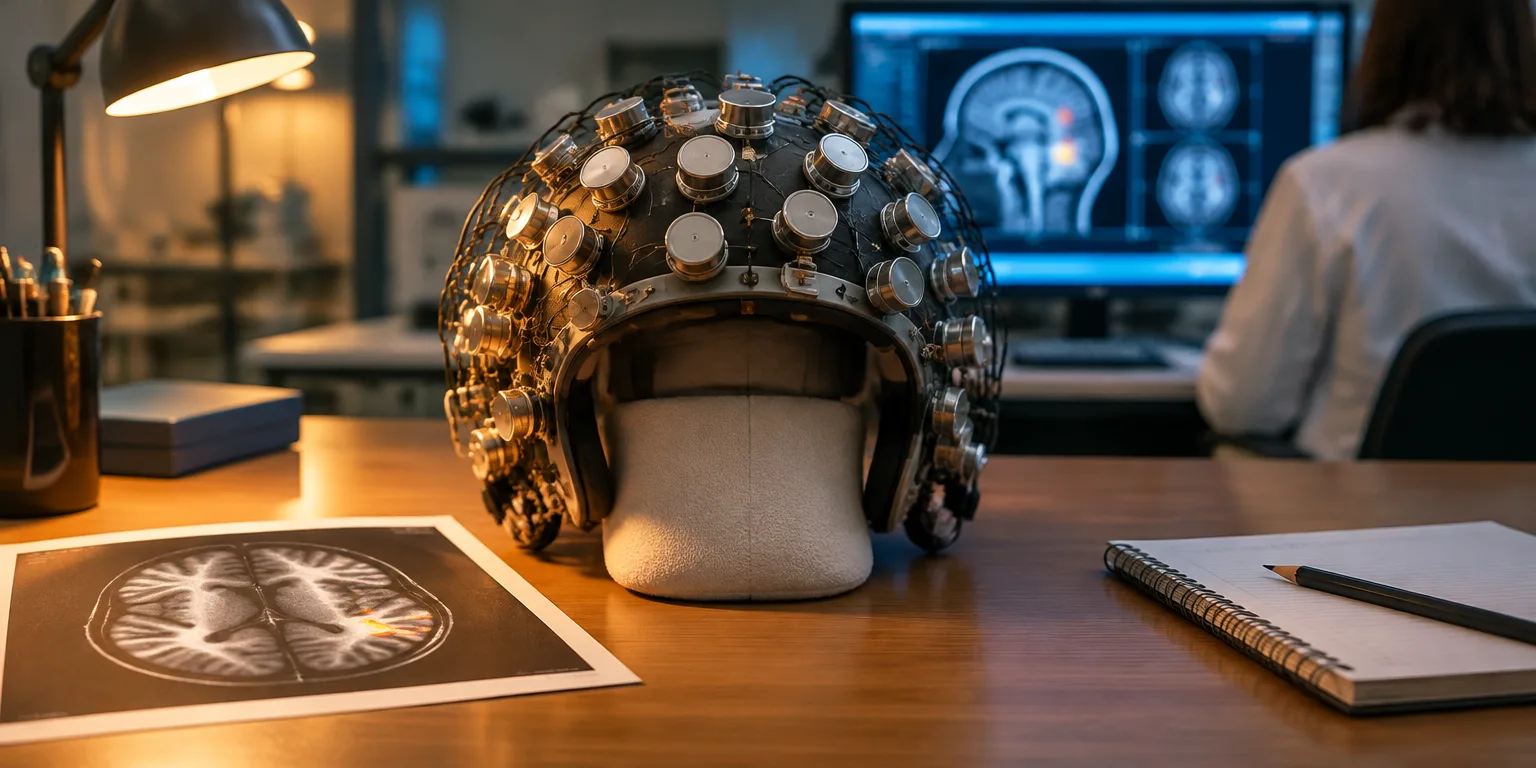
That distinction matters because no two brains put those patches in exactly the same place. For each person's brain before surgery, Shain says the team hopes to map layout in space with brain scans and to capture the computations and timing with a faster, noninvasive method called magnetoencephalography, which detects the tiny magnetic signals of brain activity. Together, they show where surgeons should place the sensors.
The payoff could reach more patients. Some patients may still be able to form thoughts and shape the notion of a planned message without being able to program the movements to speak it. In those cases the relay might not help either, so Shain points to the language network itself as a strong candidate to explore. That work is still ahead, and it could extend speech restoration beyond the fairly narrow forms of paralysis, such as ALS, where motor cortex decoding has worked best.
Questions people ask
How does a speech decoder actually work?
A decoder is software that learns the pattern of brain activity that goes with each sound or word a person is trying to say, then turns new brain activity into text or synthesized speech. It is trained while the participant attempts to speak, even if paralysis prevents any audible output.
What is MEG?
Magnetoencephalography, usually called MEG, measures the very small magnetic fields produced when brain cells fire. The sensors sit outside the head, so it is noninvasive, and it tracks activity thousands of times per second, much faster than a standard brain scan.
Why has this approach worked best so far in ALS?
ALS, amyotrophic lateral sclerosis, gradually destroys the nerve cells that control voluntary muscles, including those used for speech, while thinking and language understanding often remain. That combination makes motor cortex decoding feasible, because the intention to move is still formed even though the muscles cannot carry it out.