To Build the Future, Ask What Is Possible Now and Pick a Ship Date
After General Magic dreamed too big and collapsed, Tony Fadell built the iPod by asking what had just become possible.
 Cautionary Tales with Tim Harford · Talent, Time and Money: The Curse of General Magic
Tony Fadell learned how to ship the future by watching the future fail. Fadell, a young engineer who had called General Magic repeatedly asking for work until the startup hired him, was devastated when the company fell apart. He focused on two lessons General Magic had neglected, and he used them later at Apple.
General Magic had tried to build a pocket sized touchscreen computer for messaging, games, and a store for buying software, years before the technology was ready. It missed both of Fadell's questions, what is new and possible with current technology, and what deadline will keep us on track.
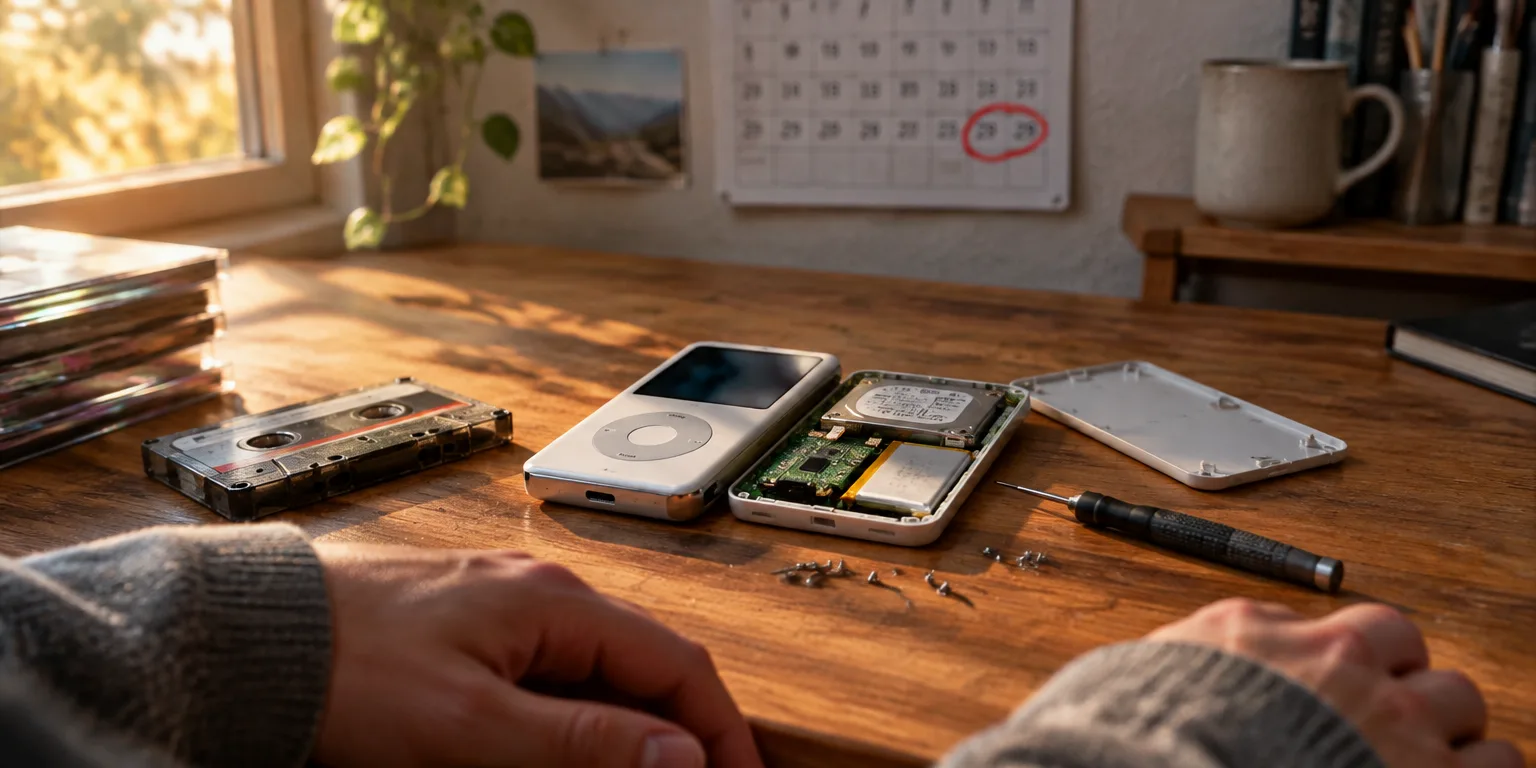
At Apple, the company Fadell had joined, he answered the first question with two recent developments. One was MP3, a new way to shrink digital music files so many songs could fit in little space. The other was ever cheaper hard drives. Together, they pointed to a portable player that could replace tapes and CDs.
The second answer was a date. In January 2001, the goal was to ship something by Christmas. Fadell shepherded the result to market just a few weeks before that Christmas. It was the iPod, a simple player that handled music extremely well, and it was a huge success.
That restraint, shipping one thing well by a deadline, paved the way for Fadell's next project, the iPhone. The iPod gave Apple practical experience with small devices, batteries, and portable software that the iPhone would need. If you want to copy him, start by asking what has recently changed.
Questions people ask
What exactly was General Magic trying to build?
General Magic was a 1990 startup spun out of Apple that tried to build an early smartphone, with a touchscreen, messaging, games, and a store for buying software. Its first product, Sony's Magic Link in 1994, was the size of a hardback book, needed a phone cable, and sold only about 3,000 units in six months.
What did the first iPod actually do?
It was a portable digital music player that held about 1,000 songs in its first version, using a small hard drive and a simple scroll wheel. It sold very well and gave Apple the experience with small devices, batteries, and portable software that helped make the iPhone possible.