To Calm an Angry Seventh Grader, Enlist the Kids Who Taunt Him
A Newark teacher turned four strong students into allies, and let peer pressure do what punishment could not.
 This American Life · 449: Middle School
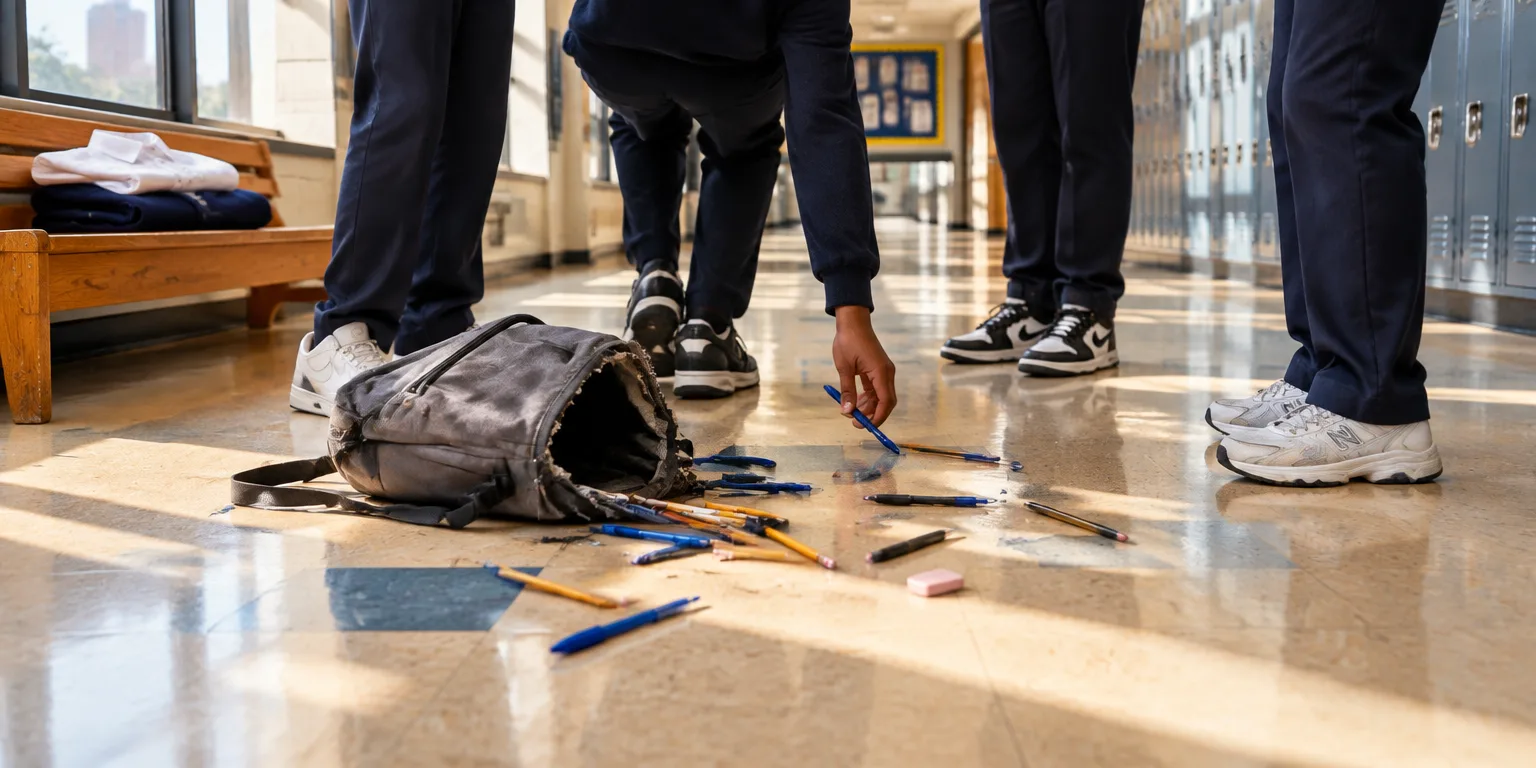
Shannon Grande, a teacher at Rise Academy in Newark, had a seventh grader she could not reach with rules. He arrived with a dirty uniform, unshowered and without breakfast, his book bag torn so his pens fell out. He was angry all day, and getting angrier.
A small jab like "your shirt's not tucked in" could set off a loud rant, slammed books, and cries of "I hate this place." He threw objects, once hitting a teacher, refused to work, and sometimes broke into tears in class without being able to explain why. Other students whispered that he was dirty, then said it to his face. The staff arranged fresh uniforms and somewhere to get washed in the mornings, but his isolation kept growing.
Her method, after one ugly fight in history group work, was to recruit the social machinery instead of fighting it. First, she picked the right messengers. She pulled aside four academically strong girls with leadership qualities, including a high-achieving girl regarded as one of Grande's strongest students, who had just told the boy he was dirty and smelled. When Grande challenged her, the girl answered, "Well, he does."
Second, she told them the private truth, and marked it as trust. Grande said the boy was starting each day without steady adult help at home. The power had been off, the water had been shut off the week before, and part of the roof had caved in. At night, he listened for his elderly grandmother, who wandered, and carried her back upstairs. She told the girls she was trusting them with something private she would not normally share with another student.
Third, she let them talk without her. The girls asked to speak to the boy themselves, telling him, "When you get angry, we get angry back. What do you expect us to say?" After a few minutes they told Grande, "We can take it from here." The boy later said it felt good that they knew he was trying.
From there, the whole class took over the job. When he erupted, students asked, "You've told us you're working on this. What are you gonna do differently now?" He answered with his own tools, deep breaths and journaling when he felt anger rising, and began to separate frustration with a behavior from the belief that everybody was against him. Research on middle schoolers finds they listen to peers more than to anyone else, and for this boy that peer pressure seemed to work.
The test came when he was punished over an incomplete uniform and started another everybody-is-against-me rant. Grande asked, "Who's they? Who's everybody?" This time he smiled, and could say what he was really upset about.
Questions people ask
Is it allowed for a teacher to tell other students about a child's home life?
Schools generally require teachers to protect student privacy, and sharing details about utilities, housing, or family should be done carefully and, when possible, with permission from the student or family. Grande framed it as an exception based on trust in the students' maturity. An outside reader should check school policy, and consider asking the student first.
Why do middle schoolers listen to peers more than adults?
Research on middle schoolers finds they listen to peers more than to anyone else, because peer approval weighs more at this age. For this boy, that meant a question from classmates carried weight that a reminder from a teacher did not.
What if the peer leaders use the private information to bully the student more?
That is the main risk, which is why Grande said she was nervous it could backfire. She chose academically strong girls who had shown leadership, met with the small group in the teachers' room, and stepped out after a couple minutes when they said they could take it from there. If leaders show cruelty rather than empathy, the adult should stop the effort and return to staff supports.