To Focus Your Mind, Lock Your Eyes on One Spot
He described staring for a minute or two when a paper would not sink in, and said it helped him settle in.
 Andrew Huberman · How to Focus to Change Your Brain
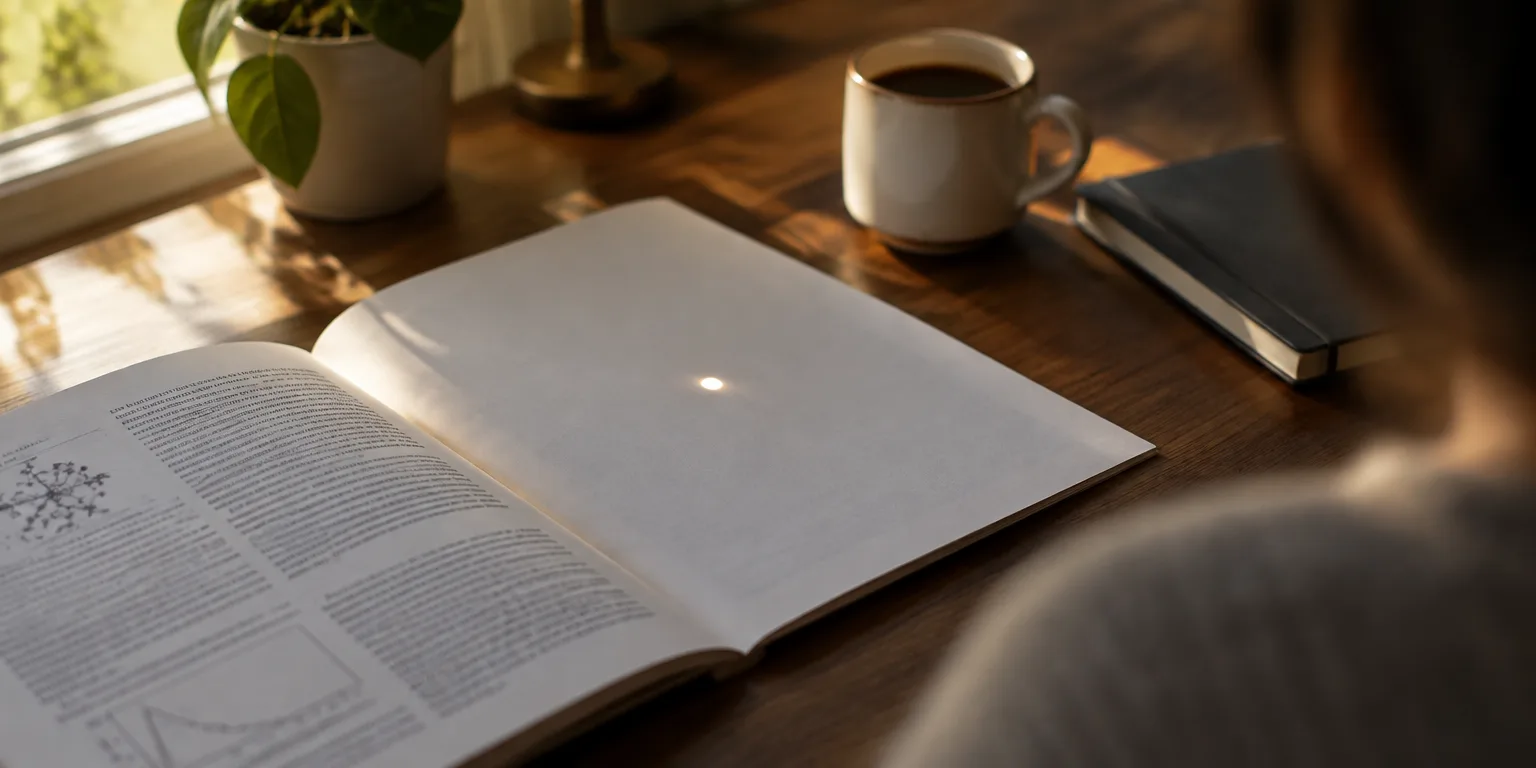
In a 2021 podcast, Andrew Huberman, a professor who studies how the adult brain changes, described a warmup ritual for hard reading. When a science paper would not sink in, he said, he spent 60 to 120 seconds staring at one small spot on his screen or page, at the same distance as his work. That stare, he said, pulled his mental focus into place so learning could start.
The principle, he said, was simple: mental focus follows visual focus. Sharp detail comes mainly from the middle of the visual field, where light sensing cells are packed most densely. When both eyes turned inward toward one point, in what scientists call vergence, and the lens adjusted, the wide visual world narrowed to a high resolution cone, like looking through a soda straw. That narrowing was linked to the release of alertness and attention chemicals, including epinephrine and acetylcholine, that open the brain to change.
To try it, he said, start reasonably rested and alert, with sleep and, if you used it, caffeine. Then pick a small window on a blank screen or paper in front of you, and hold your gaze there. Wear your normal contacts or glasses, because a sharper image brought stronger attention. Blinking was allowed, but keep staring steadily and resist letting your eyes dart around. Feeling restless or strained did not mean you were failing. That agitation, he said, often reflected the alertness chemistry at work, and steady staring could engage deep focus circuits.
Attention still drifted, he said. When it did, use your eyes to pull it back to the page. That repeated reanchoring was the skill. The rewiring itself, he added, happened later, during deep sleep, which strengthened the circuits marked during focus. He had been teased for how rarely he blinked. He said it was practiced.
Questions people ask
How long should I study after doing the stare?
He suggested working in roughly 90 minute bouts, with five to 10 minutes of warmup at the start, advising giving yourself permission not to be fully focused early on, and about an hour of steady focus in the middle. He said he protected that time by turning off wifi, putting his phone in another room, or locking it in the car.
Can I just stare at my phone to get the same effect?
No. He said a phone screen was small enough to hold visual attention, and moving images automatically grabbed attention, which was why phones were so compelling. He said reading words on a page had become harder for many people because they were used to dramatic moving video.
Will coffee or Adderall give me focus without the eye exercise?
He said caffeine could raise alertness through epinephrine, but focused attention also depended on acetylcholine. He described Adderall as basically amphetamine that raised alertness but did not increase focus because it did not touch the acetylcholine system, and he pointed to visual behavior as another way to engage focus.