To Get Into Tinder's First Party, You Had to Download Tinder
After the party trick worked, the team pitched USC Greek groups, then repeated the routine at 15 schools at a time.
 lennysnewsletter.com · How to kickstart and scale a consumer business—Step 4: Find your early adopters by doing things that don’t scale
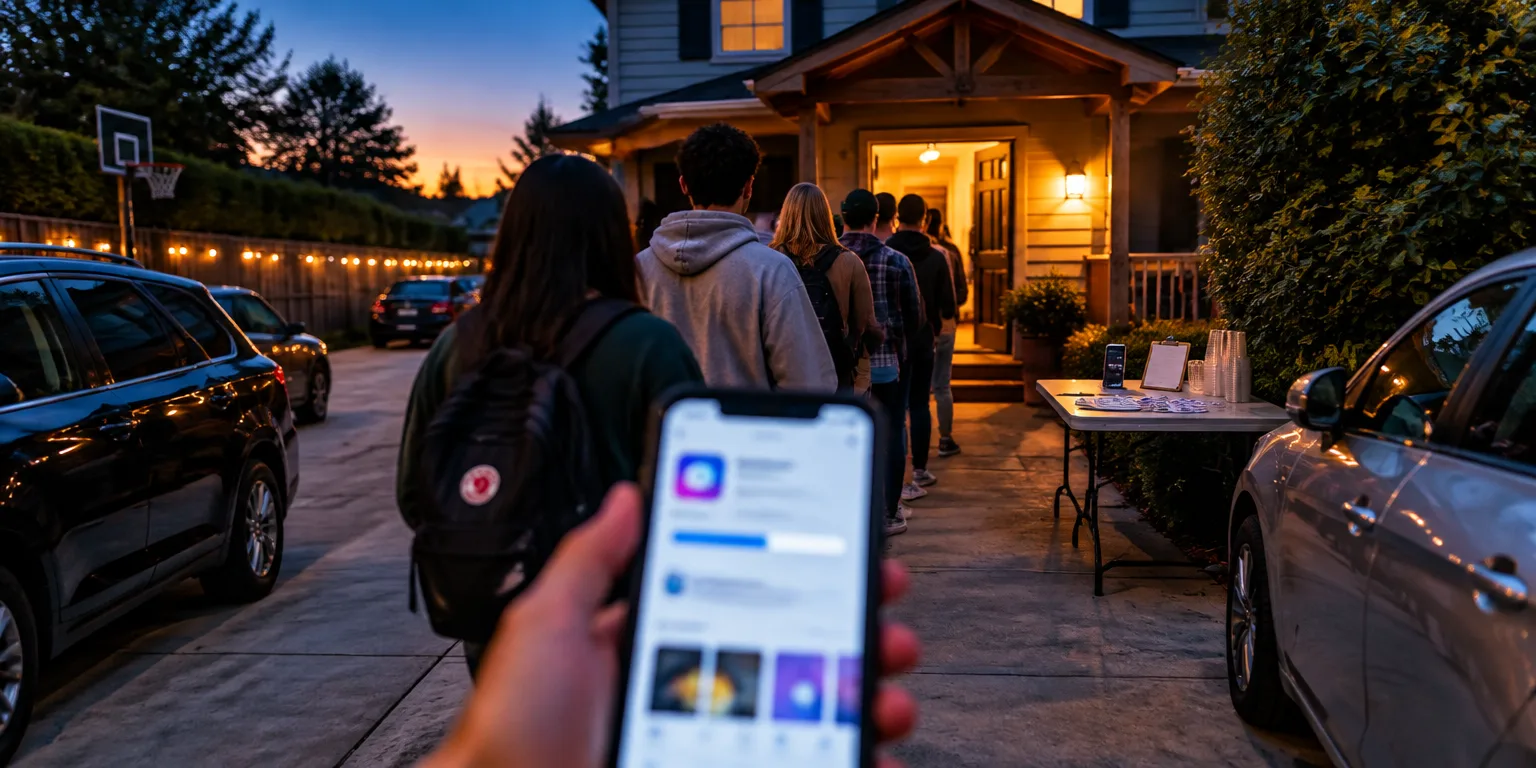
The line to get into the house party ran down the driveway, and Alexa Mateen Abdi, a member of Tinder's founding team who led U.S. expansion, was working the door. The house belonged to her parents, where she had grown up, and about 300 students from the University of Southern California had shown up. To get inside, each one had to pull out a phone and download Tinder, a new dating app for meeting people nearby.
Abdi guarded the entrance and required every guest to install the app before stepping inside. Those few hundred phones, checked one by one, put the first few hundred faces on Tinder.
The next step was a round of in person pitches at USC. Tinder sold itself sorority by sorority and fraternity by fraternity, a routine Abdi said she repeated school by school.
The following Monday, Abdi canvassed USC's Greek community, the women's and men's student social clubs that anchor campus social life. She started with the sorority chapter meetings on Monday night, waiting her turn to address each chapter. Her pitch was simple and flattering: Do you have a crush in class but feel nervous approaching them, and want to meet new faces beyond the same people every day. You could swipe anonymously, and if the other person swiped back, it was a match.
"All the cool people are on it. All your crushes are waiting for you. You don't want to miss out, trust me," she told them.
Then she hurried from fraternity house to fraternity house with a version for that audience. "Who wants to find out who likes you on campus?" she asked. "Where are the sorority girls on campus? They are on Tinder. It’s not creepy, this is the new thing," she added.
At one fraternity, she remembered climbing onto a piano to be heard and getting a round of applause afterward. People were so excited that she called Justin, the chief marketing officer at the time, who was counting downloads as they came in. The pitch was landing.
The next week she repeated the tour at Southern Methodist University, where she had previously spent a year and still knew many students, then at the University of California, Los Angeles and the University of California, Santa Barbara. A week or two later came a tour of colleges around Boston, and downloads jumped quickly.
By then she was building the Tinder University Program. She interviewed influential students on each campus, picked a few to serve as brand ambassadors for the semester, and mailed them boxes of T-shirts, stickers, keychains, and cups. Their job was to make Tinder popular, measured by the percentage of people who downloaded the app in their area, and they sent back photos from bars and clubs where downloading Tinder was the price of admission. Once an area was saturated, she added more schools, running about 15 campuses at a time, in what she called a "domino effect." As Abdi put it, "The more people on the app, the more people wanted to be on it."
Questions people ask
What exactly is Tinder?
Tinder is a dating app where users look through photos and swipe right if they are interested and left if they are not. When two people both swipe right, it is a match and they can message each other. It launched in 2012 and grew into one of the world's largest dating apps.
Why start with sororities before fraternities?
Dating apps need both men and women to be useful, and they are more appealing to men once women are already there. Starting with sororities helped seed the app with women, which made the pitch to fraternities much easier. It also created social proof, since students wanted to join where their friends and crushes already were.
Do startups still use campus brand ambassadors?
The ambassador model became a standard tactic for consumer startups trying to win college users. Companies recruit well connected students, give them merchandise and event budgets, and judge them on signups or activity in their area. It is cheap compared with advertising, and it borrows trust from someone students already know.