To get the toy you want, build it and keep fixing it
A nine-year-old built his own wand and tablet, and says failing is part of learning.
 TEDx Talks · Innovate for the Future by Developing a Makers Mindset | Berton Yang | TEDxYouth@GrandviewHeights
Berton Yang, a nine-year-old who likes to build things, loved the Harry Potter books and wanted a wand of his own. He wondered what kind of wizard he would be without one. Store versions were expensive and hard to find, so he made one using tin foil with a chopstick, and felt ready to cast spells.
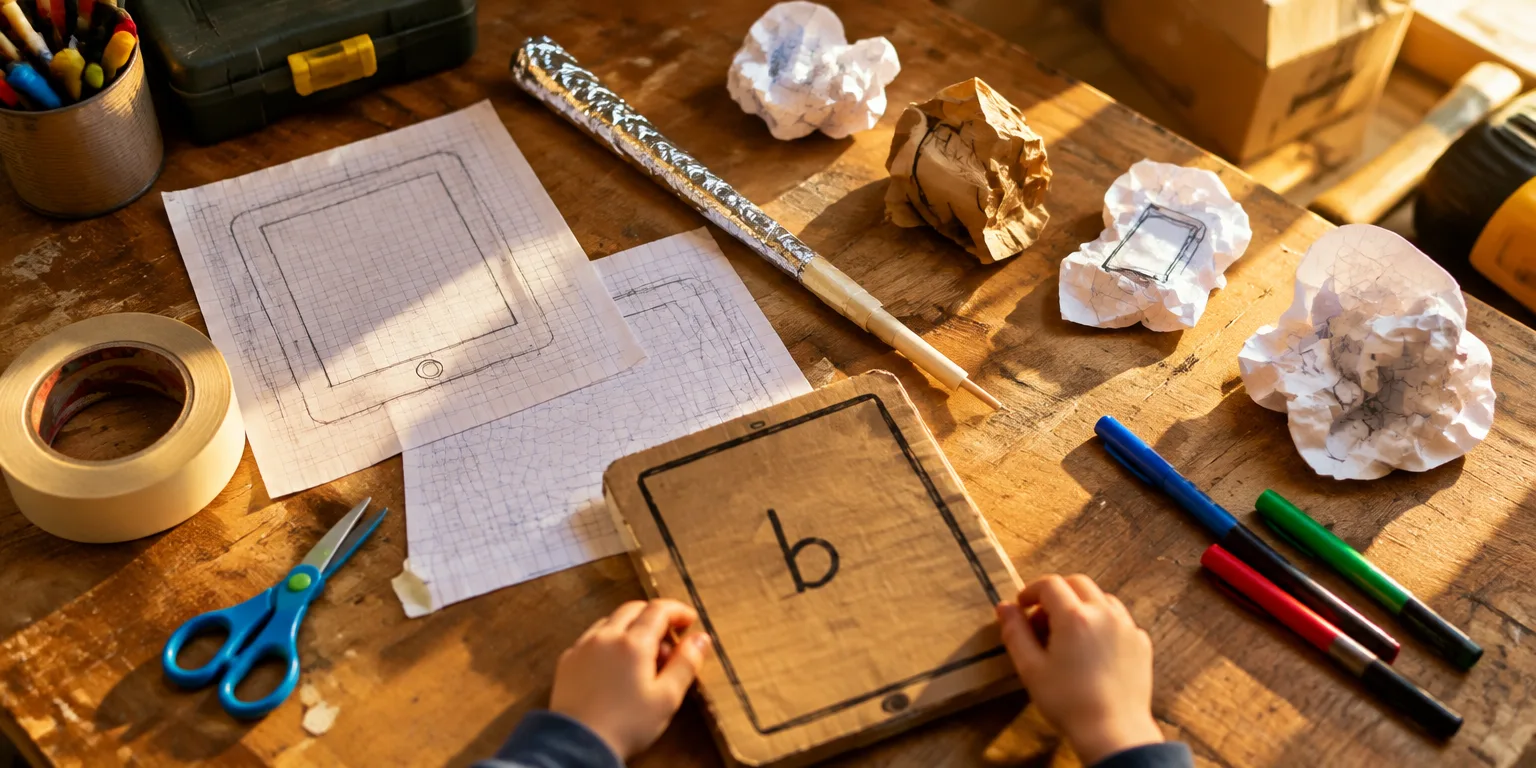
That build shows what Berton does whenever an idea strikes. He says he starts thinking about how he can create it. He draws the idea on paper, makes a trial version, changes it around, and makes it again until he likes the result.
He says misses are normal because the work is practice. He has not turned out a working phone in his garage yet, he notes, and he is still learning. Not every attempt works, and he treats that as part of making.
He used the same approach for a cardboard tablet he calls the b-pad, with the b for Berton. Although it is super basic, he loves it because it is the first one in the world, special and unique.
His starting move is the sketch. He starts by sketching what he wants, as he puts it, before he builds.
Questions people ask
What materials should a beginner start with?
Start with paper, tape, foil, chopsticks, boxes, and markers. Those are enough for wands, tablets, and other pretend versions of store toys, and they let kids sketch, fold, and redo cheaply before trying wood or electronics.
What should a kid do when the prototype does not work?
Treat a flop as data, not as an ending. Ask what broke, sketch a fix, and try one change at a time. Berton frames practicing as the goal, so a second version counts as progress even if it still looks rough.
How can adults support a young maker?
Adults can help by asking what the drawing should do, helping hold pieces steady, and setting rules for safe tools and cleanup. Berton kept ownership of his builds, and that sense of making it himself mattered to him.