To Grow Past 50 Smart Devices, Keep Them Off Your Main Wi-Fi
Wi-Fi bulbs and plugs share the same airwaves as your laptop, while Zigbee, Z-Wave, and Thread gadgets form their own mesh, a separate network where devices pass signals for neighbors, that leaves Wi-Fi alone.
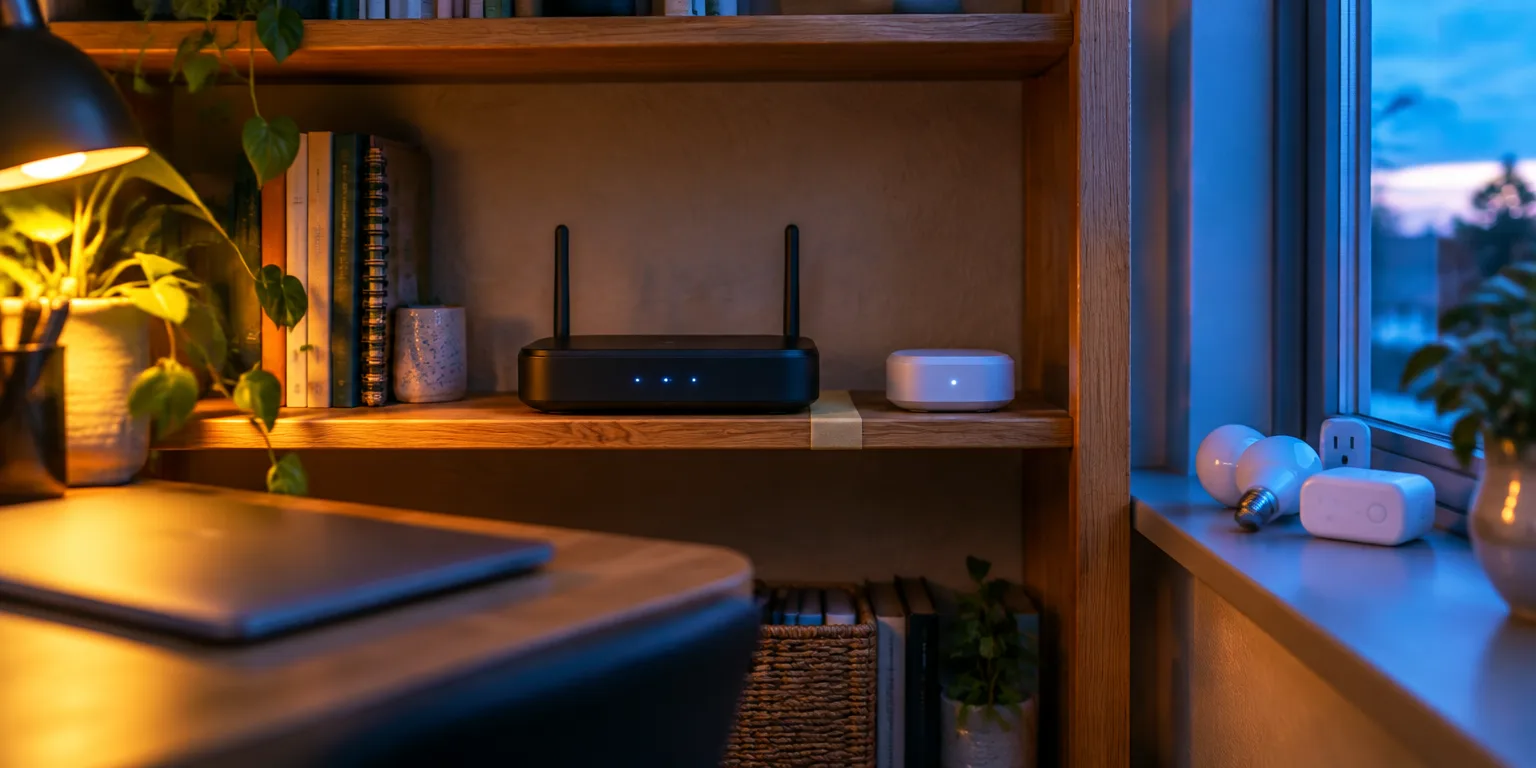
A home with around 20 smart devices chosen without regard to protocol can start to struggle, not because the internet plan is too slow but because too many gadgets share the same Wi-Fi.
Every Wi-Fi bulb, plug, and camera shares airtime with laptops and phones, so each addition can cause slowdowns, make the network harder to manage, and add a new way in for attackers.
The first fix is separation. Many home routers can broadcast a guest network, which is a second Wi-Fi name that keeps visitors and untrusted gadgets on their own segment.
That simple split means a compromised camera cannot easily reach the laptop where you bank and work, and it keeps the main network easier to manage.
Households with fancier routers can go further with what is called a VLAN, a way to divide one physical network into virtual separate networks with stricter rules.
The second fix is to buy gadgets that stay off Wi-Fi entirely. Devices that use Zigbee, Z-Wave, or Thread, three low power radio standards for smart homes, form their own mesh, meaning each powered device passes signals along to its neighbors.
That side network does not load Wi-Fi at all. Choosing with protocol in mind can support more than 50 devices, while choosing without regard to protocol can struggle at around 20.
In practice, that means starting your next smart home purchase with two questions, can it live on the guest side, and is there a version that uses Zigbee, Z-Wave, or Thread instead of Wi-Fi.
Questions people ask
Do I need special equipment for Zigbee, Z-Wave, or Thread?
Usually, yes. Zigbee and Z-Wave devices need a small hub, and Thread devices need what is called a border router. Many newer smart speakers, displays, and home control boxes already include one or more of these radios.
Will putting gadgets on a guest network slow them down?
They use very little speed. Smart bulbs and sensors send tiny, occasional messages. Moving them aside leaves more clean airtime for video calls, games, and streaming.
Is separation only about speed?
No, security is also a reason. Isolation means an attacker who gets into a light switch still faces another wall before reaching phones, laptops, and financial accounts.