To Study the Bible, Pick a Theme or Go Chapter by Chapter
One free show works by theme and another goes in order, and the recommender says the second is just as deep on context and history.
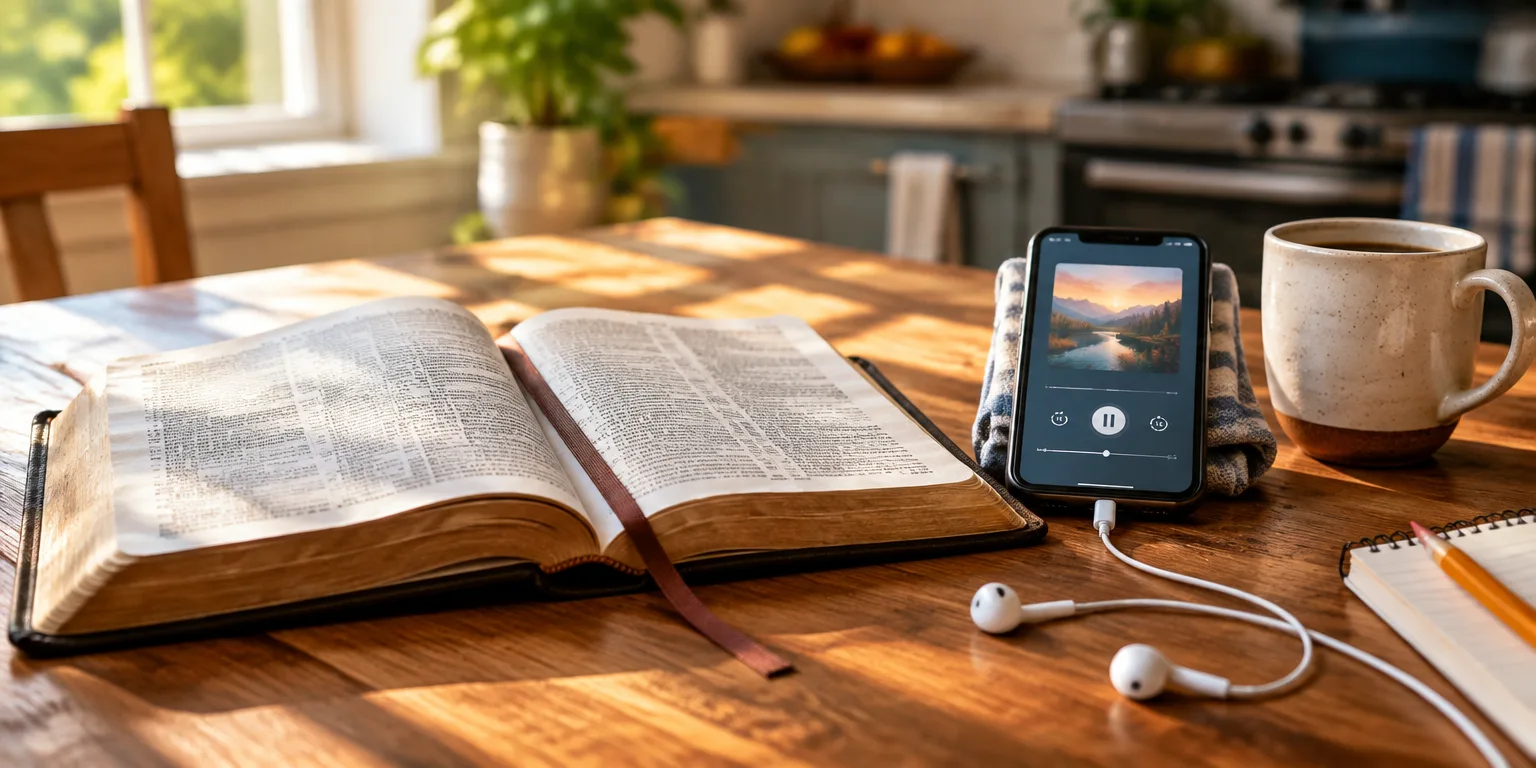
A man recommending Bible podcasts says he has followed the Bible Project since about 2014 or 2015, and he calls it "the best free Bible resource that exists."
His method for a beginner is simple: pick how you like to learn, then press play on the matching free show.
If you like big ideas, start with the Bible Project, from Tim Mackey and John Collins and their team. It takes a thematic approach, meaning an episode explores one idea or pattern wherever it shows up, rather than moving front to back. Most people already know this one, the recommender notes, and he calls it "the best one out there in my opinion."
If you like order, try the Bama Podcast with Marty Solomon. It moves through each book, one chapter at a time. The man making the recommendations says "the context and the history is just as deep, just as rich," and calls them great conversations.
My suggestion if you want to try it this week is to sample one episode of each. See whether themes or going in order is the one that keeps you listening.
Questions people ask
Which path should I try first?
It comes down to taste. Pick the Bible Project if you like following one theme across passages, and pick the chapter by chapter show if you like going in order, since going in order gives you a clear next step every day.
Are these shows really free?
Yes. Both shows publish their audio free in podcast apps, and the Bible Project also posts free videos, study notes, and classroom materials on its website. You do not need a subscription, though both accept donations.
Do I need a Bible alongside the podcasts?
It helps to have one, in print or in a free app, so you can read the passage before or after you listen. The podcasts supply the background, cultural history, and literary patterns, but following along lets you spot what they are describing.