Today's AI job fears repeat a famous wrong bet about doctors
Investor Eric Vishria says the 2016 call to stop training radiologists was right about the technology and wrong about everything else.
 Invest Like the Best with Patrick O'Shaughnessy · Eric Vishria - A Decade of Lessons Investing in Software & Hardware - [Invest Like the Best, EP.486]
Eric Vishria, a venture capitalist at Benchmark who backs software and chip startups, was asked what he is watching most closely in artificial intelligence. What bothers him, he said, is not the technology but the certainty, the way very smart people in tech are reaching deterministic conclusions about mass unemployment.
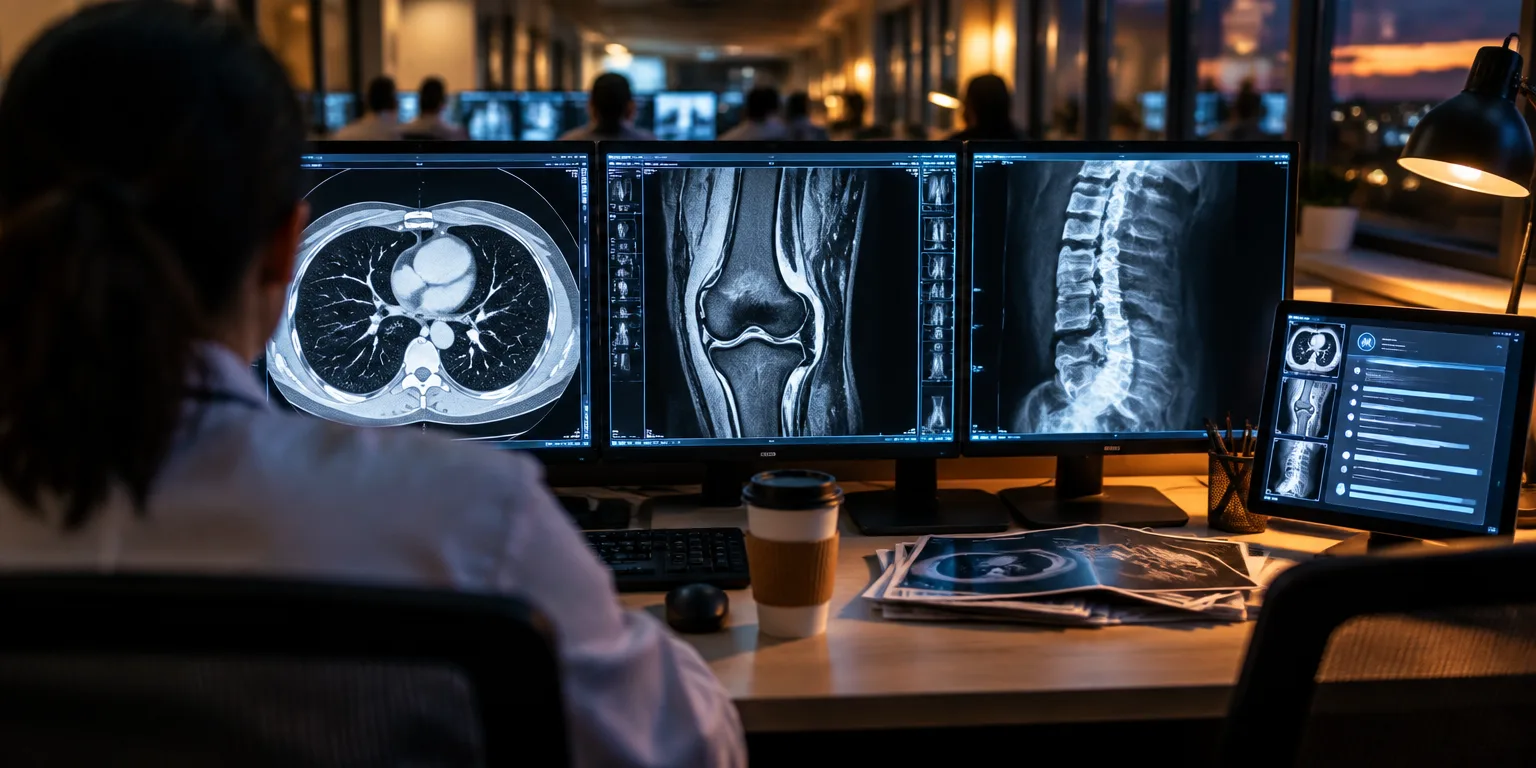
His counterexample is Geoff Hinton, the researcher who said around 2016 that we should stop training radiologists, the doctors who read X-rays, CT scans, and MRIs, because AI would soon do it better. Vishria argues that Hinton "could not have been more wrong," even though the thinking that led him there was 100 percent correct.
On capability, Vishria believes Hinton was right. Computers should be able to learn to read medical images better than people, and early results in narrow uses have supported that view. Vishria has invested in a startup, New Lantern, that is approaching the problem that way.
What Hinton missed, in Vishria's telling, was everything around the model. First, the data. There is no single, aggregated set of scans to train on. Companies go after chest CTs or other narrow slices, while a typical radiologist reads many different kinds of scans each day across the body, amounting to 20 to 40 scans. An AI that handles one of those jobs is only marginally helpful.
Second, payment and responsibility. The health industry is built around paying doctors to interpret scans, with liability, malpractice exposure, and consequences for missing something. Vishria asks, "How is that going to work?" and "How are we going to avoid that?"
Third, stickiness. He expects a long co-pilot period in which AI does some parts and the radiologist does others, with the two checking each other and throughput rising. The AI will slowly read more and more, but getting from here to there will be slow. During that stretch, he says, we need more radiologists, not fewer, because scans are getting cheaper and everyone is getting more imaging, in what he calls a Jevons paradox kind of way.
That is why he dismisses deterministic job forecasts. Mass unemployment predictions, he says, are "almost the exact same setup." As Vishria put it, Hinton "has the right data" but did not think it through in real world application.
Questions people ask
Did AI ever get good at reading scans?
Yes, in narrow tasks. AI systems now match or beat doctors on specific jobs like detecting certain chest abnormalities or breast cancers in research tests. The gap Vishria points to is breadth, a typical workday involves dozens of different scan types, not one test.
Are we short on radiologists now?
In the United States, yes. Imaging volume has grown faster than the radiologist workforce, and professional groups have reported workload pressure and hiring shortages. That is why teleradiology and AI assistants that draft findings for a doctor to check have grown.
What is Jevons paradox?
It is the idea that making something cheaper or more efficient can increase total use of it. Vishria applies it to imaging: if scans get cheaper and faster to read, doctors order more of them. The same dynamic is often cited for AI, where cheaper intelligence creates more demand for it.