Today's weight-loss drugs started in Gila monster venom
Researchers found a sturdier gut hormone in lizard venom, then needed 13 years to turn the finding into a lab-made diabetes drug.
 The Works in Progress Newsletter · Are miracle drugs hiding in plain sight?
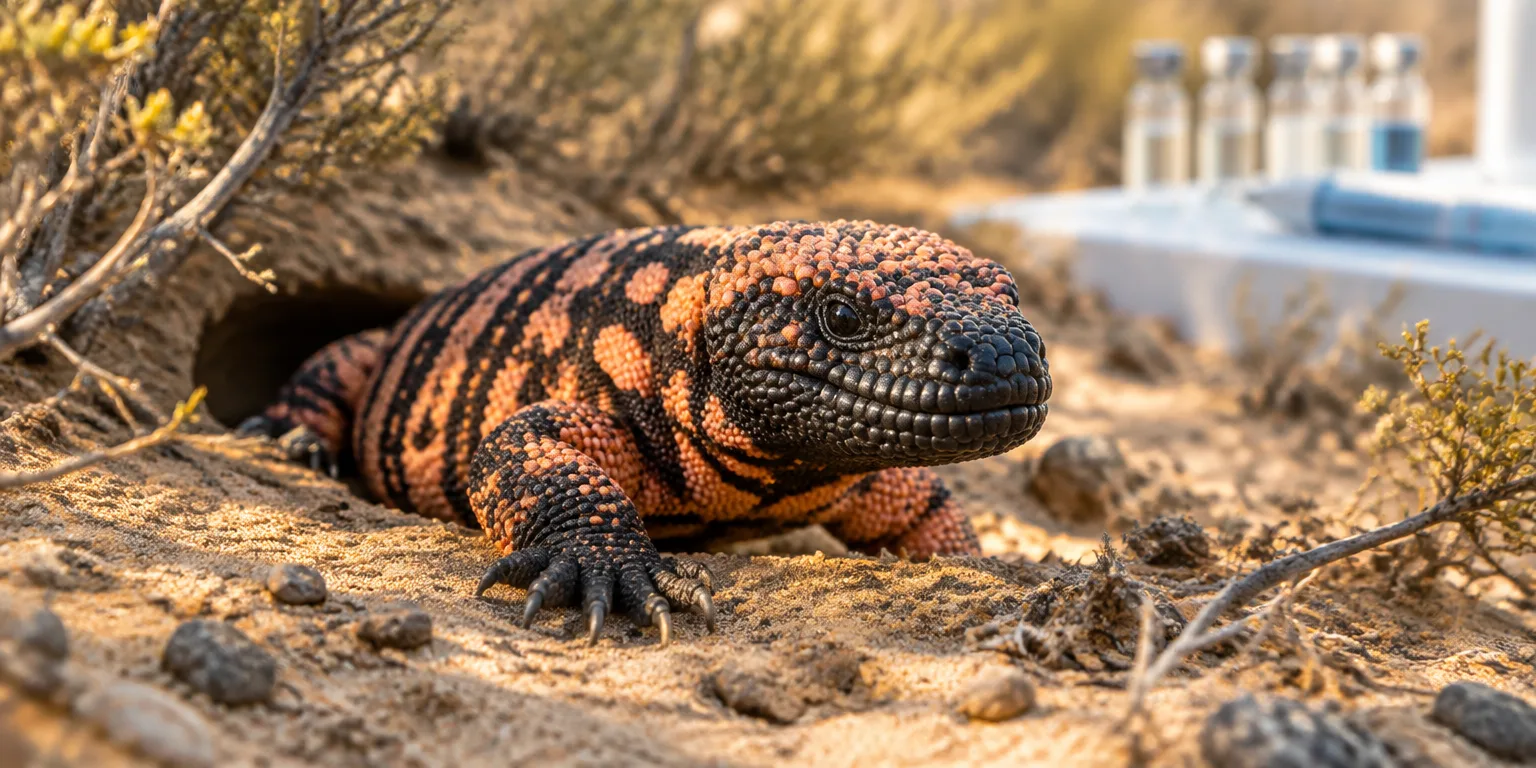
The Gila monster, pronounced Heela, is about one to two feet long and cute enough to google. It is also slow, with a top speed of about 1.5 miles per hour, and it spends most of the year underground, emerging mainly in spring.
When it does eat, it eats big, swallowing things like whole quail eggs at once and storing fat in its tail to survive on only a few meals a year. It has very muscular jaws, and when it bites, usually a mouse or a small bird, venom drips into the wound as it chews. The bite is excruciating.
In the early 1990s, two scientists were paying close attention to that venom for different reasons. One was an endocrinologist, a hormone specialist, who had noticed that people bitten by the lizard often developed an extreme reaction in the pancreas. The other was John Eng, a scientist who studied small protein-like hormones in animals and had already found a hormone resembling human GLP-1 in the venom of a related beaded lizard.
This is the origin story of today's blockbuster weight-loss and diabetes drugs. GLP-1 is a natural gut hormone, one of a group called incretins, that is released when we eat and tells the pancreas to release insulin. The natural version lasts only a couple of minutes inside a person before enzymes break it down and the kidneys clear it, which made it not very useful medically. Scientists were looking for a longer-lasting version of GLP-1 that could be used as a treatment for diabetes.
Working together, the researchers found a candidate in Gila monster venom in 1992. They called it Exendin-4. It was very similar to human GLP-1 and switched on the same receptor, but it lasted for hours instead of minutes. The trick was a slightly different building block, an amino acid, at the exact spot where the enzyme attacked natural GLP-1, so it resisted being degraded.
The idea seemed strange to some drug companies. Eng patented Exendin-4 quickly and showed it around, but executives saw little commercial use in lizard venom. The turn came in San Francisco at a 1996 diabetes researchers' gathering, where scientists from Amylin Pharmaceuticals, a biotech company, agreed to license the patent.
It took 13 years from discovery to approval. In 2005, a synthetic version, not venom milked from lizards, was approved for diabetes under the name Exenatide. Scientists at Novo Nordisk, a Danish drugmaker, then attached a fatty acid chain that hitches a ride on albumin, a blood protein that carries cargo around the body like a bus. That version, liraglutide, lasted a day. A further tweak became semaglutide, which lasts about a week.
Questions people ask
Do drugmakers still get the drug from Gila monsters?
No. Exenatide and later drugs are synthetic copies or engineered versions made in labs and factories. The lizard provided the template, and chemists learned how to make longer-lasting tweaks without needing venom.
How do today's versions last a week instead of two minutes?
Chemists changed the structure so enzymes cannot easily chop it up and kidneys cannot quickly clear it. In liraglutide and semaglutide, a fatty chain lets the drug cling to albumin in the blood, which acts as a carrier and slow-release reservoir. That stretches action from hours to a day, and then to about a week.
Are Gila monsters dangerous to people?
Their venom is very poisonous and the bite is described as excruciating, with powerful jaws that hold on while venom seeps in as they chew. In practice they rarely harm people because they are sluggish, spend most time underground, and mostly bite small prey like mice and birds.