Toilet paper shows how flush or strapped shoppers feel
With no good substitute, shoppers stock up when money is easy and count squares when it is tight.
 Marketplace · Fed holds rates, but a future hike is pretty inevitable
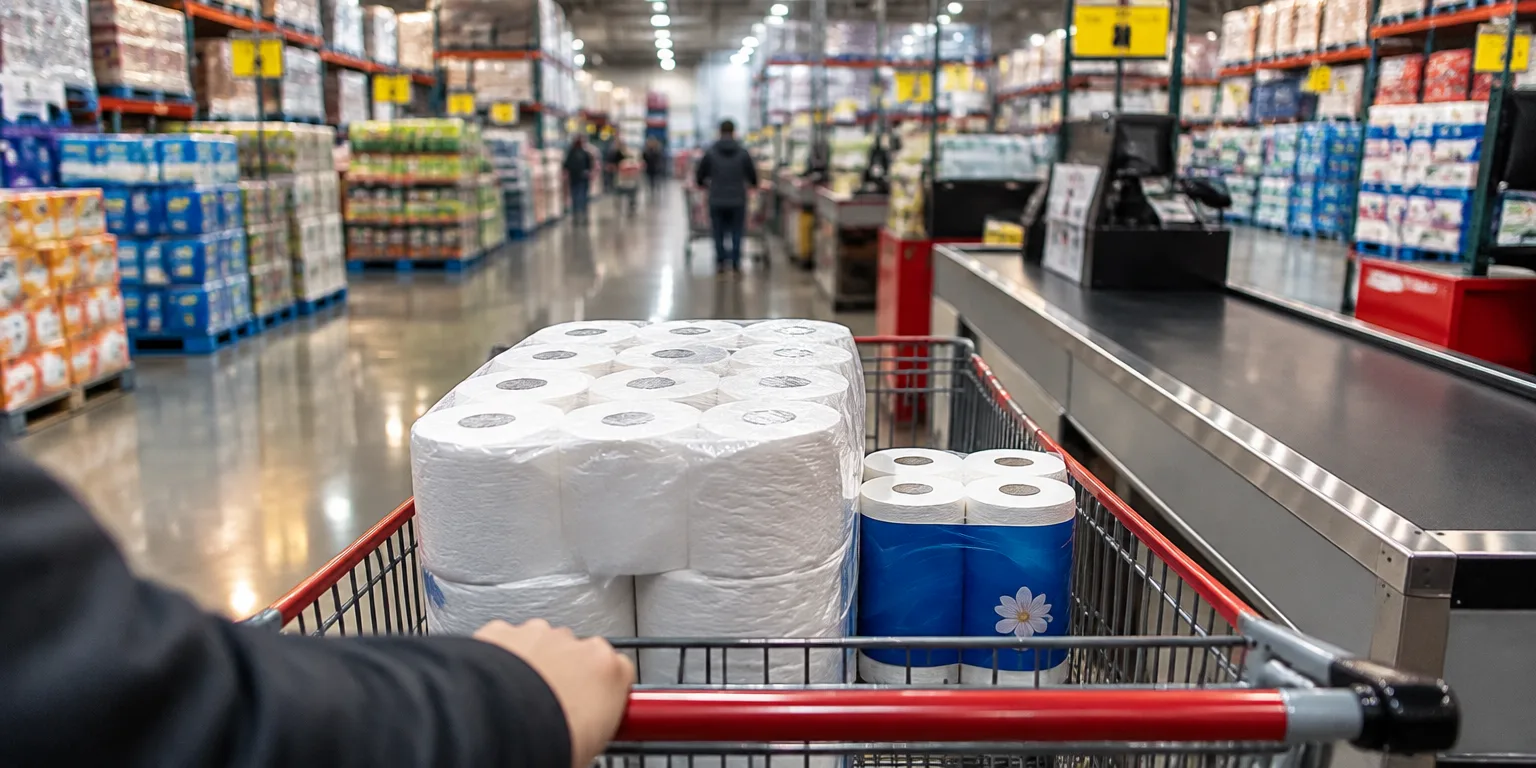
Outside a Costco in suburban Minneapolis, a surprising share of customers walked out carrying only a bulk package of the warehouse chain's own toilet paper. Shopper Vanjie Kruger said she had stopped in because of the discount, with the package priced at $20.99 after $3 off.
Another customer, Kirsten Halloran, said she divides her grocery trips among several stores, buying vegetables at a discount grocer, frozen items at a specialty chain, and paper goods at Costco. She said she reaches for the store label when the big brand price looks roughly twice as high.
At this store, the big brand option, Charmin, sold for $29.99, roughly a dozen dollars above the house label. Shopper Rick Sumrall bought it anyway, saying his wife had rejected the store version as a personal preference.
That blend of bargain hunting and brand loyalty is why economists pay attention. A University of Wisconsin researcher who studies household finances, Michael Collins, has examined toilet paper buying because demand for it is unusually steady and clear. Unlike butter, which shoppers can swap for margarine or cooking oil, toilet paper has no alternative product that does the same job, and almost everyone uses it.
Collins examined nine years of checkout scanner data and found a simple pattern. When households feel flush, such as shortly after tax season, purchases climb about 20 percent simply because shoppers can afford to stock up. When budgets are strained, households switch to lower priced rolls and use less overall.
Erin Lash, who has covered household products at Morningstar for nearly 20 years as an equity researcher focused on consumers, said companies saw that belt tightening clearly during the Great Financial Crisis, when shoppers tried to get more out of every roll and companies kept smaller inventories. Today the signal is mixed. Recent company results point to smaller purchase volumes while shoppers remain loyal to premium labels they prefer.
Marketplace reporter Kristin Schwab said, "It could reflect an economy where people have jobs, so they can still buy the products they like." Inflation, in this reading, has left money tighter, so overall purchases fall. If shoppers start trading down, she said, "it could be a sign that consumers are shifting what they're spending."
Questions people ask
Why is toilet paper better than food for tracking spending?
Food is messy to track because shoppers constantly swap one item for another when prices change, like butter for oil, and fresh goods spoil. Toilet paper keeps for a long time, almost everyone buys it, and there is no alternative product, so changes in volume or brand say more about money than taste.
Does panic buying, like in 2020, ruin the signal?
Short spikes can distort the data for a few weeks because people build closets full of extra rolls and then buy nothing while they work through them. Researchers handle this by looking at years of scanner data, not one week, so temporary hoarding averages out and longer shifts in brand and volume stand out.
What does trading down actually look like?
It usually means moving from a premium brand like Charmin to a store brand like Kirkland, choosing fewer plies or fewer sheets per roll, or waiting for sales. Analysts watch company sales reports for falling share for premium labels and rising share for private labels.