Trains often beat flying between nearby cities, until you reach the station
A downtown-to-downtown train can often beat flying, unless you still need a car once you arrive.
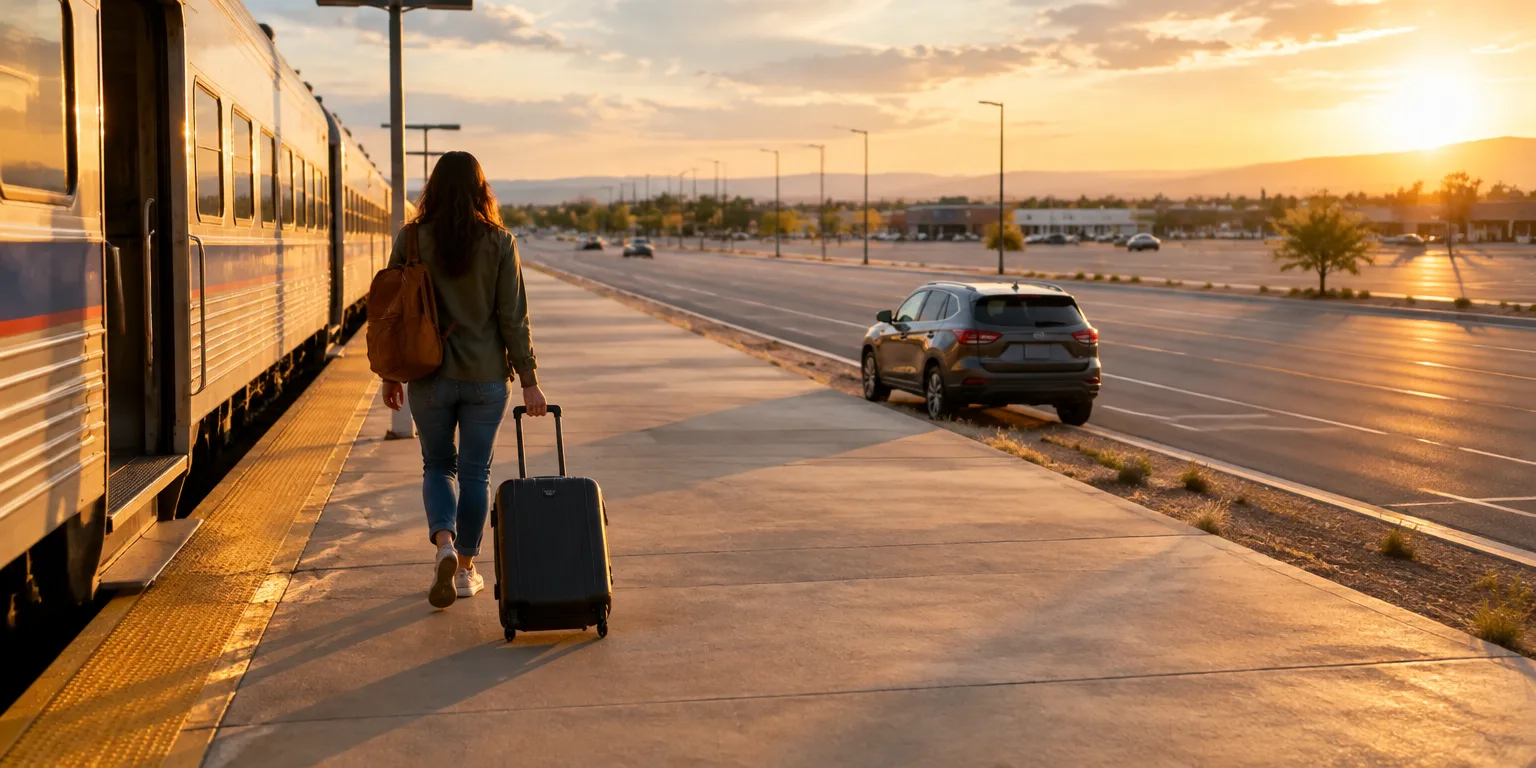
 Wendover Productions · Why Trains Suck in America
For trips of 200 to 300 miles, the train can often win.
The math is door to door, not station to station. To fly that distance, a traveler has to drive to the airport, check in, clear security, fly, and then drive back downtown. A train that runs downtown to downtown can skip most of that, and often gets there faster.
Yet trains between close American cities still feel slow and inconvenient, despite the distance. Why do they struggle exactly where the distance favors them?
The problem starts after arrival. American cities average under fifteen thousand residents in each square mile, which makes them far less walkable from the station than European cities, which at the dense end fit about fifty-five thousand residents into that same space. In a compact city, the station is the destination. In a spread out one, it is just another stop.
Much of the difference traces back to when cities were built. Many European cities grew up long before cars, when everyone except the rich had to walk everywhere, so they developed tight urban cores. American cities largely grew up around cars, and spread out.
So a 250 mile train ride often saves time downtown to downtown, then the last leg can cancel it out, when the rider still needs another ride to reach work, home, or a meeting. A train is only as convenient as the city around its station, and in America, that last mile is often many miles.
Questions people ask
Why does density matter so much for trains?
Trains can only stop in a few central places, so riders have to scatter on their own after they arrive. In a dense, walkable city, many jobs, homes, and hotels are close to the station. In a spread out city, almost everyone needs a car, bus, or taxi for that last leg, which adds time and cost.
Why are older European cities more compact?
They were largely built before cars, when walking was the only option for most people. That forced homes, shops, and workplaces close together around a center. American cities expanded much later, often after cars and highways made it easy to live farther apart.
What trip length favors trains?
The source points to 200 to 300 miles, where a downtown-to-downtown train can often be faster than flying once airport trips, check-in, and security are counted. On much longer routes, the plane's speed in the air outweighs that ground advantage.