Trapped by Ice, an Arctic Crew Bet Everything on a Day of Wind
Their rescue ship was already at the bottom of the ocean, and only a one-day wind stood between them and being frozen in.
 American History Tellers · Greely Arctic Expedition | No Relief | 2
Two days before they were supposed to leave, Sgt. David Brainerd walked back into camp with bad news. The bay in front of Fort Conger, their Arctic station, was jammed solid with ice.
He said boats could go nowhere, and the August ice was too thin to walk on. They were trapped.
Brainerd was the expedition's watcher. Every day he climbed the bluffs around Fort Conger, sometimes hiking for miles, to scan the water for a relief ship. He never saw one.
What Brainerd could not see was that about 250 miles south, the Proteus had already sunk and its crew were out on the water in small boats.
That ship was the Proteus, sent in the summer of 1883 to bring Lt. Adolphus Greeley's party home after almost two years in the far north. On July 23, ice pierced its hull and the crew took to five boats.
Lt. Ernest Garlington, who led the relief party, and Capt. Richard Pike, the ship's captain, saved only 40 days of rations and five overloaded boats. Garlington set aside a little food and gear with a letter explaining the wreck for Greeley, then rowed south with his men through sleet, hoping to meet their support ship.
Greeley was still waiting under his standing orders. If no ship had arrived by September 1, his men were to take four small boats 250 miles south along the coast to Littleton Island, where relief and winter supplies should be waiting.
But Greeley feared that waiting until September would let ice thicken until small boats could not get through. He moved the departure up to August 9, then watched the bay freeze up anyway and cursed himself for waiting.
Then a strong south wind rose on August 8. It blew for 24 hours and drove the ice away, and at dawn on the ninth the water was clear enough for boats.
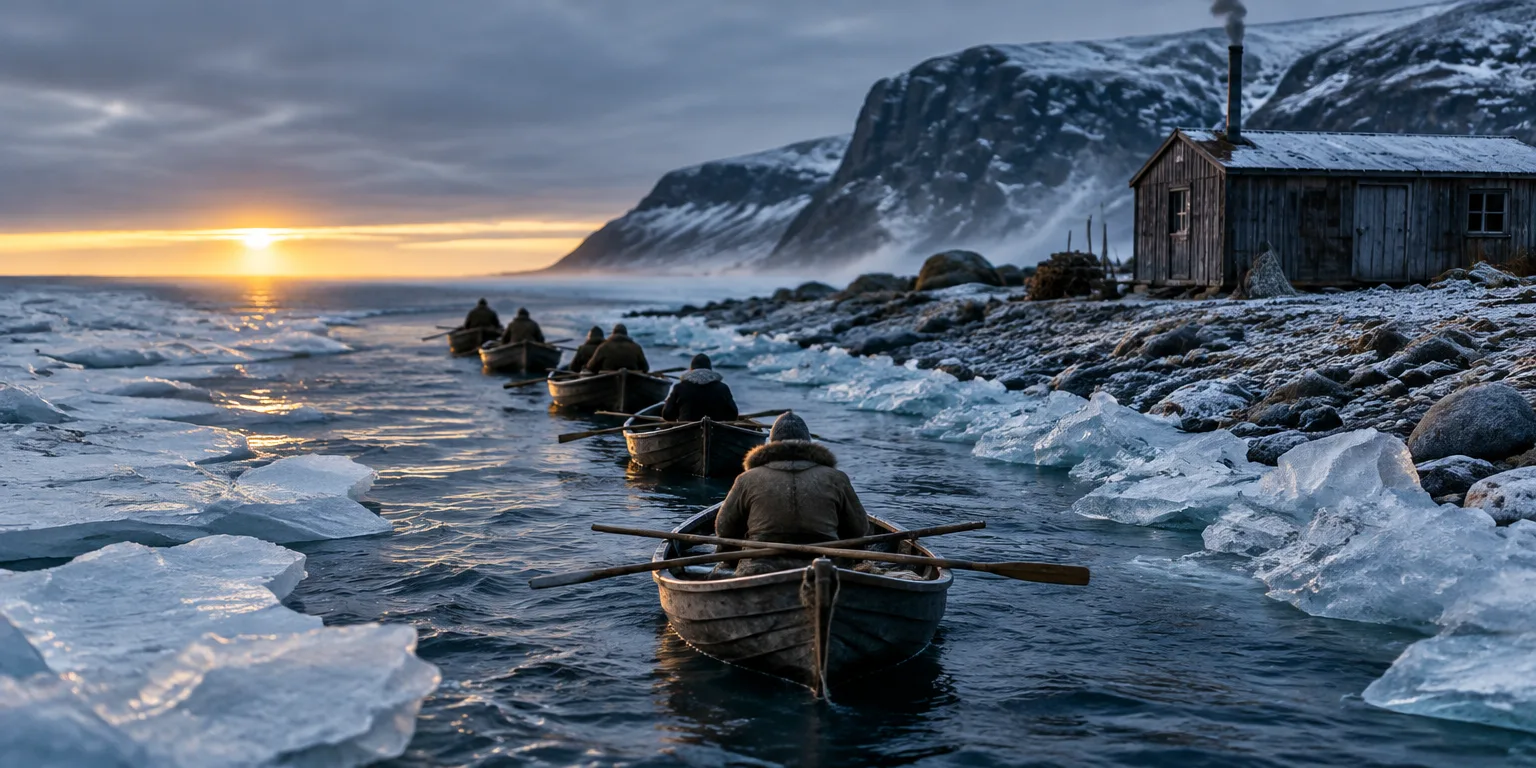
Greeley did not wait. While Brainerd and two others took the last weather readings, the men loaded the boats. Brainerd walked through the longhouse where the beds were unmade, dirty dishes sat in the sink, and the stove still burned, then walked out and nailed the door shut.
Greeley came out in full Army dress uniform, saber and shoulder knots included. He ordered the four boats to shove off, and the men rowed south with no way of knowing whether rescue or disaster lay ahead.
Questions people ask
What kind of boats did Greeley's men use to leave?
The men had four small boats left at Fort Conger, plus a coal-powered steam launch they prepared for the trip. They planned to travel about 250 miles down the coast of Ellesmere Island and then across open water to Littleton Island.
What happened to the Proteus?
The Proteus was a steam-powered sealing ship fitted with an iron bow for breaking ice. Captain Richard Pike had commanded her for nine years. After ice pierced the hull, the crew escaped in two whale boats and three lifeboats with only a fraction of the food and shelter meant for Greeley.
Why were they heading to Littleton Island?
Littleton Island, off northwest Greenland, was the agreed fallback point. The relief plan called for a ship to wait there with food and shelter materials for the winter. Greeley's orders were to retreat there if no ship reached Fort Conger.