Trucks Could Supply the CO2 Breweries Are Short Of
A startup retrofits trucks and trains to trap exhaust gas and purify it for sale to breweries, greenhouses, and water plants.
 Y Combinator · This Startup Is Trying To Delete 29% Of All CO2 Emissions
At his headquarters outside Detroit, Paul Gross, the founder and chief executive of the startup Remora, holds up ordinary tap water in one hand and a tank of gas in the other. The gas was captured that day from a diesel truck engine. He bubbles it through the water to make sparkling water, to show that truck exhaust can become something you can drink.
Gross traces the idea to something he learned in college, that the United States was running short of commercial carbon dioxide. As he puts it, “Why aren’t breweries able to get enough CO2 and yet we’re emitting 375 million tons a year from trucks and trains?”
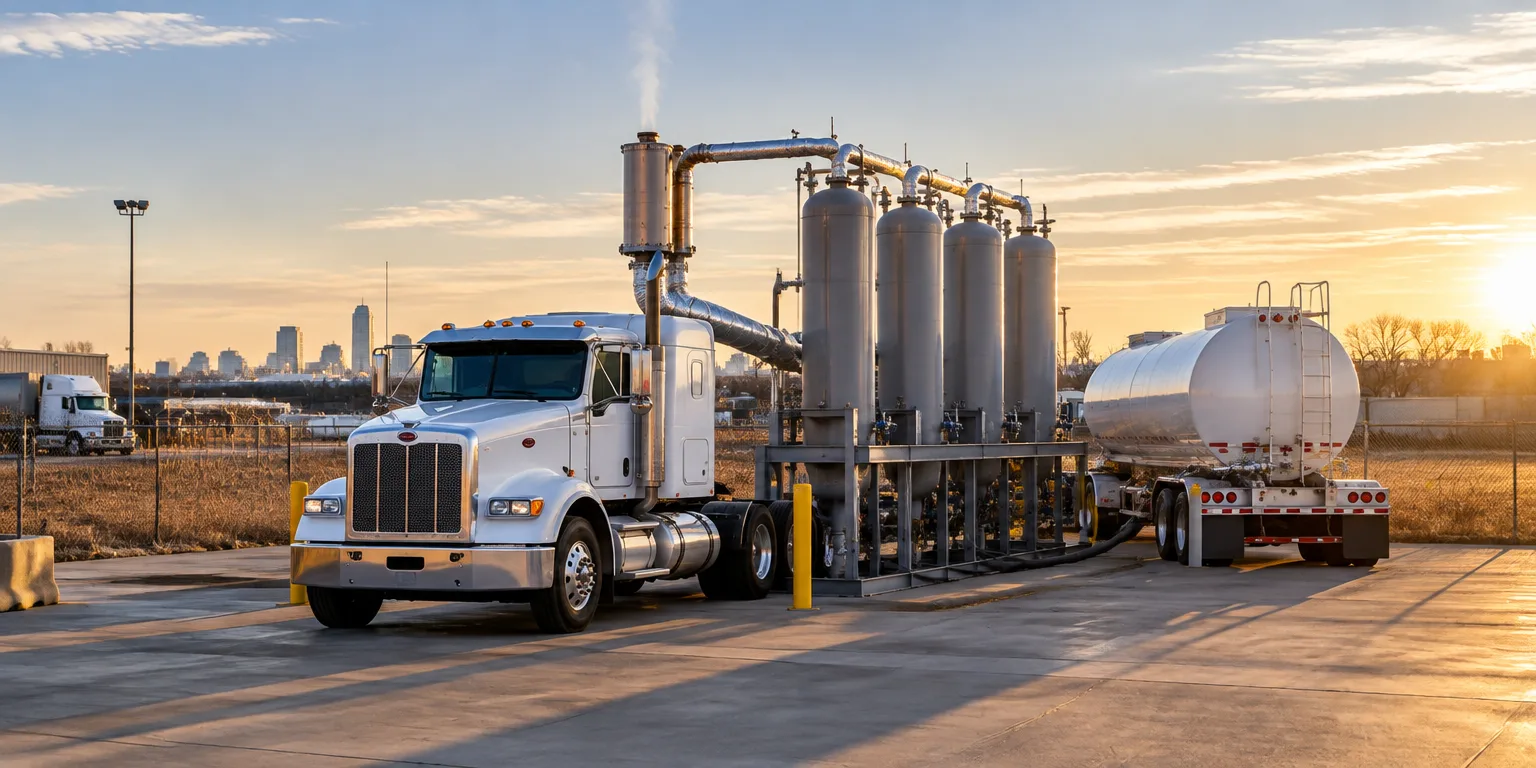
His answer, he argues, is to stop treating exhaust as waste and start treating it as supply. Remora retrofits semi-trucks and locomotives with hardware that extracts and purifies carbon dioxide from the exhaust, and then sells that gas to customers who already need it.
The device works by routing tailpipe exhaust through a cylinder filled with pellets the size of peas. Carbon dioxide molecules get stuck in microscopic pores in the pellets, Gross says, while the other gases keep moving through and are released. Once one side of the cylinder fills, the system vacuums the carbon dioxide out and keeps capturing on the other side, storing the gas in pressure vessels.
From there, Gross says, the captured gas is offloaded as a liquid into a large tank. Distributor customers arrive in tanker trucks, pick it up, and carry it to end users such as food and beverage companies, greenhouses, and water treatment plants. The setup, he argues, both cuts emissions and creates new revenue for truck and train operators.
The sparkling water is his demonstration. If exhaust gas can carbonate a glass of tap water, Gross argues, the same purified gas can be useful to buyers who already need it. He describes the sale as a way to recycle the gas.
Questions people ask
Is CO2 made from diesel exhaust really safe to drink?
It can be, once it is purified to what the industry calls beverage grade. That means it has been cleaned and tested to meet strict purity standards for food and drinks, requiring very high purity. Remora says its system extracts and purifies the exhaust gas to reach that level before it is ever sold.
Why would there be a CO2 shortage when so much is emitted?
Most commercial CO2 is not pulled from the air but captured as a byproduct of other industrial processes, such as ethanol, ammonia, and fertilizer production. When those plants shut down for maintenance or close, supply tightens quickly. Breweries, which use the gas for carbonation and packaging, are often among the first to feel it.
Does using captured CO2 in drinks keep it out of the atmosphere for good?
No, not permanently. When a beer or soda is opened and drunk, much of that CO2 bubbles out and returns to the air. The climate benefit comes from two other places: capturing a large share of the truck or train exhaust in the first place, and displacing newly produced CO2 that buyers would otherwise have to source.