Turning rock into magnets takes strong acids, and cheaper costs moved the work to China
The method is decades old and messy, while lower regulatory and labor costs helped move the work to China.
 All-In with Chamath, Jason, Sacks & Friedberg · Trump: Send National Guard to SF, China Rare Earths Trade War, AI's PR Crisis
Finding the rock is not the main problem Sacks describes. It is the messy chemistry that pulls the useful metals out of it.
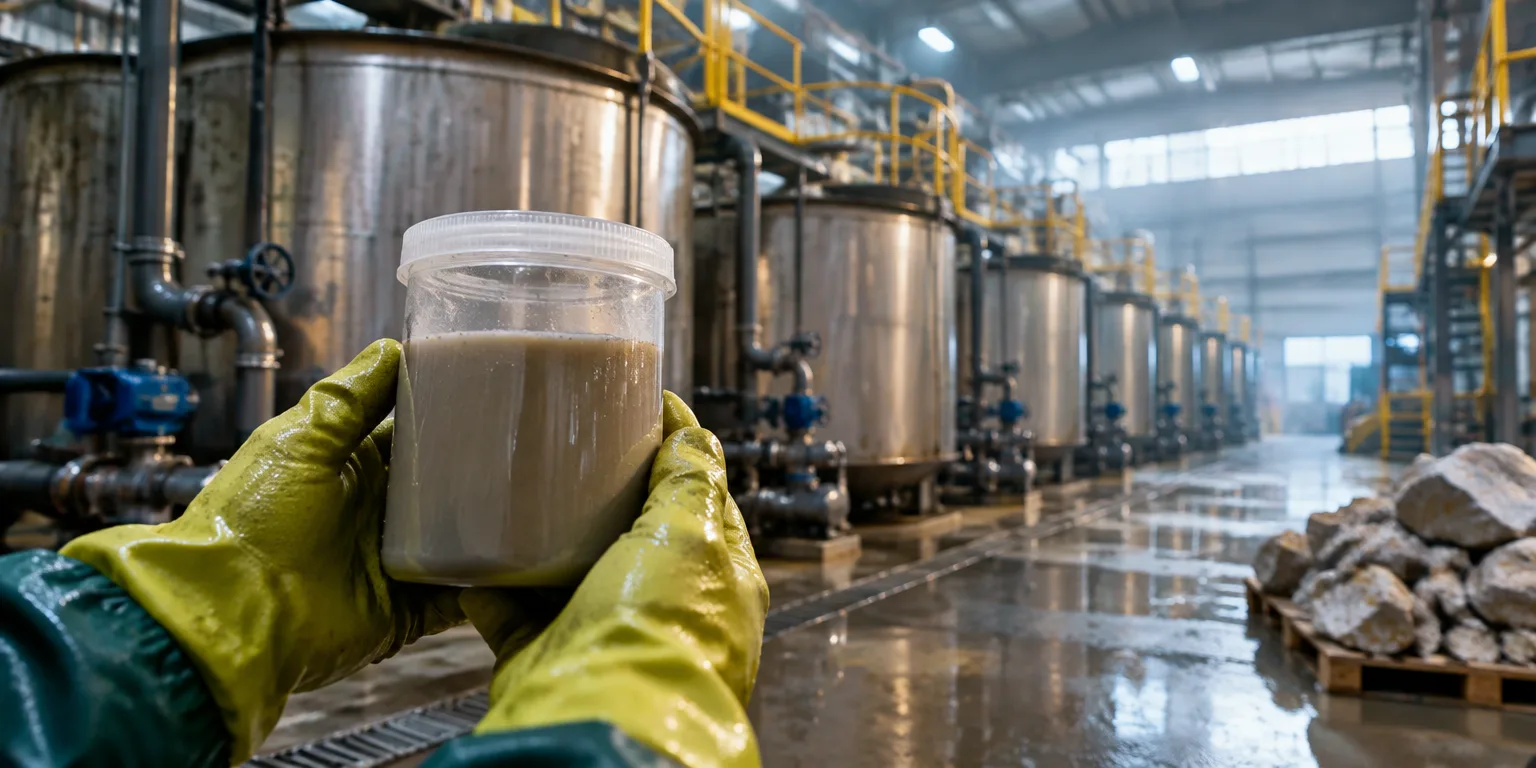
That work starts with ore from a mine on the California-Nevada border, now operated as MP Materials, where miners dig up an ore called bastnite. The ore has little use until the wanted elements are separated from the surrounding stone through leaching, extraction, and refinement. In leaching, the acid wash dissolves the metals so they can be isolated.
The separation is dirty, leaving byproducts and waste that can expose the environment and the workers handling the acids and slurry. The basic approach uses very strong acids for leaching, followed by more chemical and mechanical separation steps. David Sacks, a tech investor speaking on a business podcast, calls it "still kind of 40-year-old chemical engineering technology" that the United States stopped developing about 40 years ago.
The work shifted to China because lower regulatory burdens and lower labor costs made processing cheaper there.
In Sacks's view, which is his own assessment and not an established finding, automation and newer systems could let the United States process ore again in a more scalable and safer way, without the old environmental hazards. He describes the steps as well understood chemistry and mechanical separation.
Questions people ask
What makes a metal a “rare earth”?
Rare earths are a group of 17 chemically similar metals. They are not especially scarce in the ground, but they occur mixed together in low concentrations, so freeing one metal for use takes repeated acid and separation steps.
What are these processed metals actually used for?
After refining, the metals become strong permanent magnets and other components. They go into electric vehicle motors, wind turbines, smartphones, and military equipment, so interruptions in processing can slow many kinds of manufacturing.
Could the United States process the ore more safely now?
In Sacks's view, automation and newer techniques could make processing more scalable and safer without the old environmental hazards. He presents this as a possibility for reviving domestic processing, not as a proven commercial operation.