Twelve live Mandarin sessions taught American babies new sounds. TV taught them nothing.
After a dozen live Mandarin sessions, American babies matched Taiwanese babies with nearly a year of exposure, while screens taught nothing.
 TED · The linguistic genius of babies | Patricia Kuhl
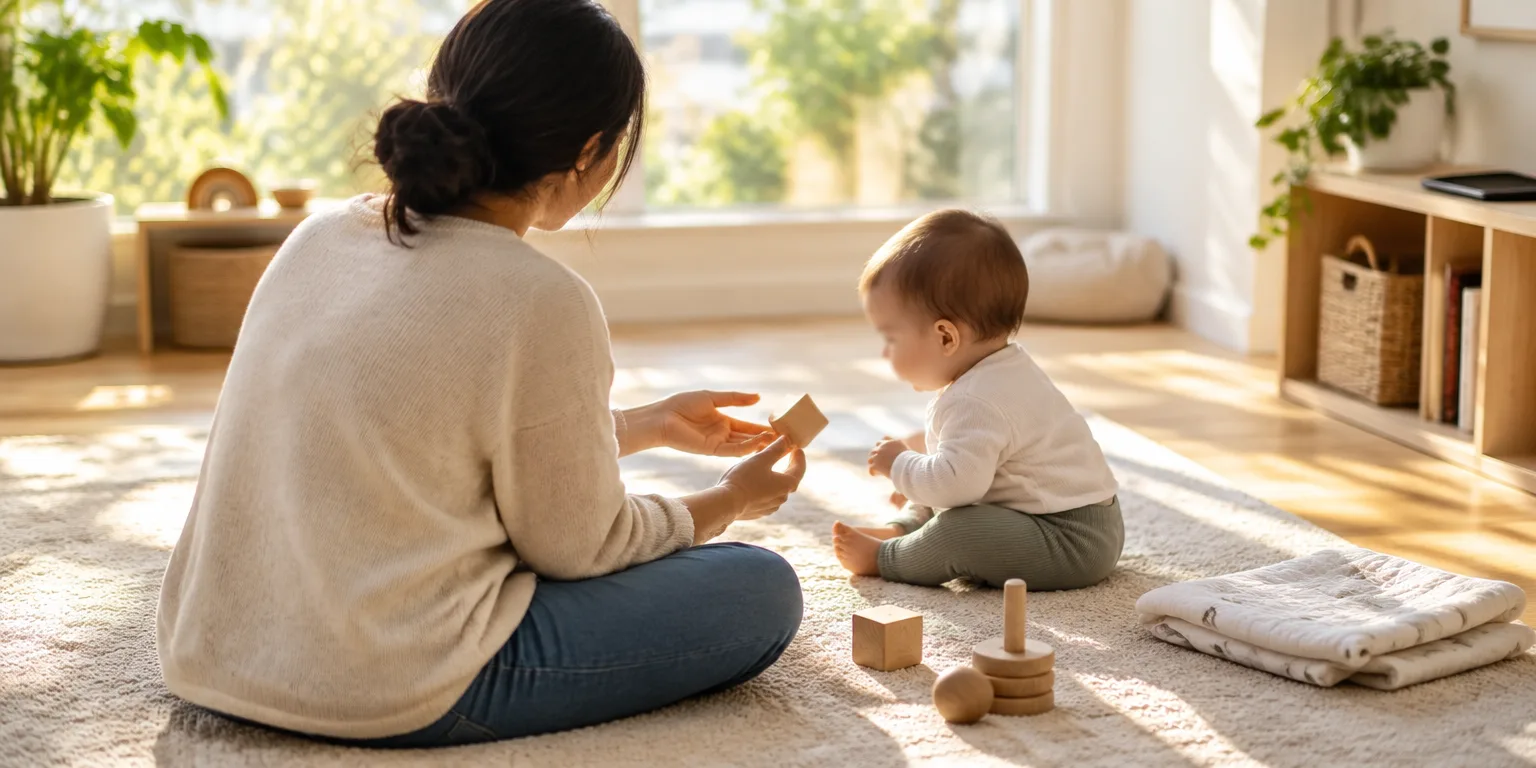
Patricia Kuhl, a researcher who studies how babies learn language, brought Mandarin speakers into her laboratory to spend time with American babies. It was “like having Mandarin relatives come and visit for a month and move into your house,” she said. The adults talked with the babies across 12 sessions.
Kuhl wanted to know whether babies who were starting to focus on English could still absorb the sounds of a completely new language. The answer was yes, and the learning was strikingly fast.
To be sure that simply coming into the laboratory did not explain any gain, her team brought in a control group of babies who came just as often but heard only English. Exposure to English did not improve their Mandarin. But the babies who heard Mandarin for 12 sessions scored as well as babies in Taiwan who had been listening to Mandarin for 10 and a half months. In 12 sessions, they had matched nearly a year of exposure.
Kuhl said what it demonstrated is that “babies take statistics on a new language.” “Whatever you put in front of them, they’ll take statistics on,” she said.
The team then tested whether the person mattered. One new group heard the same amount of Mandarin in the same number of visits, but only on video. Another group heard only the audio, while looking at a teddy bear on a screen. Neither the video group nor the audio group learned anything.
“It takes a human being for babies to take their statistics,” Kuhl said. “The social brain is controlling when the babies are taking their statistics.”
In short, babies learned from a live speaker but not from a screen with the same sounds and time.
Questions people ask
Why test babies when they were starting to focus on English?
That is the age when babies narrow from hearing all language sounds to specializing in their home language. In Kuhl’s tests, babies in Taipei and Seattle heard Mandarin contrasts equally well at six to eight months, then diverged about two months later. Testing during that shift showed whether new sounds could still get in.
Does this mean language videos for babies do not work?
For teaching sound distinctions, Kuhl's result suggests they do not. The babies who watched or only listened learned nothing measurable. Pediatric groups now advise that children under about 18 months avoid screen media except video chats, and emphasize live talk, reading, and play.
Did the American babies stay bilingual after 12 sessions?
No. The study measured sound discrimination right after the exposure, not lasting fluency or vocabulary. Without continued Mandarin input, that temporary advantage would fade. Lasting bilingualism requires ongoing, live interaction in both languages.