Two men spent five hours sinking to the bottom of the ocean, then had to leave after 20 minutes
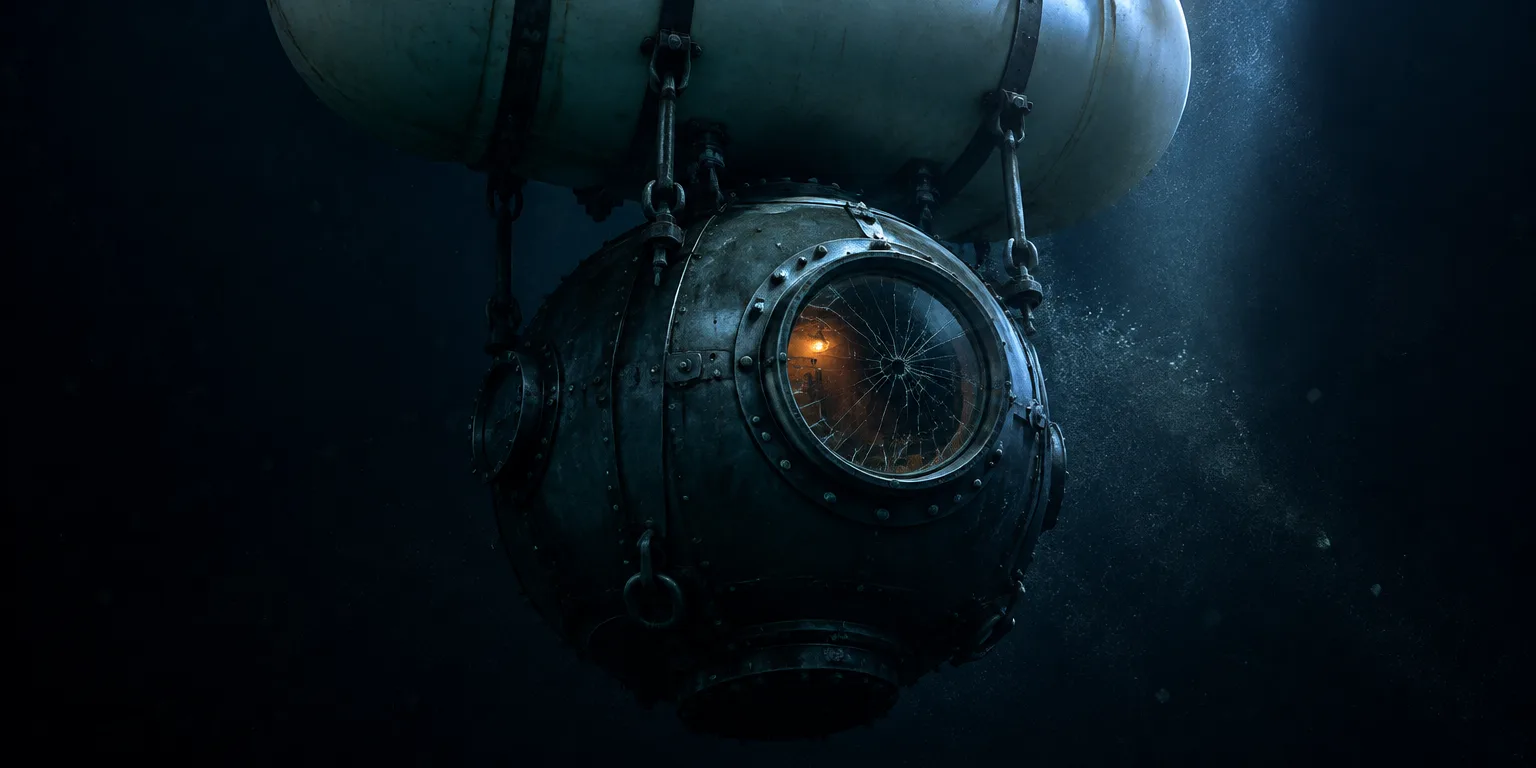
Don Walsh and Jacques Piccard got down to 10,916 meters in the Trieste, the deepest human dive at the time, and turned back when the pressure cracked a window.
 RealLifeLore · The Ocean is Way Deeper Than You Think
Ten thousand nine hundred sixteen meters below the surface, the water stops feeling like water. There is no light, no up or down that the eye can find, and the weight pressing on the hull is 1,100 times what it is at the surface.
Inside the Trieste, a deep diving craft built for extreme pressure, its two person crew, Don Walsh and Jacques Piccard, sat in that darkness in 1960. They had been sinking for five hours to get there.
At the time, it was the deepest dive humans had ever made. To understand how far they went, start higher up. At 6,500 meters, even a sturdy research submarine like the DSV Alvin, the craft that helped discover the wreck of the Titanic, can go no farther. At 8,848 meters, you are as deep as Mount Everest is tall, as if the mountain had been flipped upside down and dropped into the sea. Walsh and Piccard kept falling for more than 2,000 meters past that.
They were not built to survive that place. Without thick steel around them, the pressure would have crushed them at once. That pressure of 1,100 times the surface has been described as an elephant perched on a postage stamp, or one person left to shoulder 50 jumbo jets.
After five slow hours of descent, Walsh and Piccard reached the bottom. They had 20 minutes there. Then a window cracked, so they turned back and began the long trip up toward the light.
Just above where they turned around, at 10,898 meters, filmmaker James Cameron would later stop during his 2012 dive in the Deep Sea Challenger. Just below, at 10,972 meters, is about the altitude where airliners fly, only you are looking down at it instead of up. They had gone as deep as airliners fly high, and turned back.
Questions people ask
What kind of submarine was the Trieste?
The Trieste was a bathyscaphe, a deep diving craft built for extreme pressure with a heavy steel crew sphere hung beneath a large tank filled with gasoline for buoyancy. It was designed by Swiss physicist Auguste Piccard, the father of Jacques Piccard, and later operated by the U.S. Navy for the 1960 dive.
What exactly cracked?
One of the outer panes in a viewport cracked. The inner cabin stayed sealed, so Walsh and Piccard were not hurt, but under pressure more than a thousand times that at the surface, they ended their short stay and started up.
Has anyone gone deeper since 1960?
Yes. In 2019, American explorer Victor Vescovo piloted a submersible called Limiting Factor to about 10,927 meters in the same area, the Challenger Deep. Because depth shifts slightly with tides and measurement methods differ, the records are close, but his dive is now widely cited as the deepest.