Two Reporters Predicted How New Orleans Would Flood Years Before Katrina
Investigators later called the flooding man-made, and the rebuilt defenses have held for 20 years.
 All-In with Chamath, Jason, Sacks & Friedberg · Bill Gurley: Searching for Feynman
Three years before Hurricane Katrina drowned New Orleans, Mark Schleifstein and John McQuaid, reporters covering Louisiana, wrote a series about how the city's flood defenses might fail.
They described a city protected by levees, the earthen walls and concrete barriers built to hold back water, that might not hold. When the storm came in 2005, their warning looked prescient.
This account comes from Bill Gurley, an investor speaking about catastrophic failure. Katrina killed 1,800 people, displaced 400,000, and caused $125 billion in damage, even though it struck as only a Category 3 hurricane.
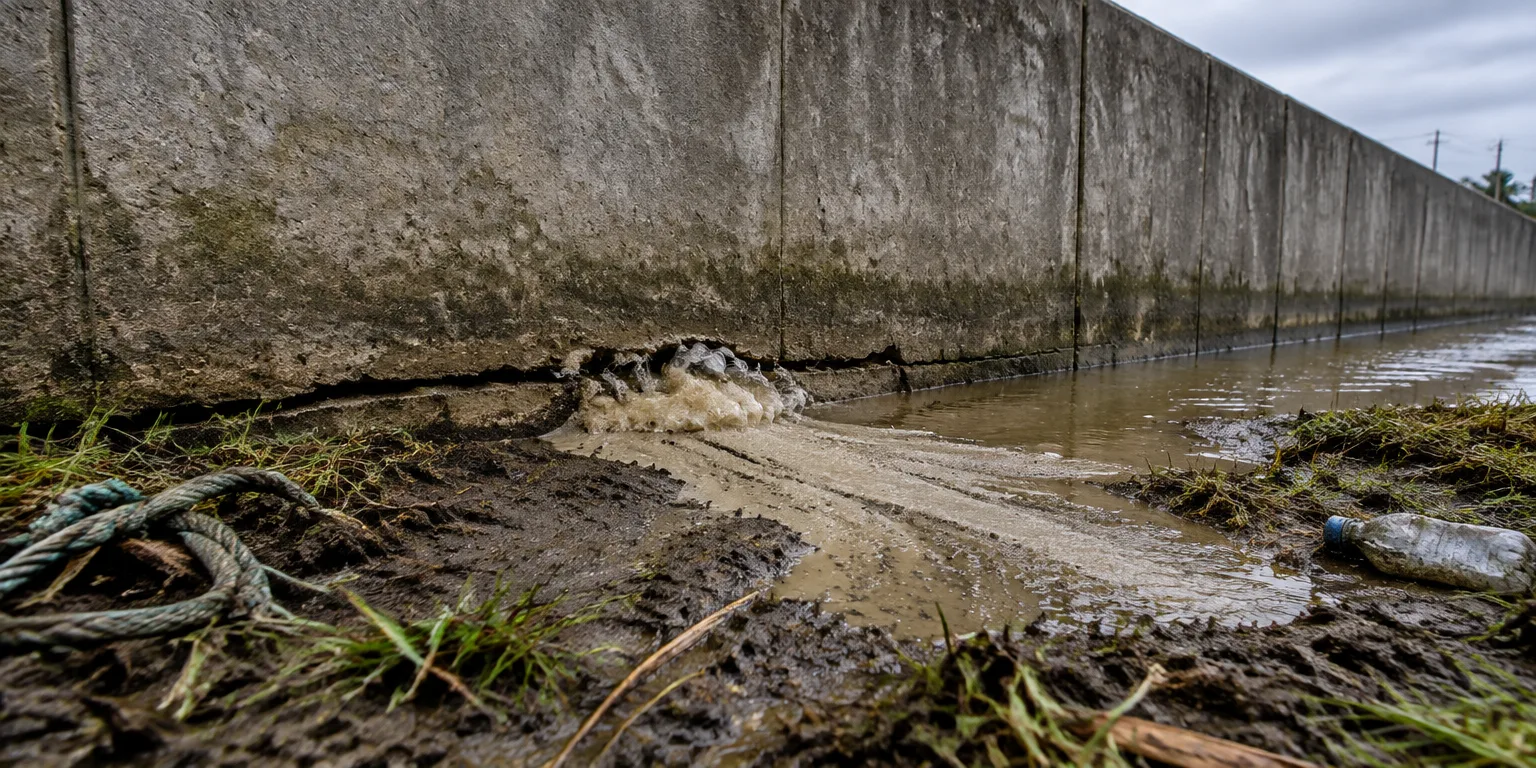
In his account, the Army Corps of Engineers, which had built the levees, wanted people to believe water had gone over the top in a natural disaster, an act of God. What happened instead was that water washed beneath the walls until the foundations gave way, a preventable collapse.
News coverage helped challenge that explanation. Schleifstein and McQuaid had written about how this could happen, and after Katrina they would win two Pulitzer Prizes for their work.
They were not alone in concluding that the flooding was man made. The House opened an inquiry, and so did the Senate. The National Science Foundation sponsored its own investigation, led by two University of California professors. Louisiana officials brought in a separate group from Louisiana State University. The groups sometimes competed and sometimes shared notes, but they all agreed the flooding stemmed from human mistakes.
He describes the Corps as naturally inclined to act as a blocker of such inquiries. As an example, he says the Corps asked the American Society of Civil Engineers to join its internal review, paid the society $1 million, and over time the outside engineers were absorbed into the Corps position.
Raymond Seed, a University of California professor, documented his concerns in a 42 page report to the engineering society listing the ways its review had been constrained. The document is still on the internet.
The investigations produced 90 recommendations. The fixes were built as part of the storm damage system, with seawalls costing about $15 billion, and he says those walls have held for 20 years.
Questions people ask
How can a levee fail from underneath?
A levee can fail when water seeps through or under loose soils and erodes the foundation, a process engineers call underseepage or piping. As soil washes away, the wall loses support and collapses even if water never comes over the top.
Who built the New Orleans levees and who maintains them?
The Corps built much of the New Orleans flood protection system starting in the 1960s after Congress authorized it. Local levee districts were responsible for maintenance, while the Corps set design standards and led major upgrades.
What was built after Katrina to protect New Orleans?
The $14.5 billion Hurricane and Storm Damage Risk Reduction System, often rounded to $15 billion, includes higher levees, massive surge barriers, gates, and pump stations around the city. It was substantially complete in the early 2010s and performed through later storms.