Unpaid Veterans Marched on an Arsenal in the Snow, and America Scrapped Its First Government
Unpaid for their war service and squeezed by taxes they could only pay in coin, the farmers showed that Congress could neither raise money nor defend its own guns.
 History That Doesn't Suck · 15 (Second Edition): “We the People:” Constitution Making in Philly
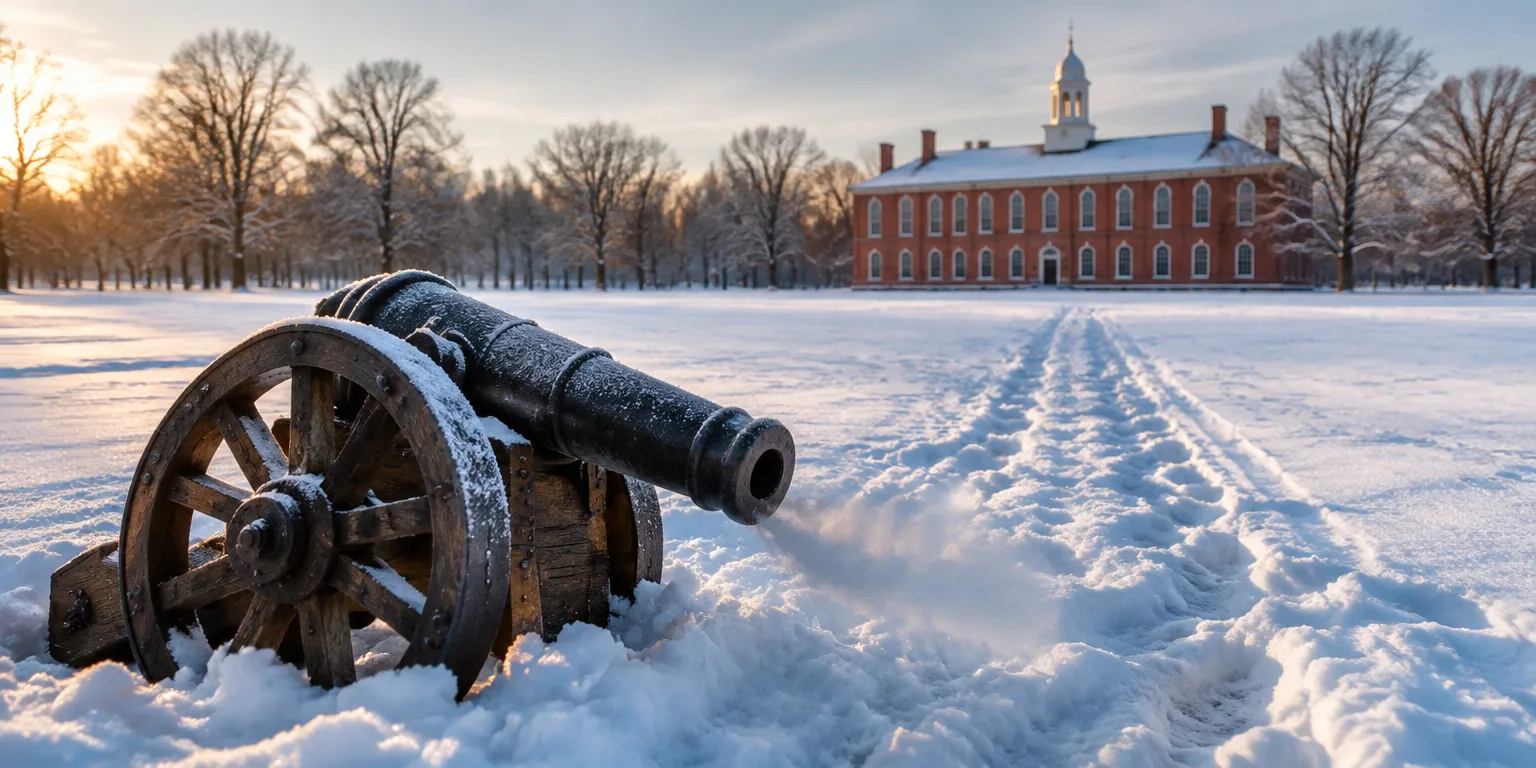
It was about 4 o'clock on a freezing afternoon, Jan. 25, 1787, and Daniel Shays was trudging through four feet of snow.
Shays, a 40-year-old Massachusetts farmer and former Continental Army captain, had fought at Bunker Hill, Saratoga, and Stony Point. George Washington had once picked him to guard a captured British officer before an execution. Now he was leading well over 1,000 farmers toward Springfield.
This march was about money, and why America under its first government could not solve a money crisis. Congress, under the Articles of Confederation then in force, had no power to tax, so it had paid Revolutionary soldiers like Shays in nearly worthless certificates. Then the cash strapped Massachusetts government, pressed by coastal merchants, raised taxes and demanded payment in coin, not in farm goods or paper promises. Courts began foreclosing on farmers who could not pay. Some veterans sold those certificates for a tiny fraction of their face value. Shays even parted with a sword that Lafayette, the French general who had aided the Revolution, had presented to him.
The target at Springfield shows why the crisis turned violent. The arsenal there was federal property, holding about 7,000 muskets with bayonets, more than a thousand barrels of gunpowder, plus cannon and ammunition. But Congress was too broke and too short of troops to defend its own guns, and Massachusetts did not want Congress meddling in its affairs. So the troops facing the farmers answered to Massachusetts, not to Congress.
In front of the arsenal stood Massachusetts militia Gen. William Shepard, a former Continental colonel, with his artillery. Shepard sent two messengers, Maj. Lyman and Capt. Buffington, about 250 yards out to parley. The order was disperse, or else. The farmers refused. In columns, they kept advancing.
Shepard turned to his artillery officer, Maj. William Stevens, and ordered a warning shot. The cannon roared over their heads. The farmers kept marching. A second shot passed overhead. Still they came, with some 400 older soldiers at the front under another veteran, Capt. James White, moving in formations eight men deep and quickening to a trot.
Shepard had done what he could to avoid blood. He then had the crew aim the cannon lower, at the waists of the men, so the shots would strike the column. Cannonballs flew straight into the marchers, and a hidden howitzer fired grapeshot, a load of small iron balls that spreads like a shotgun blast. Three farmers died on the spot as hot blood poured into the cold snow. Others clutched torn flesh and screamed. The rest broke and ran. One more wounded man later died, bringing the death toll to four.
The clash broke what became known as Shays' Rebellion, the uprising of 1786 and 1787. State leaders wanted to make examples of the ringleaders, but John Hancock, the 50-year-old Bostonian newly returned as governor, calmed the state by winning pardons for the rebellion's leaders, including Shays. Shays was pardoned after Hancock pushed for it.
The pardon did not end the fear. Americans across the 13 states were terrified that farmers had attacked a federal arsenal and Massachusetts had dealt with it alone, showing just how weak Congress was. Mercy Otis Warren, a writer and historian of the period, put it this way: "Though the late disturbances were quelled, it awakened all to a full view of the necessity of concert and union in measures that might preserve their internal peace."
That fear gave force to calls to give Congress enough power to do its job, and to repair the country's first frame of government, perhaps even to replace it, with a meeting in Philadelphia.
Questions people ask
What exactly was the Articles of Confederation?
It was America's first written frame of government, in effect from 1781 to 1789. It preserved almost all power in the states and left Congress without the power to tax, without a president to enforce laws, and requiring agreement of nine states for major action. That design made it hard to pay debts, regulate trade, or raise an army.
What is grapeshot?
Grapeshot was an artillery load made of small iron balls packed in a canvas bag or frame. When fired, the balls spread out like a giant shotgun blast, making it deadly against closely packed troops at short range. Armies used it well into the 1800s before more modern shells replaced it.
What happened to Daniel Shays after the rebellion?
Shays fled Massachusetts after the defeat at Springfield and was sentenced to death in his absence. He was pardoned in 1788 under the easing policy pushed by Governor John Hancock. He later moved to New York, lived on a small pension for his Revolutionary service, and died in 1825.