Vatican Reporter Sees Rare Openness in Details of Pope Leo's Surgery
Correspondent Joshua McElwee contrasts the detailed update with the uncertainty during hospital stays of Pope Francis.
 Reuters World News · Ukraine's Starlink problem, US inflation and Ohio voters
Joshua McElwee has spent enough time covering the Vatican to notice when its habits change. McElwee, a Vatican correspondent, was assessing the report that Pope Leo, 71, was recovering from a 90-minute operation to treat lung cancer in his right lung.
He said the handling of the news showed "unusual transparency for the Vatican."
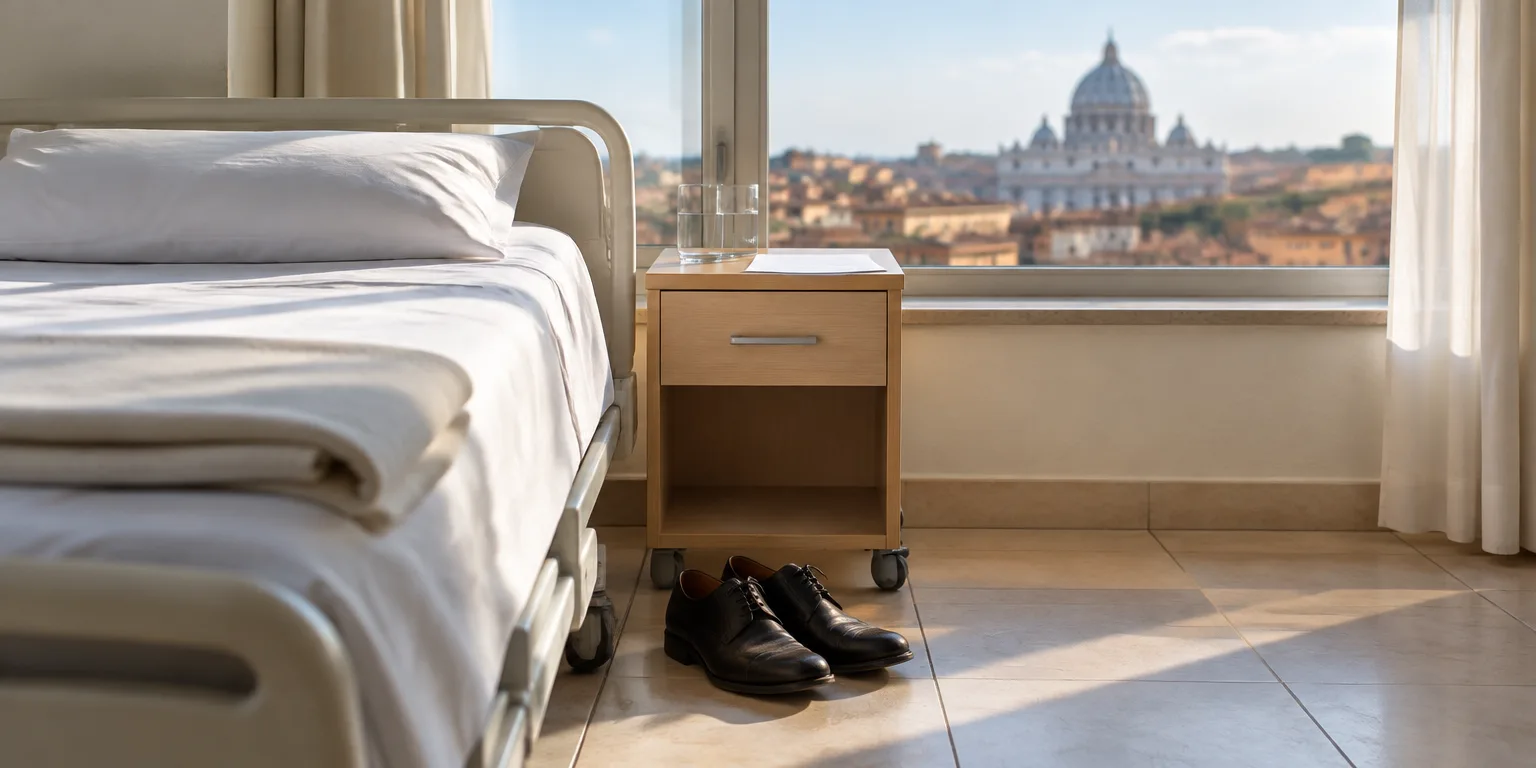
The report laid out the medical details: the surgery lasted 90 minutes, and doctors had removed the lower lobe of the lung to treat lung cancer. The Vatican said Leo was already moving around his hospital room, and that a visit to three South American countries was still planned for November.
That specificity stood out to McElwee because, in his view, discussion of a pope's condition was long treated as off limits. He called it "taboo to talk about the health of the pope," who leads the world's 1.4 billion Catholics, saying it was "just not something you would talk about in polite conversation."
McElwee pointed to his experience covering Pope Francis, the previous pope, for comparison. Francis was admitted to the hospital several times in his later years, McElwee noted, and during those stays it was unclear how much information about his condition would be made public or when it would be shared.
Against that history, McElwee argued, the account of Leo's illness was different because it named the disease and described both the procedure and the recovery.
Alongside the medical details, the Vatican also gave a forward-looking detail, saying a November trip to Uruguay, Argentina, and Peru remained on the pope's calendar.
Questions people ask
What does it mean to remove the lower lobe of a lung?
The right lung has three sections, called lobes, and surgeons can remove one lobe in an operation called a lobectomy. It is a common treatment for early lung cancer that is contained in one area. People can live with less lung tissue, though they may need time and rehabilitation to recover breathing strength.
Why was papal health historically kept secret?
Observers say the Vatican long treated the pope's frailty as a delicate subject because he is both a head of state and a spiritual figure. In past eras, officials sometimes minimized illness to avoid uncertainty about leadership. That habit has eased as modern media expectations and hospital stays have made secrecy harder to maintain.
What happens if a pope cannot carry out his duties?
Unlike a company or a country with a vice president, the Catholic Church has no acting pope. If a pope is temporarily ill, Vatican business largely pauses or continues under existing officials. If he dies or resigns, cardinals gather in a conclave to elect a successor.