Very Few Traders Ever Traveled the Whole Silk Road
Goods hopped from town to town across Africa and Eurasia, with every middleman taking a cut.
 CrashCourse · The Silk Road and Ancient Trade: Crash Course World History #9
Very few traders ever traveled the whole Silk Road. The goods traveled far more than the people who sold them.
What we now call the Silk Road worked less like a single highway and more like a web of trading paths. One overland stretch tied the Mediterranean world to the market towns of Central Asia, and another tied those towns to China. By sea, many cargoes arrived in Rome through the Mediterranean, while goods from Central Asia moved east to Japan and farther south to Java.
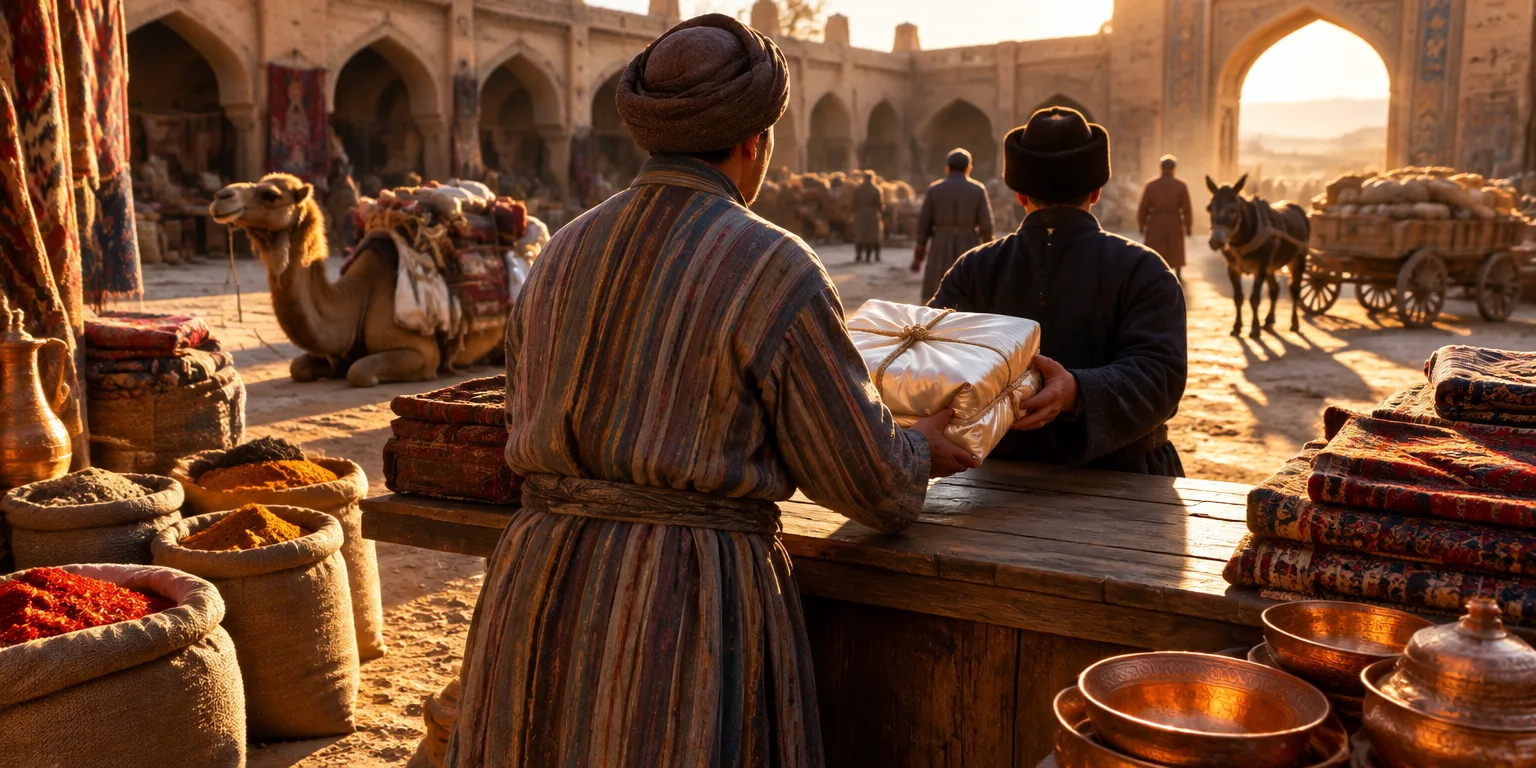
Many merchants simply shuttled back and forth between neighboring towns. At each stop, they sold their load to the next trader down the line, who carried it a little farther and raised the price.
By the time Chinese silk reached a buyer in Rome, it had passed through many hands, and every one had taken a cut.
Questions people ask
Why was silk the signature cargo?
Silk was made only in China for thousands of years, and it was light, durable, and easy to carry over long distances. That made it ideal for a relay trade where every middleman needed enough profit to make his short leg worthwhile.
How long did it take goods to go from one end to the other?
It depended on the route and the relays, but a load could take months or years to cross from China to the Mediterranean. Since no single merchant made the whole trip, delays, weather, wars, and bargaining in each market town all added time.