Volleyball Families Pay Thousands for Long-Odds Scholarships
Tournaments tout visiting college coaches, and clubs tout past stars, to keep families paying for very long odds.
 Wendover Productions · How Private Equity Ruined American Youth Sports
The math of club volleyball starts with college tuition, not volleyball.
An American college education can cost $25,000 to $65,000 a year or more, so any help paying for it feels worth chasing. For many volleyball families, that help is imagined as an athletic scholarship, and the thousands spent each season on clubs, travel, and tournaments come to feel like an investment toward it.
The odds do not support the investment. Fewer than 6% of youth volleyball players will play in college at any level, and only about 1.2% to 2% will play Division 1, the highest and most competitive tier of college sports. The lower tiers, known as Division 2, Division 3, and the NAIA, a separate national association of smaller colleges, offer another path, but none offer the full scholarships that cover tuition, room, and board, and not all even offer partial scholarships.
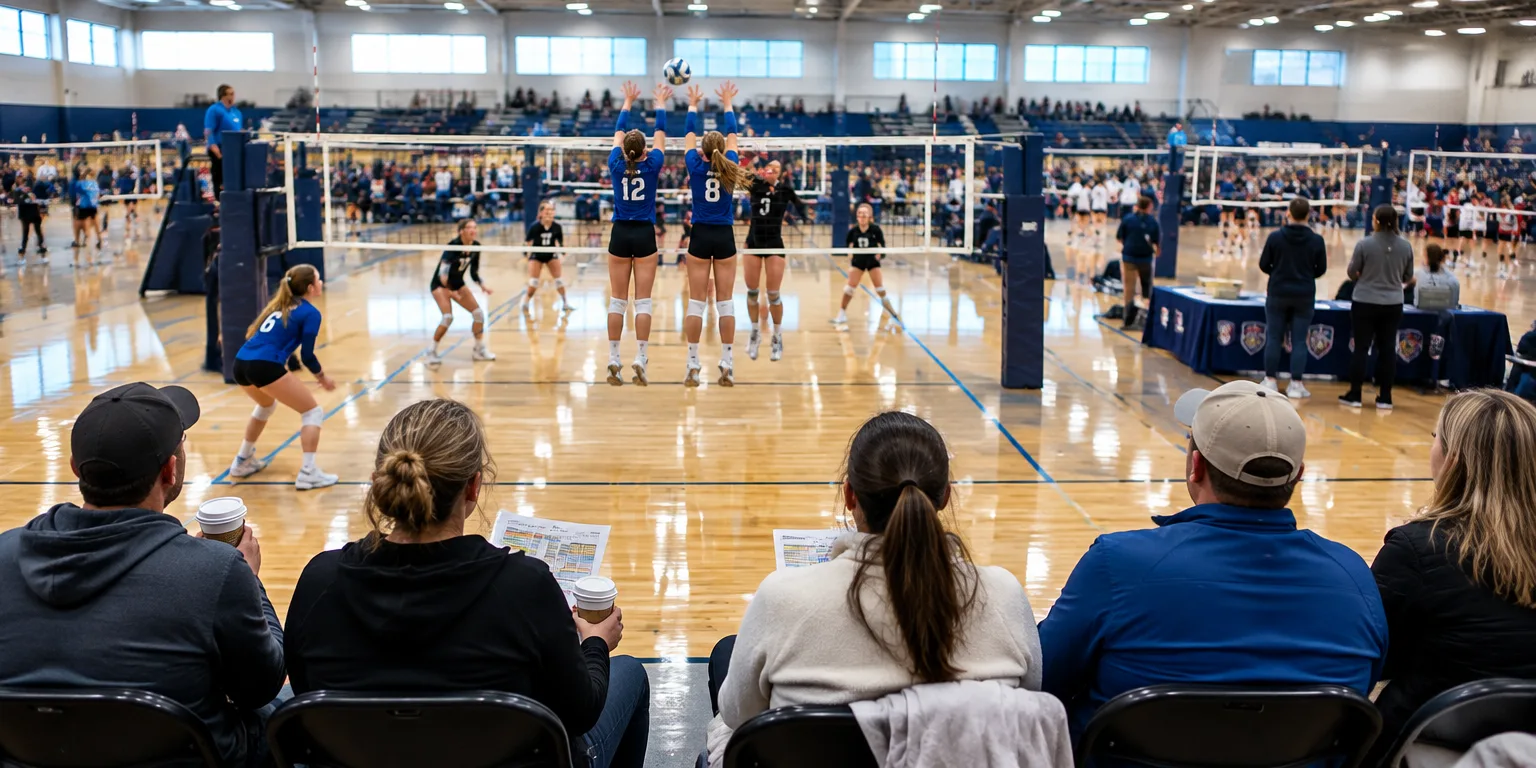
The reason parents keep paying is that the system keeps selling the dream. Tournament organizers promote the turnout of college recruiters on the sidelines, a number that drowns out the slim statistics. Local clubs do the same when they recruit, highlighting only the former players who went on to play in college as proof that the path works, and as justification for collecting another year of dues.
That sales pitch lands because it is also social. Sending a child to play college sports is a source of status among parents, something to boast about and a sign, in many circles, of good parenting. The dream is shared by the kid, the coach, and the parent, which keeps it deeply ingrained.
Put together, belief pays for participation, and participation pays the organizers.
Questions people ask
What does a full Division 1 volleyball scholarship actually cover?
At schools that offer them, a full athletic scholarship can cover tuition, fees, room, board, and books. In women's volleyball, Division 1 programs can offer up to 12 full scholarships, while men's programs are fewer and often offer partial aid.
Why is Division 1 such a big deal compared with other divisions?
Division 1 includes the largest, most competitive athletic programs with the biggest budgets and the most television exposure. Divisions 2 and 3 and the NAIA are smaller programs, and Division 3 schools do not award athletic scholarships at all.
Does being seen by a college coach at a tournament lead to a scholarship?
Exposure can help, but coaches recruit a tiny fraction of the players they watch, and they usually track top prospects for years. For most families at a 1,000-team event, being in the same building as a coach does not mean being recruited by one.