Walt Disney Lost His First Star Because He Never Owned It
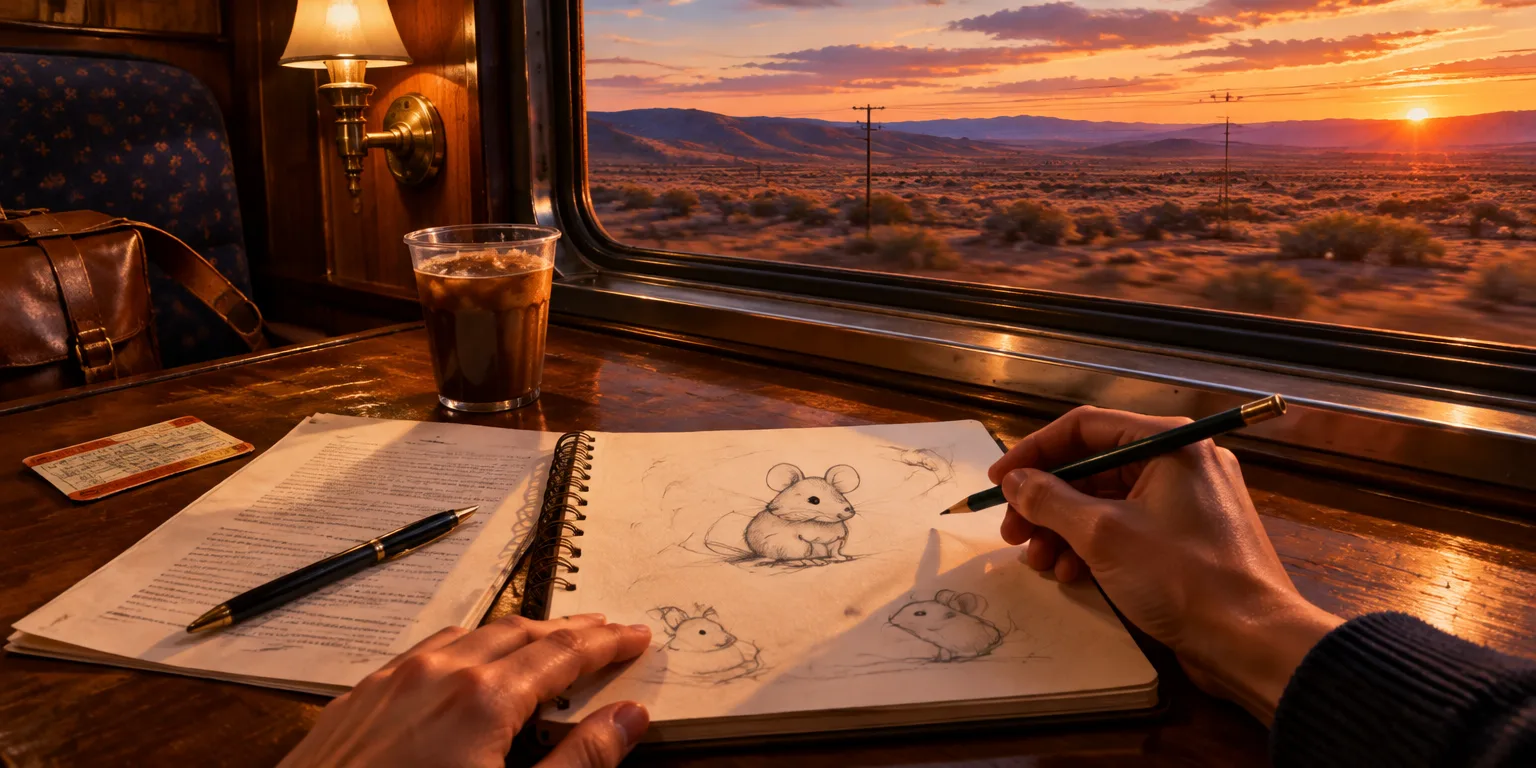
By Walt's later account, he sketched a new star on the train home after losing Oswald, a character he would make sure to own.
 Acquired · The Walt Disney Company: The most successful enterprise for monetizing human nostalgia (Audio)
In early 1928, Walt Disney traveled to New York with his wife Lillian, an early employee in his studio's ink and paint department, to ask for a raise. His cartoon rabbit, Oswald the Lucky Rabbit, distributed by Universal, had become a hit, and Walt wanted more money for each short.
His distributor, Charles Mintz, a New York film distributor who controlled the Oswald deal, did not offer more. He offered less, demanding a cut of $500 per cartoon that would have wiped out Disney's profit margin and left the little studio making cartoons at cost.
The cut was only half the blow. Mintz had already secretly signed contracts with nearly all of Disney's animators, all except his loyal partner Ub Iwerks, a fellow Kansas City draftsman, and two or three others, to come work for him instead. Walt had walked in thinking he owned a thriving studio, then 60 percent held by him and Lillian and 40 percent by his brother Roy, who handled business and finance, and his wife. He walked out understanding he owned almost nothing at all.
That reversal is why the meeting mattered. The studio had behaved as if Oswald was its own creation, but Universal owned the character, and the hosts suggest the brothers had not paid close attention to the fine print. The situation left Walt with no customer contract, no employees, and no rights to the rabbit. By the hosts' reckoning the studio was worth close to nothing.
Mintz made the humiliation complete by forcing Walt to finish the remaining Oswald cartoons under contract, paying the same animators who had just agreed to abandon him.
By Walt's later account, the answer came during the lengthy rail journey home to Los Angeles, when he sketched a replacement on his drawing pad, a character that would grow into among the most widely known characters ever created.
In Walt's telling, it was March 1928 and the idea was a plucky mouse named Mortimer trying to fly an airplane like his hero, aviator Charles Lindbergh. Lillian looked at the sketches and said she liked the mouse but not the name. Mortimer was too much of a name. How about Mickey.
Back in Los Angeles, the more likely work began. Walt, Roy, and the loyalists holed up and brainstormed a new star to replace Oswald. Anyone comparing the two can see the family resemblance in the pale faces, dark outlines, and simple rounded forms, with long rabbit ears traded for round mouse ears. It was the same brief that had produced Oswald, to make something like Felix the Cat, except this time, in the hosts' blunt phrasing, to "make damn sure we own it." According to biographer Neil Gabler, Iwerks, not Walt on the train, most likely first drew Mickey, and Iwerks served as the primary animator of the early films.
Questions people ask
Who was Ub Iwerks, the animator who stayed loyal?
Ub Iwerks was Walt's earliest partner, a fellow apprentice from a Kansas City advertising art shop who co-founded their first commercial art firm and followed Walt to Hollywood. A gifted draftsman, he stayed loyal when the other animators signed with Mintz and became the primary animator of the first Mickey Mouse cartoons.
Did Disney ever get Oswald back?
Disney eventually got Oswald back in 2006, nearly 80 years later. Then chief executive Bob Iger agreed to let sportscaster Al Michaels move from Disney's ABC and ESPN to NBC, which was tied to Universal, in exchange for the intellectual property rights to Oswald.
Did Mickey become an instant hit?
No. The first two Mickey shorts were silent and every major distributor passed on them as an Oswald imitation without Oswald's fans. Mickey only broke through with the third film, Steamboat Willie, when Disney added sound synchronized to the action, which turned cartoons from gags into characters with personality.