Warm Up a White and Grey Nordic Room Without Renovating
Swap cool bulbs for warm white, add one dark wood piece, and let texture do the rest.
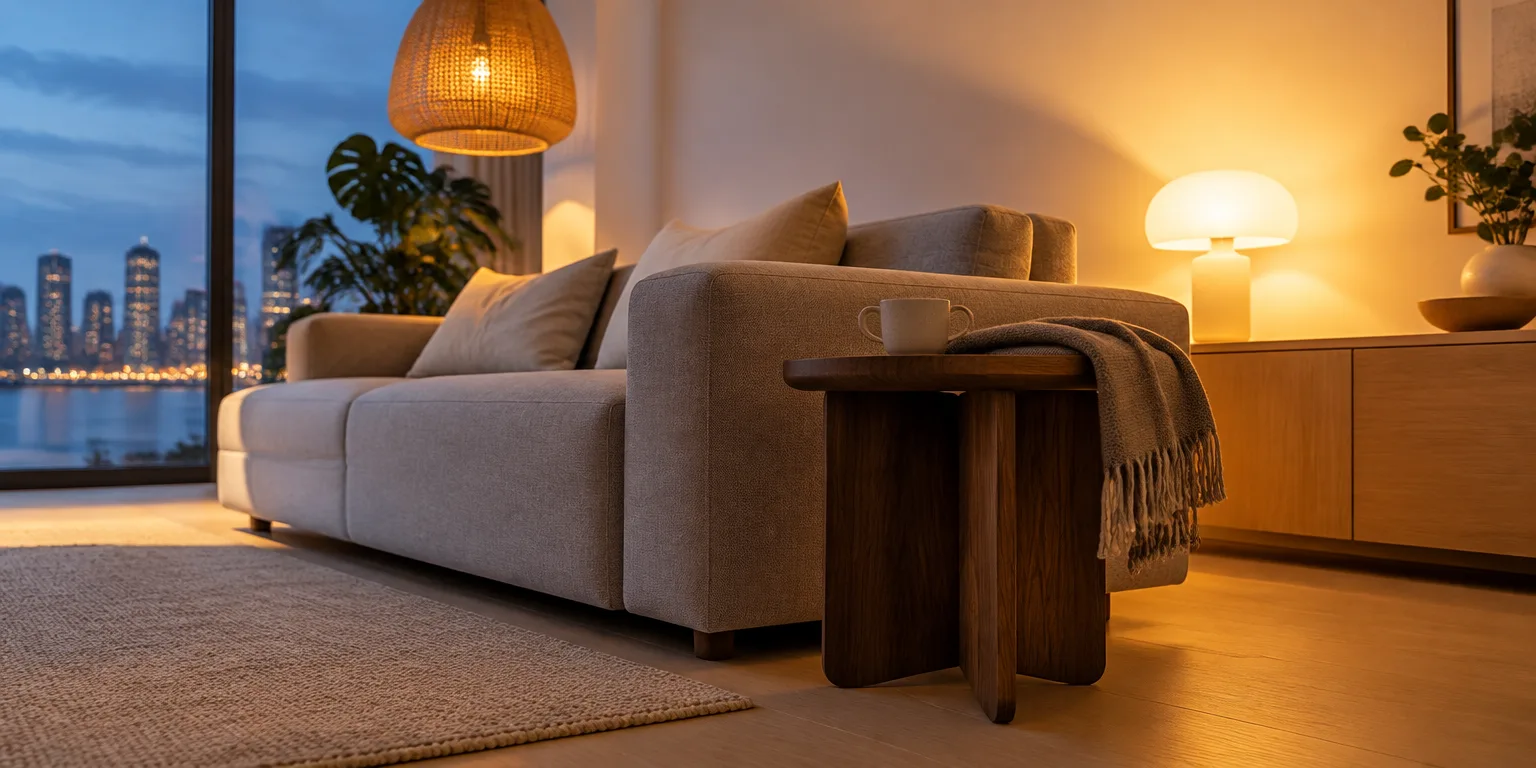
If your living room is white walls, pale wood, and grey cushions, you do not need to renovate to make it feel warmer.
Designers who update Scandinavian-style apartments in Singapore say the same calm, uncluttered room can feel softer with a few finish-level swaps. The structure stays put.
Start with the light. Replace cool-white bulbs with warm-white bulbs at around 3000K, a color scale on which lower numbers look more golden. Designers say the swap can change how a room feels within an evening, with no carpentry work.
Next, add one richer wood. If the floor or built-in cabinets are already pale, leave them. Bringing in a single darker wood table or cabinet can make the whole space feel cozier.
Then soften the fabrics. Trade grey wool for linen cushions, wool throws, and a rattan pendant light or woven chair. The texture adds warmth through touch, not just color, so the room still looks calm.
Keep the balance simple with a 60-30-10 mix. Let a warm neutral such as beige, sand, or taupe cover about 60 percent of the room, put a second tone on upholstery or curtains for 30 percent, and save terracotta or sage for the last 10 percent.
Finish with matte and metal. Designers say matte cabinet fronts and worktops take in light more softly than shiny ones, helping a calmer, less stark mood. In the warm palette, brushed brass or bronze takes the place of matte black or chrome.
If I were starting this weekend, I would start with the bulb box.
Questions people ask
What does 3000K actually mean on a bulb box?
The K stands for Kelvin, a scale for the color of white light. Around 2700K to 3000K looks warm and slightly golden, like an older incandescent bulb. Around 5000K to 6500K looks cool and bluish, like daylight on a cloudy day.
Will warmer colors make a small apartment feel darker?
Not if you keep most of the room light. The method keeps about 60 percent of the room in a pale warm neutral, such as cream, beige, or sand. The deeper color is limited to about 10 percent, so it reads as an accent rather than a dark wall.
Why choose matte finishes over glossy ones?
Matte absorbs light and hides fingerprints and small marks better in daily use. Gloss reflects more light, which can feel brighter but also harsher and more clinical. In a warm Nordic room, designers favor matte because the softer effect supports a relaxed mood.