Warming Water Is Pushing Sharks Closer to Swimmers
As habitat expands and the ocean grows more acidic, sharks have a harder time telling people from prey.
 Global News Podcast · Houthis attack Saudi airport for third time in four days
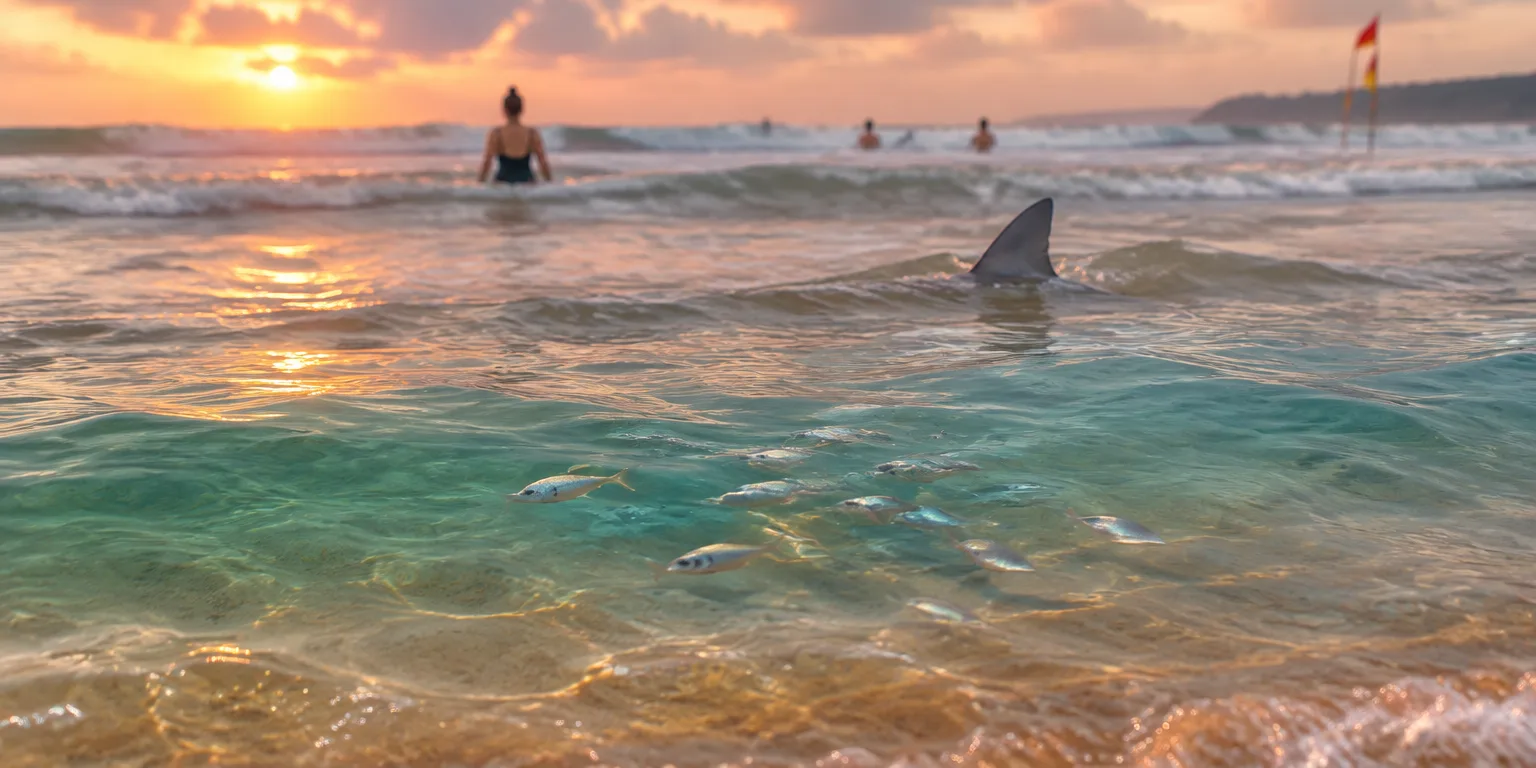
Australia is seeing more shark bites even as attacks fall in most of the rest of the world. In the 1990s, the country saw about eight to ten incidents each year. Since 2020, the yearly toll has averaged in the upper 20s.
The numbers reflect several overlapping changes. Jodi Rummer, a marine scientist at James Cook University in Queensland, said, "Those numbers are influenced by a lot of things. How many people are in the water, how incidents are reported, and of course, where sharks are and where their prey are occurring."
Climate change adds another layer. Warmer seas bring changes in oxygen, shifts in where suitable habitat is found, and movement in where prey is found.
With warm water covering a wider area, the places where sharks can live reach nearer to beaches where people swim and surf.
Extra carbon dioxide from the air dissolves into seawater and makes it more acidic. That acidification affects visibility in the water. This matters for finding food because sharks hunt largely by electroreception, detecting faint electric pulses given off by nearby animals. With visibility reduced, it can be harder to distinguish a swimmer from usual prey such as seals and rays.
Rummer emphasizes that the change is in the surroundings, not necessarily in behavior.
Questions people ask
Are sharks trying to eat people?
Almost never. Most bites are believed to be cases of mistaken identity or curiosity, which is why many victims are bitten once and then released. Sharks generally prefer fatty marine animals like seals and fish, and humans are not part of their normal diet.
What is ocean acidification?
The ocean absorbs about a quarter of the carbon dioxide humans release, and that gas forms a weak acid in seawater. Since the Industrial Revolution, surface ocean acidity has risen by roughly 30 percent. That change can affect the senses and behavior of many sea creatures, from shellfish to fish to sharks.
What can swimmers do to lower the risk?
Experts advise swimming in groups, staying close to shore, and avoiding dawn and dusk when many sharks feed. It also helps to stay out of murky water, river mouths, and areas where fish are schooling or seals are resting. In Australia, swimming at beaches with lifeguards and drone or helicopter patrols adds another layer of safety.