Watching Another Person Use an AI Coder Teaches You a Lot
By June 2026, a team member said work with AI coding helpers could feel lonely, and said they learn a lot from each other when they pair up.
 Lenny's Podcast: Product | Growth | Career · What AI coding costs engineers
The question put to one engineer was what engineers lose when AI does more of the coding.
The engineer, a member of the team that builds Cloud Code, an AI coding helper, answered in terms of how the work feels day to day. By June 2026, they said, the work could start to feel lonely.
In their words, it "could start being a lonely experience cuz we all started just working with our agents so much." Agents here means AI programs that work alongside an engineer, taking on coding tasks.
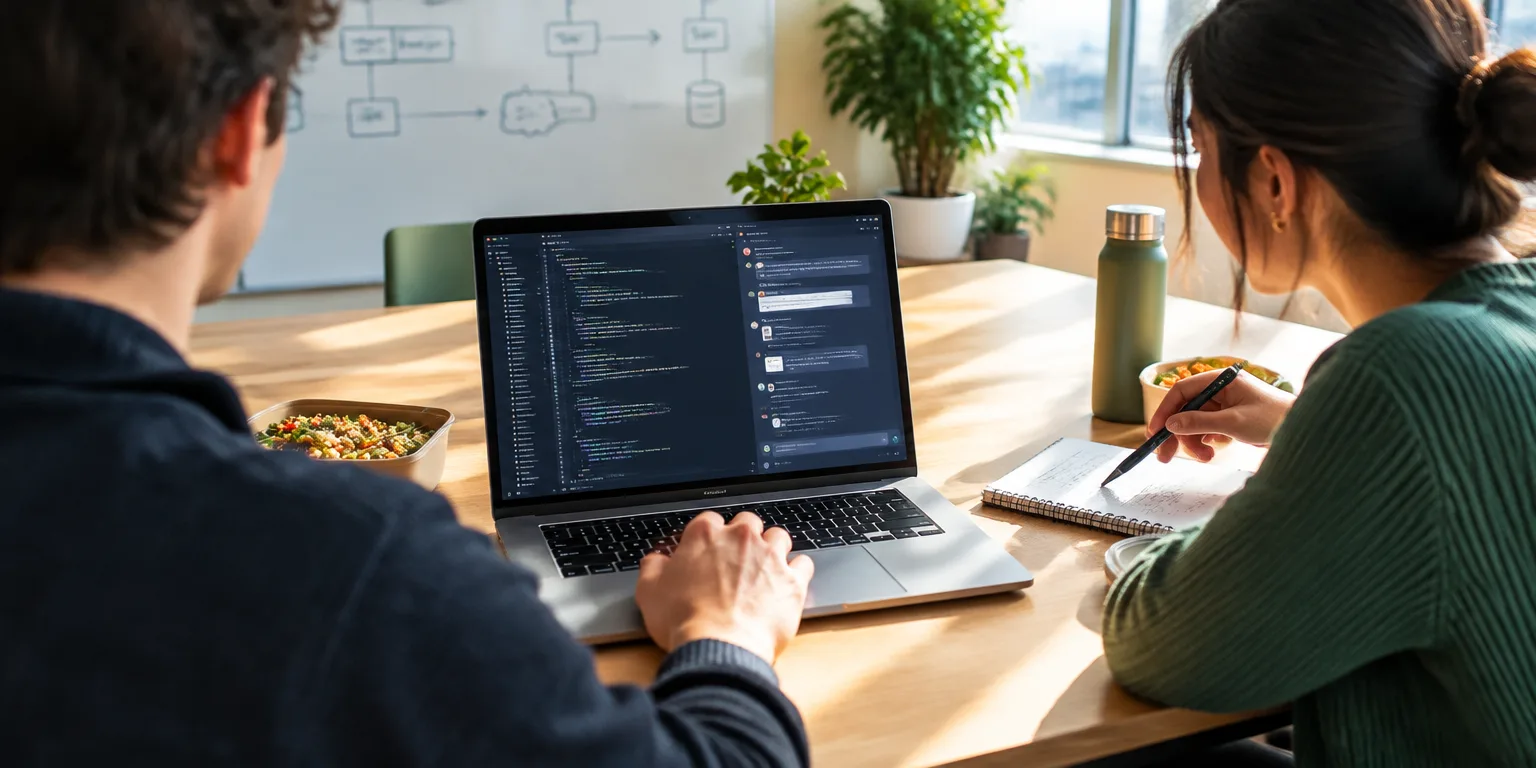
After describing that lonely feeling, they said the team had started a pairwise programming lunch by June 2026. By pairwise programming, they meant two engineers pairing up at lunch.
Their explanation was that the same setup leads to different habits. In their words: "Everybody uses Cloud Code Co-work. Everybody uses the flow so differently." Co-work was the name they used for the shared setup for coding with the AI helper.
Because each person uses the flow differently, they argued, watching someone else work shows how that person works with it. The difference itself is what makes observing another person useful, in their account.
They said the payoff was learning from each other. In their words: "When we do pairwise programming, we actually learn so much from each other."
They also described maker time together, shared time for working alongside one another. They said the team holds it to make sure members keep interacting as a team.
Questions people ask
What is Cloud Code Co-work?
It is the name the engineer used for the team's shared setup for coding with an AI helper. In general, such setups let an engineer ask an AI agent to suggest code, make edits, and carry out steps in a coding workflow.
What does pairwise programming mean here?
As described here, it means two engineers pairing up at lunch to watch and talk through each other's work. Pairing is an older engineering practice for catching mistakes and sharing habits, and here it was used to see how different people direct the same AI tool.
Why would engineers learn from watching each other use the same tool?
The engineer's point was that people develop different habits with the same tool. Watching a peer can therefore reveal approaches you had not tried, such as a different way to order tasks or check results. That kind of learning is hard to get from working alone.